AUTOMATION HISTORY
1513
Total Articles Scraped
4666
Total Images Extracted
Scraped Articles
New Automation| Action | Title | URL | Images | Scraped At | Status |
|---|---|---|---|---|---|
| Unitree Ranks No.1 Globally in Humanoid Robot Shipments, Exceeding 5,500 … | https://bubblear.com/unitree-ranks-no-1… | 1 | Feb 08, 2026 00:03 | active | |
Unitree Ranks No.1 Globally in Humanoid Robot Shipments, Exceeding 5,500 Units in 2025 – The BubbleContent:
HANGZHOU, China, Jan. 29, 2026 /PRNewswire/ — Unitree Robotics, a global leader in general-purpose robotics development, issued an official clarification regarding its 2025 sales and shipment figures on January 22, 2026, in response to misinformation circulating online. The company’s full statement is as follows: Clarification Regarding Unitree’s 2025 Sales Data 1. Over the past month, many pieces of misinformation regarding our company’s 2025 shipment volume have been circulating online. Unitree has never previously disclosed any sales data of 2025 externally. We appreciate everyone’s attention.2. In 2025, Unitree’s actual shipment volume of humanoid robots exceeded 5,500 units (referring to the quantity actually sold and delivered to end customers, not order volume; the order volume is higher). The total mass-production output of 2025 exceeded 6,500 units.3. The aforementioned figures consist solely of our pure humanoid robots and do not include our dual-arm wheeled robots or any other robots.4. Currently, given the diversity of robotic forms, we suggest not to directly combine the numbers of different types of robots together for comparison. January 22, 2026 About Unitree Robotics Unitree Robotics is a world-renowned civilian robotics company, which is focusing on the R&D, production, and sales of consumer and industry-class high-performance general-purpose legged and humanoid robots, six-axis manipulators, and so on. View original content:https://www.prnewswire.com/news-releases/unitree-ranks-no1-globally-in-humanoid-robot-shipments-exceeding-5-500-units-in-2025–302674729.html SOURCE Unitree Robotics Disclaimer: The above press release comes to you under an arrangement with PR Newswire. Bubblear.com takes no editorial responsibility for the same. © 2026 - The Bubble. All Rights Reserved.
Images (1): 
|
|||||
| ChatGPT sucks at being a real robot | Vox | https://www.vox.com/technology/476657/c… | 1 | Feb 07, 2026 16:01 | active | |
ChatGPT sucks at being a real robot | VoxURL: https://www.vox.com/technology/476657/chatgpt-mit-csail-tesla-humanoid-robot Description: Science fiction promised us humanoids with AI brains. Do we even want them? Content:
When news breaks, you need to understand what actually matters. At Vox, our mission is to help you make sense of the world — and that work has never been more vital. But we can’t do it on our own. We rely on readers like you to fund our journalism. Will you support our work and become a Vox Member today? Science fiction promised us humanoids. Do we even want them? There’s something sad about seeing a humanoid robot lying on the floor. Without any electricity, these bipedal machines can’t stand up, so if they’re powered down and not hanging from a winch, they’re sprawled out on the floor, staring up at you, helpless. That’s how I met Atlas a couple of months ago. I’d seen the robot on YouTube a hundred times, running obstacle courses and doing backflips. Then I saw it on the floor of a lab at MIT. It was just lying there. The contrast is jarring, if only because humanoid robots have become so much more capable and ubiquitous since Atlas got famous on YouTube. Across town at Boston Dynamics, the company that makes Atlas, a newer version of the humanoid robot had learned not only to walk but also to drop things and pick them back up instinctively, thanks to a single artificial intelligence model that controls its movement. Some of these next-generation Atlas robots will soon be working on factory floors — and may venture further. Thanks in part to AI, general-purpose humanoids of all types seem inevitable. “In Shenzhen, you can already see them walking down the street every once in a while,” Russ Tedrake told me back at MIT. “You’ll start seeing them in your life in places that are probably dull, dirty, and dangerous.” Tedrake runs the Robot Locomotion Group at the MIT Computer Science and Artificial Intelligence Lab, also known as CSAIL, and he co-led the project that produced the latest AI-powered Atlas. Walking was once the hard thing for robots to learn, but not anymore. Tedrake’s group has shifted focus from teaching robots how to move to helping them understand and interact with the world through software, namely AI. They’re not the only ones. A weekly dispatch to make sure tech is working for you, instead of overwhelming you. From senior technology correspondent Adam Clark Estes. In the United States, venture capital investment in robotics startups grew from $42.6 million in 2020 to nearly $2.8 billion in 2025. Morgan Stanley predicts the cumulative global sales of humanoids will reach 900,000 in 2030 and explode to more than 1 billion by 2050, the vast majority of which will be for industrial and commercial purposes. Some believe these robots will ultimately replace human labor, ushering in a new global economic order. After all, we designed the world for humans, so humanoids should be able to navigate it with ease and do what we do. They won’t all be factory workers, if certain startups get their way. A company called X1 Technologies has started taking preorders for its $20,000 home robot, Neo, which wears clothes, does dishes, and fetches snacks from the fridge. Figure AI introduced its Figure 03 humanoid robot, which also does chores. Sunday Robotics said it would have fully autonomous robots making coffee in beta testers’ homes next year. So far, we’ve seen a lot of demos of these AI-powered home robots and promises from the industrial humanoid makers, but not much in the way of a new global economic order. Demos of home robots, like the X1 Neo, have relied on human operators, making these automatons, in practice, more like puppets. Reports suggest that Figure AI and Apptronik have only one or two robots on manufacturing floors at any given time, usually doing menial tasks. That’s a proof of concept, not a threat to the human work force. “In order to make them better, we have to make AI better.” You can think of all these robots as the physical embodiment of AI, or just embodied AI. This is what happens when you put AI into a physical system, enabling it to interact with the real world. Whether that’s in the form of a humanoid robot or an autonomous car, it’s the next frontier for hardware and, arguably, technological progress writ large. Embodied AI is already transforming how farming works, how we move goods around the world, and what’s possible in surgical theaters. We might be just one or two breakthroughs away from walking, talking, thinking machines that can work alongside us, unlocking a whole new realm of possibilities. “Might” is the key word there. “If we’re looking for robots that will work side by side with us in the next couple of years, I don’t think it will be humanoids,” Daniela Rus, director of CSAIL, told me not long after I left Tedrake’s lab. “Humanoids are really complicated, and we have to make them better. And in order to make them better, we have to make AI better.” So to understand the gap between the hype around humanoids and the technology’s real promise, you have to know what AI can and can’t do for robots. You also, unfortunately, have to try to understand what Elon Musk has been up to at Tesla for the past five years. It’s still embarrassing to watch the part of the Tesla AI Day presentation in 2021 when a human person dressed in a robot costume appears on stage dancing to dubstep music. Musk eventually stops the dance and announces that Tesla, “a robotics company,” will have a prototype of a general-purpose humanoid robot, now known as Optimus, the following year. Not many people believed him, and now, years later, Tesla still has not delivered a fully functional Optimus. Never afraid to make a prediction, Musk told audiences at Davos in January 2026 that Tesla’s robot will go on sale next year. “People took him seriously because he had a great track record,” said Ken Goldberg, a roboticist at the University of California-Berkeley and co-founder of Ambi Robotics. “I think people were inspired by that.” You can imagine why people got excited, though. With the Optimus robot, Elon Musk promised to eliminate poverty and offer shareholders “infinite” profits. He said engineers could effectively translate Tesla’s self-driving car technology into software that could power autonomous robots that could work in factories or help around the house. It’s a version of the same vision humanoid robotics startups are chasing today, albeit colored by several years of Musk’s unfulfilled promises. We now know that Optimus struggles with a lot of the same problems as other attempts at general-purpose humanoids. It often requires humans to remotely operate it, and it struggles with dexterity and precision. The 1X Neo, likewise, needed a human’s help to open a refrigerator door and collapsed onto the floor in a demo for a New York Times journalist last year. The hardware seems capable enough. Optimus can dance, and Neo can fold clothes, albeit a bit clumsily. But they don’t yet understand physics. They don’t know how to plan or to improvise. They certainly can’t think. “People in general get too excited by the idea of the robot and not the reality.” “People in general get too excited by the idea of the robot and not the reality,” said Rodney Brooks, co-founder of iRobot, makers of the Roomba robot vacuum. Brooks, a former CSAIL director, has written extensively and skeptically about humanoid robots. Clearly, there’s a gap between what’s happening in research labs and what’s being deployed in the real world. Some of the optimism around humanoids is based on good science, though. In 2023, Tedrake coauthored a landmark paper with Tony Zhao, co-founder and CEO of Sunday Robotics, that outlined a novel method for training robots to move like humans. It involves humans performing the task wearing sensor-laden gloves that send data to an AI model that enables the robot to figure out how to do those tasks. This complemented work Tedrake was doing at the Toyota Research Institute that used the same kinds of methods AI models use to generate images to generate robot behavior. You’ve heard of large language models, or LLMs. Tedrake calls these large behavior models, or LBMs. It makes sense. By watching humans do things over and over, these AI models collect enough data to generate new behaviors that can adapt to changing environments. Folding laundry, for example, is a popular example of a task that requires nimble hands and better brains. If a robot picks up a shirt and the fabric flops down in an unexpected way, it needs to figure out how to handle that uncertainty. You can’t simply program it to know what to do when there are so many variables. You can, however, teach it to learn. That’s what makes the lemonade demo so impressive. Some of Rus’s students at CSAIL have been teaching a humanoid robot named Ruby to make lemonade — something that you might want a robot butler to do one day — by wearing sensors that measure not only the movements but the forces involved. It’s a combination of delicate movements, like pouring sugar, and strong ones, like lifting a jug of water. I watched Ruby do this without spilling a drop. It hadn’t been programmed to make lemonade. It had learned. The real challenge is getting this method to scale. One way is simply to brute-force it: Employ thousands of humans to perform basic tasks, like folding laundry, to build foundation models for the physical world. Foundation models are the massive datasets that can be adapted to specific tasks like generating text, images, or in this case, robot behavior. You can also get humans to teleoperate countless robots in order to train these models. These so-called arm farms already exist in warehouses in Eastern Europe, and they’re about as dystopian as they sound. Another option is YouTube. There are a lot of how-to videos on YouTube, and some researchers think that feeding them all into an AI model will provide enough data to give robots a better understanding of how the world works. These two-dimensional videos are obviously limited, if only because they can’t tell us anything about the physics of the objects in the frame. The same goes for synthetic data, which involves a computer rapidly and repeatedly carrying out a task in a simulation. The upside here, of course, is more data, more quickly. The downside is that the data isn’t as good, especially when it comes to physical forces like friction and torque, which also happen to be the most important for robot dexterity. “Physics is a tough task to master,” Brooks said. “And if you have a robot, which is not good with physics, in the presence of people, it doesn’t end well.” That’s not even taking into account the many other bottlenecks facing robotics right now. While components have gotten cheaper — you can buy a humanoid robot right now for less than $6,000, compared to the $75,000 it cost to buy Boston Dynamics’ small, four-legged robot Spot five years ago — batteries represent a major bottleneck for robotics, limiting the run time of most humanoids to two to four hours. Then you have the problem with processing power. The AI models that can make humanoids more human require massive amounts of compute. If that’s done in the cloud, you’ve got latency issues, preventing the robot from reacting in real time. And inevitably, to tie a lot of other constraints into a tidy bundle, the AI is just not good enough. If you trace the history of AI and the history of robotics back to their origins, you’ll see a braided line. The two technologies have intersected time and again, since the birth of the term “artificial intelligence” at a Dartmouth summer research workshop in the summer of 1956. Then, half a century later, things started heating up on the AI front, when advances in machine learning and powerful processors called GPUs — the things that have now made Nvidia a $5 trillion company — ushered in the era of deep learning. I’m about to throw a few technical terms at you, so bear with me. Machine learning is a type of AI. It’s when algorithms look for patterns in data and make decisions without being explicitly trained to do so. Deep learning takes it to another level with the help of a machine learning model called a neural network. You can think of a neural network, a concept that’s even older than AI, as a system loosely modeled on the human brain that’s made up of lots of artificial neurons that do math problems. Deep learning uses multilayered neural networks to learn from huge data sets and to make decisions and predictions. Among other accomplishments, neural networks have revolutionized computer vision to improve perception in robots. There are different architectures for neural networks that can do different things, like recognize images or generate text. One is called a transformer. The “GPT” in ChatGPT stands for “generative pre-trained transformer,” which is a type of large language model, or LLM, that powers many generative AI chatbots. While you’d think LLMs would be good at making robots think, they really aren’t. Then there are diffusion models, which are often used for image generation and, more recently, making robots appear to think. The framework that Tedrake and his coauthors described in their 2023 research into using generative AI to train robots is based on diffusion. “Under the hood, what’s actually going on should be something much more like our own brains.” Three things stand out in this very limited explanation of how AI and robots get along. One is that deep learning requires a massive amount of processing power and, as a result, a huge amount of energy. The other is that the latest AI models work with the help of stacks of neural networks whose millions or even billions of artificial neurons do their magic in mysterious and usually inefficient ways. The third thing is that, while LLMs are good at language, and diffusion models are good at images, we don’t have any models that are good enough at physics to send a 200-pound robot marching into a crowd to shake hands and make friends. As Josh Tenenbaum, a computational cognitive scientist at MIT, explained to me recently, an LLM can make it easier to talk to a robot, but it’s hardly capable of being the robot’s brains. “You could imagine a system where there’s a language model, there’s a chatbot, you want to talk to your robot,” Tenenbaum said. “Under the hood, what’s actually going on should be something much more like our own brains and minds or other animals, not just humans in terms of how it’s embodied and deals with the world.” So we need better AI for robots, if not in general. Scientists at CSAIL have been working on a couple of physics-inspired and brain-like technologies they’re calling liquid neural networks and linear optical networks. They both fall into the category of state-space models, which are emerging as an alternative or rival to transformer-based models. Whereas transformer-based models look at all available data to identify what’s important, state-space models are much more efficient, as they maintain a summary of the world that gets updated as new data comes in. It’s closer to how the human brain works. To be perfectly honest, I’d never heard of state-space models until Rus, the CSAIL director, told me about them when we chatted in her office a few weeks ago. She pulled up a video to illustrate the difference between a liquid neural network and a traditional model used for self-driving cars. In it, you can see how the traditional model focuses its attention on everything but the road, while the newer state-space model only looks at the road. If I’m riding in that car, by the way, I want the AI that’s watching the road. “And instead of a hundred thousand neurons,” Rus says, referring to the traditional neural network, “I have only 19.” And here’s where it gets really compelling. She added, “And because I have only 19, I can actually figure out how these neurons fire and what the correlation is between these neurons and the action of the car.” You may have already heard that we don’t really know how AI works. If newer approaches bring us a little bit closer to comprehension, it certainly seems worth taking them seriously, especially if we’re talking about the kinds of brains we’ll put in humanoid robots. When a humanoid robot loses power, when electricity stops flowing to the motors that keep it upright, it collapses into a heap of heavy metal parts. This can happen for any number of reasons. Maybe it’s a bug in the code or a lost wifi connection. And when they’re on, humanoids are full of energy as their joints fight gravity or stand ready to bend. If you imagine being on the wrong side of that incredible mechanical power, it’s easy to doubt this technology. Some companies that make humanoid robots also admit that they’re not very useful yet. They’re too unreliable to help out around the house, and they’re not efficient enough to be helpful in factories. Furthermore, most of the money being spent developing robots is being spent on making them safe around people. When it comes to deploying robots that can contribute to productivity, that can participate in the economy, it makes a lot more sense to make them highly specialized and not human-shaped. “Let’s not do open heart surgery right away with these things.” The embodied AI that will transform the world in the near future is what’s already out there. In fact, it’s what’s been out there for years. Early self-driving cars date back to the 1980s, when Ernst Dickmanns put a vision-guided Mercedes van on the streets of Munich. Researchers from Carnegie Mellon University got a minivan to drive itself across the United States in 1995. Now, decades later, Waymo is operating its robotaxi service in a half-dozen American cities, and the company says its AI-powered cars actually make the roads safer for everyone. Then there are the Roombas of the world, the robots that are designed to do one thing and keep getting better at it. You can include the vast array of increasingly intelligent manufacturing and warehouse robots in this camp too. By 2027, the year Elon Musk is on track to miss his deadline to start selling Optimus humanoids to the public, Amazon will reportedly replace more than 600,000 jobs with robots. These would probably be boring robots, but they’re safe and effective. Science fiction promised us humanoids, however. Pick an era in human history, in fact, and someone was dreaming about an automaton that could move like us, talk like us, and do all our dirty work. Replicants, androids, the Mechanical Turk — all these humanoid fantasies imagined an intelligent synthetic self. Reality gave us package-toting platforms on wheels roving around Amazon warehouses or the sensor-heavy self-driving cars clogging San Francisco streets. In time, even the skeptics think that humanoids will be possible. Probably not in five years, but maybe in 50, we’ll get artificially intelligent companions who can walk alongside us. They’ll take baby steps. “Good robots are going to be clumsy at first, and you have to find applications where it’s okay for the robot to make mistakes and then recover,” Tedrake said. “Let’s not do open-heart surgery right away with these things. This is more like folding laundry.” Understand the world with a daily explainer, plus the most compelling stories of the day. This is the title for the native ad Are the new owners censoring you, or are they just bad at running the app? ChatGPT is boring compared to what comes next. Don’t be afraid of your bad posts. AI agents populated their own social network. Then they started a religion. 2016 really wasn’t that great. Why are we so nostalgic for it? President Trump helped create a US version of the app, which now appears to be censoring people. This is the title for the native ad © 2026 Vox Media, LLC. All Rights Reserved
Images (1): 
|
|||||
| Robots Talking To Robots | Hackaday | https://hackaday.com/2026/02/07/robots-… | 1 | Feb 07, 2026 16:01 | active | |
Robots Talking To Robots | HackadayURL: https://hackaday.com/2026/02/07/robots-talking-to-robots/ Description: Although there are a few robots on the market that can make life a bit easier, plenty of them have closed-source software or smartphone apps required for control that may phone home and send any am… Content:
Although there are a few robots on the market that can make life a bit easier, plenty of them have closed-source software or smartphone apps required for control that may phone home and send any amount of data from the user’s LAN back to some unknown server. Many people will block off Internet access for these types of devices, if they buy them at all, but that can restrict the abilities of the robots in some situations. [Max]’s robot vacuum has this problem, but he was able to keep it offline while retaining its functionality by using an interesting approach. Home Assistant, a popular open source home automation system, has a few options for voice commands, and can also be set up to transmit voice commands as well. This robotic vacuum can accept voice commands in lieu of commands from its proprietary smartphone app, so to bypass this [Max] set up a system of automations in Home Assistant that would command the robot over voice. His software is called jacadi and is built in Go, which uses text-to-speech to command the vacuum using a USB speaker, keeping it usable while still offline. Integrating a voice-controlled appliance like this robotic vacuum cleaner allows things like scheduled cleanings and other commands to be sent to the vacuum even when [Max] isn’t home. There are still a few limitations though, largely that communication is only one way to the vacuum and the Home Assistant server can’t know when it’s finished or exactly when to send new commands to the device. But it’s still an excellent way to keep something like this offline without having to rewrite its control software entirely. Please be kind and respectful to help make the comments section excellent. (Comment Policy) This site uses Akismet to reduce spam. Learn how your comment data is processed.
Images (1): 
|
|||||
| Vivo Vision Mixed Reality Headset Unveiled China; Bears Striking Resemblance … | https://www.gadgets360.com/wearables/ne… | 0 | Feb 07, 2026 08:00 | active | |
Vivo Vision Mixed Reality Headset Unveiled China; Bears Striking Resemblance to Apple Vision ProURL: https://www.gadgets360.com/wearables/news/vivo-vision-heaset-mixed-reality-unveiled-china-8008754 Description: Vivo Vision was unveiled by the company at the Boao Forum for Asia 2025 in China as a new mixed reality headset. Bearing a striking resemblance to the Apple Vis... Content: |
|||||
| ASUS IoT Introduces PE1000U Rugged Fanless DIN-Rail Industrial PC for … | https://www.manilatimes.net/2026/02/06/… | 0 | Feb 07, 2026 08:00 | active | |
ASUS IoT Introduces PE1000U Rugged Fanless DIN-Rail Industrial PC for AMR, Robotics, and Computer VisionDescription: **media[927714]** Compact edge computer features an Intel Core Ultra Series 2 processor and extensive I/O connectivity Content: |
|||||
| Contributions to Safe Reinforcement Learning and Degradation Tolerant Control Design … | https://hal.univ-lorraine.fr/tel-050104… | 1 | Feb 07, 2026 00:01 | active | |
Contributions to Safe Reinforcement Learning and Degradation Tolerant Control Design - Université de LorraineURL: https://hal.univ-lorraine.fr/tel-05010498v1 Description: Safety-critical dynamical systems are essential in various industries, such as aerospace domain, autonomous systems, robots in healthcare area etc. where safety issues and structural or functional failure may lead to catastrophic consequences. A significant challenge in these systems is the degradation of components and actuators, which can compromise safety and stability of systems. As such, incorporating state of system's health within the control design framework is essential to ensure tolerance to functional degradation. Moreover, such system models often involve uncertainties and incomplete knowledge, especially as components degrade, altering system dynamics in a nonlinear manner, calling for development of learning approaches that envisage assimilation of available data within the control learning paradigm. However, assuring safety during the learning phase (exploration) as well as operational phase (exploitation) is of paramount importance when it comes to such dynamical systems. Traditional model-based control approaches, require precise system models, making them less effective under these conditions. In this context, Reinforcement Learning (RL) emerges as a powerful approach, capable of learning optimal control laws for partially or fully unknown dynamic systems, in the presence of input-output data (without the exact knowledge of system models). However, development and implementation of RL based approaches present their own challenges: the exploration phase, necessary for learning, can lead the system into unsafe regions and accelerate the speed of degradation; further, provable safety guarantees during the operational (exploitation) phase are equally important to ensure safety throughout the system operation. In this context, Safe Reinforcement Learning (Safe RL) paradigm targets development of RL based approaches that prioritize the safety guarantees, along with traditional stability, and optimality of systems. This thesis addresses these challenges by developing novel control learning strategies that adapt to system uncertainties and functional degradation. The main contributions of this thesis lie in proposition of novel approaches to addressing the challenges of system safety and stability, as well as decelerating the speed of degradation, thereby advancing the fields of safe RL and leading to proposition of Degradation-Tolerant Control (DTC). These contributions include:• ensuring the optimality, safety, and stability of control policy during both exploration and exploitation phases of RL. By integrating Control Barrier Functions (CBFs) and Control Lyapunov Functions (CLFs) within the RL framework, safe exploration and stable operation are ensured for both regulation and tracking problems. CBFs are used to define safe operating regions, while CLFs ensure that the system remains stable. These functions are incorporated into the RL algorithms to guide the learning process, ensuring that safety and stability constraints are respected;• decelerating the speed of degradation by incorporating degradation rates into control design, initially employing an optimal control approach in discrete time for linear systems. This ensures that control actions minimize the speed of degradation on system components, thereby extending their lifespan. For nonlinear systems, RL methods are employed to address the problem in both discrete and continuous time, providing adaptable solutions to complex dynamics;• proposal of a novel cyclic RL algorithm to ensure system stability under actuator degradation. This algorithm cyclically updates the learned control law, ensuring proper adaptation as system components degrade. The cyclic nature of the algorithm allows for reassessment and adjustment of control policies, ensuring continuous optimal performance despite ongoing degradation. These developed approaches were implemented through simulations, demonstrating their effectiveness in academic applications. Content:
Safety-critical dynamical systems are essential in various industries, such as aerospace domain, autonomous systems, robots in healthcare area etc. where safety issues and structural or functional failure may lead to catastrophic consequences. A significant challenge in these systems is the degradation of components and actuators, which can compromise safety and stability of systems. As such, incorporating state of system's health within the control design framework is essential to ensure tolerance to functional degradation. Moreover, such system models often involve uncertainties and incomplete knowledge, especially as components degrade, altering system dynamics in a nonlinear manner, calling for development of learning approaches that envisage assimilation of available data within the control learning paradigm. However, assuring safety during the learning phase (exploration) as well as operational phase (exploitation) is of paramount importance when it comes to such dynamical systems. Traditional model-based control approaches, require precise system models, making them less effective under these conditions. In this context, Reinforcement Learning (RL) emerges as a powerful approach, capable of learning optimal control laws for partially or fully unknown dynamic systems, in the presence of input-output data (without the exact knowledge of system models). However, development and implementation of RL based approaches present their own challenges: the exploration phase, necessary for learning, can lead the system into unsafe regions and accelerate the speed of degradation; further, provable safety guarantees during the operational (exploitation) phase are equally important to ensure safety throughout the system operation. In this context, Safe Reinforcement Learning (Safe RL) paradigm targets development of RL based approaches that prioritize the safety guarantees, along with traditional stability, and optimality of systems. This thesis addresses these challenges by developing novel control learning strategies that adapt to system uncertainties and functional degradation. The main contributions of this thesis lie in proposition of novel approaches to addressing the challenges of system safety and stability, as well as decelerating the speed of degradation, thereby advancing the fields of safe RL and leading to proposition of Degradation-Tolerant Control (DTC). These contributions include:• ensuring the optimality, safety, and stability of control policy during both exploration and exploitation phases of RL. By integrating Control Barrier Functions (CBFs) and Control Lyapunov Functions (CLFs) within the RL framework, safe exploration and stable operation are ensured for both regulation and tracking problems. CBFs are used to define safe operating regions, while CLFs ensure that the system remains stable. These functions are incorporated into the RL algorithms to guide the learning process, ensuring that safety and stability constraints are respected;• decelerating the speed of degradation by incorporating degradation rates into control design, initially employing an optimal control approach in discrete time for linear systems. This ensures that control actions minimize the speed of degradation on system components, thereby extending their lifespan. For nonlinear systems, RL methods are employed to address the problem in both discrete and continuous time, providing adaptable solutions to complex dynamics;• proposal of a novel cyclic RL algorithm to ensure system stability under actuator degradation. This algorithm cyclically updates the learned control law, ensuring proper adaptation as system components degrade. The cyclic nature of the algorithm allows for reassessment and adjustment of control policies, ensuring continuous optimal performance despite ongoing degradation. These developed approaches were implemented through simulations, demonstrating their effectiveness in academic applications. Les systèmes dynamiques critiques pour la sécurité sont essentiels dans divers secteurs, tels que l'aérospatiale, les systèmes autonomes et les robots en santé, où des défaillances peuvent avoir des conséquences catastrophiques. Un défi majeur est la prise en compte de la dégradation des composants et des actionneurs, compromettant la sécurité et la stabilité des systèmes. Il est donc crucial d'intégrer l'état de santé du système dans la conception de la commande pour assurer une tolérance à la dégradation fonctionnelle. Ces systèmes impliquent souvent des incertitudes et des connaissances incomplètes, nécessitant des approches d'apprentissage pour assimiler les données disponibles. L'apprentissage par renforcement (RL) est une approche puissante capable de synthétiser des lois de commande optimales pour des systèmes dynamiques partiellement ou totalement inconnus. Cependant, le développement de ces approches présente des défis : la phase d'exploration nécessaire à l'apprentissage peut entraîner le système dans des régions non sûres, accélérant la dégradation des composants ; en outre, des garanties de sécurité pendant la phase opérationnelle sont cruciales pour assurer la sécurité continue du système. Le paradigme de l'apprentissage par renforcement sûr (Safe RL) vise à développer des approches RL prioritaires aux garanties de sécurité, ainsi qu'à la stabilité et l'optimalité des systèmes. Cette thèse aborde ces défis en synthétisant de nouvelles stratégies d'apprentissage de commande adaptatives aux incertitudes et à la dégradation fonctionnelle. Les contributions principales incluent :• garantir l'optimalité, la sécurité et la stabilité de la loi de commande pendant les phases d'exploration et d'exploitation du RL. En intégrant les fonctions de barrière de commande (CBFs) et les fonctions de Lyapunov de commande (CLFs) dans le cadre du RL, l'exploration sécurisée et l'exploitation stable sont assurées pour les problèmes de régulation et de suivi de trajectoire. Les CBFs définissent des régions de fonctionnement sûres, tandis que les CLFs assurent la stabilité du système. Ces fonctions guident le processus d'apprentissage, garantissant le respect des contraintes de sécurité et de stabilité;• ralentir la vitesse de dégradation en intégrant les taux de dégradation dans la conception de la commande, utilisant initialement une approche de contrôle optimal en temps discret pour les systèmes linéaires. Cela garantit que les actions de contrôle minimisent la dégradation des composants, prolongeant leur durée de vie. Pour les systèmes non linéaires, des méthodes RL sont utilisées pour résoudre le problème en temps discret et continu, fournissant des solutions adaptables aux dynamiques complexes;• proposer un nouvel algorithme de RL cyclique pour garantir la stabilité du système en cas de dégradation des actionneurs. Cet algorithme met à jour dynamiquement la loi de commande apprise, assurant une adaptation adéquate à mesure que les composants se dégradent. La nature cyclique de l'algorithme permet une réévaluation et un ajustement des lois de commande, garantissant une performance optimale continue malgré la dégradation. Ces approches ont été mises en œuvre à travers des simulations, démontrant leur efficacité dans des applications académiques. Connectez-vous pour contacter le contributeur https://hal.univ-lorraine.fr/tel-05010498 Soumis le : lundi 26 janvier 2026-16:27:03 Dernière modification le : jeudi 5 février 2026-05:55:01 Contact Ressources Informations Questions juridiques Portails CCSD
Images (1): 
|
|||||
| When Robots Stumble: Inside the High-Stakes Race for Humanoid Dominance … | https://www.webpronews.com/when-robots-… | 6 | Feb 05, 2026 08:00 | active | |
When Robots Stumble: Inside the High-Stakes Race for Humanoid Dominance After XPeng's Viral MishapDescription: Keywords Content:
The auditorium fell silent as XPeng’s highly anticipated humanoid robot took its first steps onto the stage at the company’s 2025 AI Day event in Guangzhou. What happened next became an instant viral sensation—but not for the reasons the Chinese electric vehicle giant had hoped. The robot, designed to showcase XPeng’s expansion beyond autonomous vehicles into the burgeoning humanoid robotics sector, stumbled forward and crashed face-first onto the stage floor, creating a moment that would reverberate across social media platforms and industry boardrooms worldwide. According to Business Insider, XPeng founder and CEO He Xiaopeng attempted to maintain composure as his company’s robotic ambassador lay prone before hundreds of attendees and countless viewers watching the livestream. The incident, while embarrassing, illuminates the formidable technical challenges facing companies racing to commercialize humanoid robots—a market that analysts project could reach $38 billion by 2035. The stumble also raises critical questions about whether the industry’s ambitions have outpaced its technological capabilities, particularly as Chinese firms accelerate efforts to compete with American robotics pioneers like Boston Dynamics and Tesla. The mishap comes at a pivotal moment for XPeng, which has positioned itself as more than just an electric vehicle manufacturer. The company has invested heavily in artificial intelligence and robotics, viewing humanoid machines as a natural extension of its autonomous driving technology. He Xiaopeng has repeatedly emphasized that the sensors, processors, and AI algorithms developed for self-driving cars translate directly to bipedal robots navigating human environments. Yet the on-stage failure suggests that walking on two legs presents unique challenges that four wheels simply don’t encounter. The Unforgiving Physics of Bipedal Motion Engineering experts point to fundamental differences between wheeled and legged locomotion that make humanoid robots exponentially more complex than their wheeled counterparts. While autonomous vehicles maintain constant contact with the ground across multiple points, bipedal robots must continuously shift their center of gravity while balanced on relatively small footprints. Each step requires split-second calculations involving dozens of joints, motors, and sensors working in perfect synchronization. A single miscalculation in timing, force application, or balance compensation can result in exactly the kind of catastrophic failure witnessed at XPeng’s event. The technical challenges extend beyond mere balance. Humanoid robots must process sensory information about terrain, obstacles, and their own body position while simultaneously planning movements and executing motor commands. This requires computational power, sophisticated algorithms, and sensor arrays that can operate in real-time without latency. When any component in this chain experiences even millisecond delays or minor errors, the results can be spectacular—and not in a good way. Industry insiders note that even Boston Dynamics’ Atlas robot, widely considered the most advanced humanoid platform in existence, required years of development and countless failures before achieving its current capabilities. China’s Aggressive Push Into Humanoid Robotics XPeng’s robotic faceplant occurred against the backdrop of China’s aggressive national strategy to dominate the humanoid robotics sector. Beijing has designated robotics as a strategic priority, with government officials setting ambitious targets for domestic production and deployment. Chinese President Xi Jinping has called for the country to become a “robot power,” leading to substantial state funding and policy support for companies developing humanoid platforms. This governmental backing has spawned dozens of Chinese robotics startups and encouraged established firms like XPeng to diversify into the sector. The competitive pressure extends beyond national borders. Tesla CEO Elon Musk has positioned his company’s Optimus robot as a potential game-changer, claiming it could eventually become more valuable than Tesla’s automotive business. Figure AI, backed by major investors including Microsoft and Nvidia, recently demonstrated its humanoid robot performing warehouse tasks. These developments have created a sense of urgency among Chinese competitors who fear falling behind in a technology that could reshape manufacturing, healthcare, and countless other industries. However, the rush to market may be compromising safety and reliability. Multiple robotics researchers who spoke on condition of anonymity expressed concern that companies are prioritizing flashy demonstrations over fundamental engineering. One veteran robotics engineer noted that public debuts should only occur after extensive private testing has eliminated basic failure modes like balance loss during simple walking. The pressure to show progress to investors and government officials may be pushing companies to showcase technologies before they’re genuinely ready for prime time. The Public Relations Calculus of Failure Despite the immediate embarrassment, some marketing analysts suggest XPeng’s robot mishap might not inflict lasting damage to the company’s brand. In an era where viral moments dominate social media, the incident generated massive awareness for XPeng’s robotics program—awareness that might have cost millions in traditional advertising. The company’s willingness to demonstrate cutting-edge technology in a live, unscripted environment could actually enhance its reputation for transparency and innovation, particularly if XPeng responds appropriately by acknowledging the challenges and demonstrating rapid improvement. Historical precedents support this optimistic interpretation. Boston Dynamics’ early videos showing robots falling, stumbling, and failing in various ways didn’t prevent the company from eventually achieving technical breakthroughs that established it as the industry leader. Tesla’s Autopilot system has experienced well-publicized failures, yet the company maintains strong brand loyalty among customers who appreciate its willingness to push boundaries. The key differentiator lies in how companies respond to setbacks—whether they treat them as learning opportunities or attempt to minimize and deflect criticism. Investor Implications and Market Dynamics Financial markets reacted with surprising mildness to XPeng’s robotic tumble, with the company’s stock experiencing only minor fluctuations in the days following the event. This relatively calm response suggests investors maintain long-term confidence in the humanoid robotics sector despite short-term technical setbacks. Analysts note that the industry remains in its nascent stages, with commercial viability still years away for most applications. Investors appear willing to tolerate development challenges as long as companies demonstrate continued progress and maintain credible roadmaps toward eventual commercialization. The incident does, however, highlight risks for companies that may be overpromising on timelines. XPeng and competitors have made bold claims about when humanoid robots will become practical for real-world applications, with some suggesting deployment within two to three years. The on-stage failure serves as a reminder that fundamental technical challenges remain unsolved, potentially pushing realistic commercial deployment further into the future than optimistic projections suggest. Investors with shorter time horizons may need to recalibrate expectations accordingly. The Road Ahead for Humanoid Development Despite XPeng’s stumble, industry experts remain convinced that humanoid robots represent an inevitable technological evolution. The fundamental value proposition—machines that can navigate human environments and use human tools without requiring infrastructure modifications—remains compelling across numerous sectors. Manufacturing facilities, warehouses, healthcare institutions, and households all present potential applications where bipedal robots could provide significant value. The question isn’t whether humanoid robots will succeed, but rather when they’ll achieve sufficient reliability and cost-effectiveness for widespread adoption. Technical progress continues at multiple companies simultaneously, creating a competitive dynamic that should accelerate innovation. Each failure provides data that helps engineers refine algorithms, improve hardware, and better understand the challenges involved. The robotics community has historically been collaborative, with researchers publishing findings and sharing insights that benefit the entire field. This open approach, combined with substantial capital investment from both private and government sources, suggests that solutions to current technical challenges will eventually emerge. The XPeng incident ultimately serves as a valuable reminder that transformative technologies rarely develop in straight lines. The path from laboratory prototypes to reliable commercial products invariably includes setbacks, failures, and embarrassing moments. What matters most is whether companies learn from these experiences and apply those lessons to create better, more reliable systems. For XPeng and the broader humanoid robotics industry, the real test won’t be whether robots occasionally fall down—it will be whether they can consistently get back up, learn from their mistakes, and eventually walk confidently into a future where humans and humanoid machines work side by side. As the industry processes this latest reminder of robotics’ challenges, one thing remains certain: the race to develop practical humanoid robots will continue unabated, driven by massive market potential and national strategic interests. XPeng’s fallen robot may have stumbled, but the march toward a future populated by bipedal machines continues forward, one careful step at a time. The auditorium fell silent as XPeng’s highly anticipated humanoid robot took its first steps onto the stage at the company’s 2025 AI Day event in Guangzhou. What happened next became an instant viral sensation—but not for the reasons the Chinese electric vehicle giant had hoped. The robot, designed to showcase XPeng’s expansion beyond autonomous vehicles into the burgeoning humanoid robotics sector, stumbled forward and crashed face-first onto the stage floor, creating a moment that would reverberate across social media platforms and industry boardrooms worldwide. According to Business Insider, XPeng founder and CEO He Xiaopeng attempted to maintain composure as his company’s robotic ambassador lay prone before hundreds of attendees and countless viewers watching the livestream. The incident, while embarrassing, illuminates the formidable technical challenges facing companies racing to commercialize humanoid robots—a market that analysts project could reach $38 billion by 2035. The stumble also raises critical questions about whether the industry’s ambitions have outpaced its technological capabilities, particularly as Chinese firms accelerate efforts to compete with American robotics pioneers like Boston Dynamics and Tesla. The mishap comes at a pivotal moment for XPeng, which has positioned itself as more than just an electric vehicle manufacturer. The company has invested heavily in artificial intelligence and robotics, viewing humanoid machines as a natural extension of its autonomous driving technology. He Xiaopeng has repeatedly emphasized that the sensors, processors, and AI algorithms developed for self-driving cars translate directly to bipedal robots navigating human environments. Yet the on-stage failure suggests that walking on two legs presents unique challenges that four wheels simply don’t encounter. The Unforgiving Physics of Bipedal Motion Engineering experts point to fundamental differences between wheeled and legged locomotion that make humanoid robots exponentially more complex than their wheeled counterparts. While autonomous vehicles maintain constant contact with the ground across multiple points, bipedal robots must continuously shift their center of gravity while balanced on relatively small footprints. Each step requires split-second calculations involving dozens of joints, motors, and sensors working in perfect synchronization. A single miscalculation in timing, force application, or balance compensation can result in exactly the kind of catastrophic failure witnessed at XPeng’s event. The technical challenges extend beyond mere balance. Humanoid robots must process sensory information about terrain, obstacles, and their own body position while simultaneously planning movements and executing motor commands. This requires computational power, sophisticated algorithms, and sensor arrays that can operate in real-time without latency. When any component in this chain experiences even millisecond delays or minor errors, the results can be spectacular—and not in a good way. Industry insiders note that even Boston Dynamics’ Atlas robot, widely considered the most advanced humanoid platform in existence, required years of development and countless failures before achieving its current capabilities. China’s Aggressive Push Into Humanoid Robotics XPeng’s robotic faceplant occurred against the backdrop of China’s aggressive national strategy to dominate the humanoid robotics sector. Beijing has designated robotics as a strategic priority, with government officials setting ambitious targets for domestic production and deployment. Chinese President Xi Jinping has called for the country to become a “robot power,” leading to substantial state funding and policy support for companies developing humanoid platforms. This governmental backing has spawned dozens of Chinese robotics startups and encouraged established firms like XPeng to diversify into the sector. The competitive pressure extends beyond national borders. Tesla CEO Elon Musk has positioned his company’s Optimus robot as a potential game-changer, claiming it could eventually become more valuable than Tesla’s automotive business. Figure AI, backed by major investors including Microsoft and Nvidia, recently demonstrated its humanoid robot performing warehouse tasks. These developments have created a sense of urgency among Chinese competitors who fear falling behind in a technology that could reshape manufacturing, healthcare, and countless other industries. However, the rush to market may be compromising safety and reliability. Multiple robotics researchers who spoke on condition of anonymity expressed concern that companies are prioritizing flashy demonstrations over fundamental engineering. One veteran robotics engineer noted that public debuts should only occur after extensive private testing has eliminated basic failure modes like balance loss during simple walking. The pressure to show progress to investors and government officials may be pushing companies to showcase technologies before they’re genuinely ready for prime time. The Public Relations Calculus of Failure Despite the immediate embarrassment, some marketing analysts suggest XPeng’s robot mishap might not inflict lasting damage to the company’s brand. In an era where viral moments dominate social media, the incident generated massive awareness for XPeng’s robotics program—awareness that might have cost millions in traditional advertising. The company’s willingness to demonstrate cutting-edge technology in a live, unscripted environment could actually enhance its reputation for transparency and innovation, particularly if XPeng responds appropriately by acknowledging the challenges and demonstrating rapid improvement. Historical precedents support this optimistic interpretation. Boston Dynamics’ early videos showing robots falling, stumbling, and failing in various ways didn’t prevent the company from eventually achieving technical breakthroughs that established it as the industry leader. Tesla’s Autopilot system has experienced well-publicized failures, yet the company maintains strong brand loyalty among customers who appreciate its willingness to push boundaries. The key differentiator lies in how companies respond to setbacks—whether they treat them as learning opportunities or attempt to minimize and deflect criticism. Investor Implications and Market Dynamics Financial markets reacted with surprising mildness to XPeng’s robotic tumble, with the company’s stock experiencing only minor fluctuations in the days following the event. This relatively calm response suggests investors maintain long-term confidence in the humanoid robotics sector despite short-term technical setbacks. Analysts note that the industry remains in its nascent stages, with commercial viability still years away for most applications. Investors appear willing to tolerate development challenges as long as companies demonstrate continued progress and maintain credible roadmaps toward eventual commercialization. The incident does, however, highlight risks for companies that may be overpromising on timelines. XPeng and competitors have made bold claims about when humanoid robots will become practical for real-world applications, with some suggesting deployment within two to three years. The on-stage failure serves as a reminder that fundamental technical challenges remain unsolved, potentially pushing realistic commercial deployment further into the future than optimistic projections suggest. Investors with shorter time horizons may need to recalibrate expectations accordingly. The Road Ahead for Humanoid Development Despite XPeng’s stumble, industry experts remain convinced that humanoid robots represent an inevitable technological evolution. The fundamental value proposition—machines that can navigate human environments and use human tools without requiring infrastructure modifications—remains compelling across numerous sectors. Manufacturing facilities, warehouses, healthcare institutions, and households all present potential applications where bipedal robots could provide significant value. The question isn’t whether humanoid robots will succeed, but rather when they’ll achieve sufficient reliability and cost-effectiveness for widespread adoption. Technical progress continues at multiple companies simultaneously, creating a competitive dynamic that should accelerate innovation. Each failure provides data that helps engineers refine algorithms, improve hardware, and better understand the challenges involved. The robotics community has historically been collaborative, with researchers publishing findings and sharing insights that benefit the entire field. This open approach, combined with substantial capital investment from both private and government sources, suggests that solutions to current technical challenges will eventually emerge. The XPeng incident ultimately serves as a valuable reminder that transformative technologies rarely develop in straight lines. The path from laboratory prototypes to reliable commercial products invariably includes setbacks, failures, and embarrassing moments. What matters most is whether companies learn from these experiences and apply those lessons to create better, more reliable systems. For XPeng and the broader humanoid robotics industry, the real test won’t be whether robots occasionally fall down—it will be whether they can consistently get back up, learn from their mistakes, and eventually walk confidently into a future where humans and humanoid machines work side by side. As the industry processes this latest reminder of robotics’ challenges, one thing remains certain: the race to develop practical humanoid robots will continue unabated, driven by massive market potential and national strategic interests. XPeng’s fallen robot may have stumbled, but the march toward a future populated by bipedal machines continues forward, one careful step at a time. According to Business Insider, XPeng founder and CEO He Xiaopeng attempted to maintain composure as his company’s robotic ambassador lay prone before hundreds of attendees and countless viewers watching the livestream. The incident, while embarrassing, illuminates the formidable technical challenges facing companies racing to commercialize humanoid robots—a market that analysts project could reach $38 billion by 2035. The stumble also raises critical questions about whether the industry’s ambitions have outpaced its technological capabilities, particularly as Chinese firms accelerate efforts to compete with American robotics pioneers like Boston Dynamics and Tesla. The mishap comes at a pivotal moment for XPeng, which has positioned itself as more than just an electric vehicle manufacturer. The company has invested heavily in artificial intelligence and robotics, viewing humanoid machines as a natural extension of its autonomous driving technology. He Xiaopeng has repeatedly emphasized that the sensors, processors, and AI algorithms developed for self-driving cars translate directly to bipedal robots navigating human environments. Yet the on-stage failure suggests that walking on two legs presents unique challenges that four wheels simply don’t encounter. The Unforgiving Physics of Bipedal Motion Engineering experts point to fundamental differences between wheeled and legged locomotion that make humanoid robots exponentially more complex than their wheeled counterparts. While autonomous vehicles maintain constant contact with the ground across multiple points, bipedal robots must continuously shift their center of gravity while balanced on relatively small footprints. Each step requires split-second calculations involving dozens of joints, motors, and sensors working in perfect synchronization. A single miscalculation in timing, force application, or balance compensation can result in exactly the kind of catastrophic failure witnessed at XPeng’s event. The technical challenges extend beyond mere balance. Humanoid robots must process sensory information about terrain, obstacles, and their own body position while simultaneously planning movements and executing motor commands. This requires computational power, sophisticated algorithms, and sensor arrays that can operate in real-time without latency. When any component in this chain experiences even millisecond delays or minor errors, the results can be spectacular—and not in a good way. Industry insiders note that even Boston Dynamics’ Atlas robot, widely considered the most advanced humanoid platform in existence, required years of development and countless failures before achieving its current capabilities. China’s Aggressive Push Into Humanoid Robotics XPeng’s robotic faceplant occurred against the backdrop of China’s aggressive national strategy to dominate the humanoid robotics sector. Beijing has designated robotics as a strategic priority, with government officials setting ambitious targets for domestic production and deployment. Chinese President Xi Jinping has called for the country to become a “robot power,” leading to substantial state funding and policy support for companies developing humanoid platforms. This governmental backing has spawned dozens of Chinese robotics startups and encouraged established firms like XPeng to diversify into the sector. The competitive pressure extends beyond national borders. Tesla CEO Elon Musk has positioned his company’s Optimus robot as a potential game-changer, claiming it could eventually become more valuable than Tesla’s automotive business. Figure AI, backed by major investors including Microsoft and Nvidia, recently demonstrated its humanoid robot performing warehouse tasks. These developments have created a sense of urgency among Chinese competitors who fear falling behind in a technology that could reshape manufacturing, healthcare, and countless other industries. However, the rush to market may be compromising safety and reliability. Multiple robotics researchers who spoke on condition of anonymity expressed concern that companies are prioritizing flashy demonstrations over fundamental engineering. One veteran robotics engineer noted that public debuts should only occur after extensive private testing has eliminated basic failure modes like balance loss during simple walking. The pressure to show progress to investors and government officials may be pushing companies to showcase technologies before they’re genuinely ready for prime time. The Public Relations Calculus of Failure Despite the immediate embarrassment, some marketing analysts suggest XPeng’s robot mishap might not inflict lasting damage to the company’s brand. In an era where viral moments dominate social media, the incident generated massive awareness for XPeng’s robotics program—awareness that might have cost millions in traditional advertising. The company’s willingness to demonstrate cutting-edge technology in a live, unscripted environment could actually enhance its reputation for transparency and innovation, particularly if XPeng responds appropriately by acknowledging the challenges and demonstrating rapid improvement. Historical precedents support this optimistic interpretation. Boston Dynamics’ early videos showing robots falling, stumbling, and failing in various ways didn’t prevent the company from eventually achieving technical breakthroughs that established it as the industry leader. Tesla’s Autopilot system has experienced well-publicized failures, yet the company maintains strong brand loyalty among customers who appreciate its willingness to push boundaries. The key differentiator lies in how companies respond to setbacks—whether they treat them as learning opportunities or attempt to minimize and deflect criticism. Investor Implications and Market Dynamics Financial markets reacted with surprising mildness to XPeng’s robotic tumble, with the company’s stock experiencing only minor fluctuations in the days following the event. This relatively calm response suggests investors maintain long-term confidence in the humanoid robotics sector despite short-term technical setbacks. Analysts note that the industry remains in its nascent stages, with commercial viability still years away for most applications. Investors appear willing to tolerate development challenges as long as companies demonstrate continued progress and maintain credible roadmaps toward eventual commercialization. The incident does, however, highlight risks for companies that may be overpromising on timelines. XPeng and competitors have made bold claims about when humanoid robots will become practical for real-world applications, with some suggesting deployment within two to three years. The on-stage failure serves as a reminder that fundamental technical challenges remain unsolved, potentially pushing realistic commercial deployment further into the future than optimistic projections suggest. Investors with shorter time horizons may need to recalibrate expectations accordingly. The Road Ahead for Humanoid Development Despite XPeng’s stumble, industry experts remain convinced that humanoid robots represent an inevitable technological evolution. The fundamental value proposition—machines that can navigate human environments and use human tools without requiring infrastructure modifications—remains compelling across numerous sectors. Manufacturing facilities, warehouses, healthcare institutions, and households all present potential applications where bipedal robots could provide significant value. The question isn’t whether humanoid robots will succeed, but rather when they’ll achieve sufficient reliability and cost-effectiveness for widespread adoption. Technical progress continues at multiple companies simultaneously, creating a competitive dynamic that should accelerate innovation. Each failure provides data that helps engineers refine algorithms, improve hardware, and better understand the challenges involved. The robotics community has historically been collaborative, with researchers publishing findings and sharing insights that benefit the entire field. This open approach, combined with substantial capital investment from both private and government sources, suggests that solutions to current technical challenges will eventually emerge. The XPeng incident ultimately serves as a valuable reminder that transformative technologies rarely develop in straight lines. The path from laboratory prototypes to reliable commercial products invariably includes setbacks, failures, and embarrassing moments. What matters most is whether companies learn from these experiences and apply those lessons to create better, more reliable systems. For XPeng and the broader humanoid robotics industry, the real test won’t be whether robots occasionally fall down—it will be whether they can consistently get back up, learn from their mistakes, and eventually walk confidently into a future where humans and humanoid machines work side by side. As the industry processes this latest reminder of robotics’ challenges, one thing remains certain: the race to develop practical humanoid robots will continue unabated, driven by massive market potential and national strategic interests. XPeng’s fallen robot may have stumbled, but the march toward a future populated by bipedal machines continues forward, one careful step at a time. The mishap comes at a pivotal moment for XPeng, which has positioned itself as more than just an electric vehicle manufacturer. The company has invested heavily in artificial intelligence and robotics, viewing humanoid machines as a natural extension of its autonomous driving technology. He Xiaopeng has repeatedly emphasized that the sensors, processors, and AI algorithms developed for self-driving cars translate directly to bipedal robots navigating human environments. Yet the on-stage failure suggests that walking on two legs presents unique challenges that four wheels simply don’t encounter. The Unforgiving Physics of Bipedal Motion Engineering experts point to fundamental differences between wheeled and legged locomotion that make humanoid robots exponentially more complex than their wheeled counterparts. While autonomous vehicles maintain constant contact with the ground across multiple points, bipedal robots must continuously shift their center of gravity while balanced on relatively small footprints. Each step requires split-second calculations involving dozens of joints, motors, and sensors working in perfect synchronization. A single miscalculation in timing, force application, or balance compensation can result in exactly the kind of catastrophic failure witnessed at XPeng’s event. The technical challenges extend beyond mere balance. Humanoid robots must process sensory information about terrain, obstacles, and their own body position while simultaneously planning movements and executing motor commands. This requires computational power, sophisticated algorithms, and sensor arrays that can operate in real-time without latency. When any component in this chain experiences even millisecond delays or minor errors, the results can be spectacular—and not in a good way. Industry insiders note that even Boston Dynamics’ Atlas robot, widely considered the most advanced humanoid platform in existence, required years of development and countless failures before achieving its current capabilities. China’s Aggressive Push Into Humanoid Robotics XPeng’s robotic faceplant occurred against the backdrop of China’s aggressive national strategy to dominate the humanoid robotics sector. Beijing has designated robotics as a strategic priority, with government officials setting ambitious targets for domestic production and deployment. Chinese President Xi Jinping has called for the country to become a “robot power,” leading to substantial state funding and policy support for companies developing humanoid platforms. This governmental backing has spawned dozens of Chinese robotics startups and encouraged established firms like XPeng to diversify into the sector. The competitive pressure extends beyond national borders. Tesla CEO Elon Musk has positioned his company’s Optimus robot as a potential game-changer, claiming it could eventually become more valuable than Tesla’s automotive business. Figure AI, backed by major investors including Microsoft and Nvidia, recently demonstrated its humanoid robot performing warehouse tasks. These developments have created a sense of urgency among Chinese competitors who fear falling behind in a technology that could reshape manufacturing, healthcare, and countless other industries. However, the rush to market may be compromising safety and reliability. Multiple robotics researchers who spoke on condition of anonymity expressed concern that companies are prioritizing flashy demonstrations over fundamental engineering. One veteran robotics engineer noted that public debuts should only occur after extensive private testing has eliminated basic failure modes like balance loss during simple walking. The pressure to show progress to investors and government officials may be pushing companies to showcase technologies before they’re genuinely ready for prime time. The Public Relations Calculus of Failure Despite the immediate embarrassment, some marketing analysts suggest XPeng’s robot mishap might not inflict lasting damage to the company’s brand. In an era where viral moments dominate social media, the incident generated massive awareness for XPeng’s robotics program—awareness that might have cost millions in traditional advertising. The company’s willingness to demonstrate cutting-edge technology in a live, unscripted environment could actually enhance its reputation for transparency and innovation, particularly if XPeng responds appropriately by acknowledging the challenges and demonstrating rapid improvement. Historical precedents support this optimistic interpretation. Boston Dynamics’ early videos showing robots falling, stumbling, and failing in various ways didn’t prevent the company from eventually achieving technical breakthroughs that established it as the industry leader. Tesla’s Autopilot system has experienced well-publicized failures, yet the company maintains strong brand loyalty among customers who appreciate its willingness to push boundaries. The key differentiator lies in how companies respond to setbacks—whether they treat them as learning opportunities or attempt to minimize and deflect criticism. Investor Implications and Market Dynamics Financial markets reacted with surprising mildness to XPeng’s robotic tumble, with the company’s stock experiencing only minor fluctuations in the days following the event. This relatively calm response suggests investors maintain long-term confidence in the humanoid robotics sector despite short-term technical setbacks. Analysts note that the industry remains in its nascent stages, with commercial viability still years away for most applications. Investors appear willing to tolerate development challenges as long as companies demonstrate continued progress and maintain credible roadmaps toward eventual commercialization. The incident does, however, highlight risks for companies that may be overpromising on timelines. XPeng and competitors have made bold claims about when humanoid robots will become practical for real-world applications, with some suggesting deployment within two to three years. The on-stage failure serves as a reminder that fundamental technical challenges remain unsolved, potentially pushing realistic commercial deployment further into the future than optimistic projections suggest. Investors with shorter time horizons may need to recalibrate expectations accordingly. The Road Ahead for Humanoid Development Despite XPeng’s stumble, industry experts remain convinced that humanoid robots represent an inevitable technological evolution. The fundamental value proposition—machines that can navigate human environments and use human tools without requiring infrastructure modifications—remains compelling across numerous sectors. Manufacturing facilities, warehouses, healthcare institutions, and households all present potential applications where bipedal robots could provide significant value. The question isn’t whether humanoid robots will succeed, but rather when they’ll achieve sufficient reliability and cost-effectiveness for widespread adoption. Technical progress continues at multiple companies simultaneously, creating a competitive dynamic that should accelerate innovation. Each failure provides data that helps engineers refine algorithms, improve hardware, and better understand the challenges involved. The robotics community has historically been collaborative, with researchers publishing findings and sharing insights that benefit the entire field. This open approach, combined with substantial capital investment from both private and government sources, suggests that solutions to current technical challenges will eventually emerge. The XPeng incident ultimately serves as a valuable reminder that transformative technologies rarely develop in straight lines. The path from laboratory prototypes to reliable commercial products invariably includes setbacks, failures, and embarrassing moments. What matters most is whether companies learn from these experiences and apply those lessons to create better, more reliable systems. For XPeng and the broader humanoid robotics industry, the real test won’t be whether robots occasionally fall down—it will be whether they can consistently get back up, learn from their mistakes, and eventually walk confidently into a future where humans and humanoid machines work side by side. As the industry processes this latest reminder of robotics’ challenges, one thing remains certain: the race to develop practical humanoid robots will continue unabated, driven by massive market potential and national strategic interests. XPeng’s fallen robot may have stumbled, but the march toward a future populated by bipedal machines continues forward, one careful step at a time. The Unforgiving Physics of Bipedal Motion Engineering experts point to fundamental differences between wheeled and legged locomotion that make humanoid robots exponentially more complex than their wheeled counterparts. While autonomous vehicles maintain constant contact with the ground across multiple points, bipedal robots must continuously shift their center of gravity while balanced on relatively small footprints. Each step requires split-second calculations involving dozens of joints, motors, and sensors working in perfect synchronization. A single miscalculation in timing, force application, or balance compensation can result in exactly the kind of catastrophic failure witnessed at XPeng’s event. The technical challenges extend beyond mere balance. Humanoid robots must process sensory information about terrain, obstacles, and their own body position while simultaneously planning movements and executing motor commands. This requires computational power, sophisticated algorithms, and sensor arrays that can operate in real-time without latency. When any component in this chain experiences even millisecond delays or minor errors, the results can be spectacular—and not in a good way. Industry insiders note that even Boston Dynamics’ Atlas robot, widely considered the most advanced humanoid platform in existence, required years of development and countless failures before achieving its current capabilities. China’s Aggressive Push Into Humanoid Robotics XPeng’s robotic faceplant occurred against the backdrop of China’s aggressive national strategy to dominate the humanoid robotics sector. Beijing has designated robotics as a strategic priority, with government officials setting ambitious targets for domestic production and deployment. Chinese President Xi Jinping has called for the country to become a “robot power,” leading to substantial state funding and policy support for companies developing humanoid platforms. This governmental backing has spawned dozens of Chinese robotics startups and encouraged established firms like XPeng to diversify into the sector. The competitive pressure extends beyond national borders. Tesla CEO Elon Musk has positioned his company’s Optimus robot as a potential game-changer, claiming it could eventually become more valuable than Tesla’s automotive business. Figure AI, backed by major investors including Microsoft and Nvidia, recently demonstrated its humanoid robot performing warehouse tasks. These developments have created a sense of urgency among Chinese competitors who fear falling behind in a technology that could reshape manufacturing, healthcare, and countless other industries. However, the rush to market may be compromising safety and reliability. Multiple robotics researchers who spoke on condition of anonymity expressed concern that companies are prioritizing flashy demonstrations over fundamental engineering. One veteran robotics engineer noted that public debuts should only occur after extensive private testing has eliminated basic failure modes like balance loss during simple walking. The pressure to show progress to investors and government officials may be pushing companies to showcase technologies before they’re genuinely ready for prime time. The Public Relations Calculus of Failure Despite the immediate embarrassment, some marketing analysts suggest XPeng’s robot mishap might not inflict lasting damage to the company’s brand. In an era where viral moments dominate social media, the incident generated massive awareness for XPeng’s robotics program—awareness that might have cost millions in traditional advertising. The company’s willingness to demonstrate cutting-edge technology in a live, unscripted environment could actually enhance its reputation for transparency and innovation, particularly if XPeng responds appropriately by acknowledging the challenges and demonstrating rapid improvement. Historical precedents support this optimistic interpretation. Boston Dynamics’ early videos showing robots falling, stumbling, and failing in various ways didn’t prevent the company from eventually achieving technical breakthroughs that established it as the industry leader. Tesla’s Autopilot system has experienced well-publicized failures, yet the company maintains strong brand loyalty among customers who appreciate its willingness to push boundaries. The key differentiator lies in how companies respond to setbacks—whether they treat them as learning opportunities or attempt to minimize and deflect criticism. Investor Implications and Market Dynamics Financial markets reacted with surprising mildness to XPeng’s robotic tumble, with the company’s stock experiencing only minor fluctuations in the days following the event. This relatively calm response suggests investors maintain long-term confidence in the humanoid robotics sector despite short-term technical setbacks. Analysts note that the industry remains in its nascent stages, with commercial viability still years away for most applications. Investors appear willing to tolerate development challenges as long as companies demonstrate continued progress and maintain credible roadmaps toward eventual commercialization. The incident does, however, highlight risks for companies that may be overpromising on timelines. XPeng and competitors have made bold claims about when humanoid robots will become practical for real-world applications, with some suggesting deployment within two to three years. The on-stage failure serves as a reminder that fundamental technical challenges remain unsolved, potentially pushing realistic commercial deployment further into the future than optimistic projections suggest. Investors with shorter time horizons may need to recalibrate expectations accordingly. The Road Ahead for Humanoid Development Despite XPeng’s stumble, industry experts remain convinced that humanoid robots represent an inevitable technological evolution. The fundamental value proposition—machines that can navigate human environments and use human tools without requiring infrastructure modifications—remains compelling across numerous sectors. Manufacturing facilities, warehouses, healthcare institutions, and households all present potential applications where bipedal robots could provide significant value. The question isn’t whether humanoid robots will succeed, but rather when they’ll achieve sufficient reliability and cost-effectiveness for widespread adoption. Technical progress continues at multiple companies simultaneously, creating a competitive dynamic that should accelerate innovation. Each failure provides data that helps engineers refine algorithms, improve hardware, and better understand the challenges involved. The robotics community has historically been collaborative, with researchers publishing findings and sharing insights that benefit the entire field. This open approach, combined with substantial capital investment from both private and government sources, suggests that solutions to current technical challenges will eventually emerge. The XPeng incident ultimately serves as a valuable reminder that transformative technologies rarely develop in straight lines. The path from laboratory prototypes to reliable commercial products invariably includes setbacks, failures, and embarrassing moments. What matters most is whether companies learn from these experiences and apply those lessons to create better, more reliable systems. For XPeng and the broader humanoid robotics industry, the real test won’t be whether robots occasionally fall down—it will be whether they can consistently get back up, learn from their mistakes, and eventually walk confidently into a future where humans and humanoid machines work side by side. As the industry processes this latest reminder of robotics’ challenges, one thing remains certain: the race to develop practical humanoid robots will continue unabated, driven by massive market potential and national strategic interests. XPeng’s fallen robot may have stumbled, but the march toward a future populated by bipedal machines continues forward, one careful step at a time. Engineering experts point to fundamental differences between wheeled and legged locomotion that make humanoid robots exponentially more complex than their wheeled counterparts. While autonomous vehicles maintain constant contact with the ground across multiple points, bipedal robots must continuously shift their center of gravity while balanced on relatively small footprints. Each step requires split-second calculations involving dozens of joints, motors, and sensors working in perfect synchronization. A single miscalculation in timing, force application, or balance compensation can result in exactly the kind of catastrophic failure witnessed at XPeng’s event. The technical challenges extend beyond mere balance. Humanoid robots must process sensory information about terrain, obstacles, and their own body position while simultaneously planning movements and executing motor commands. This requires computational power, sophisticated algorithms, and sensor arrays that can operate in real-time without latency. When any component in this chain experiences even millisecond delays or minor errors, the results can be spectacular—and not in a good way. Industry insiders note that even Boston Dynamics’ Atlas robot, widely considered the most advanced humanoid platform in existence, required years of development and countless failures before achieving its current capabilities. China’s Aggressive Push Into Humanoid Robotics XPeng’s robotic faceplant occurred against the backdrop of China’s aggressive national strategy to dominate the humanoid robotics sector. Beijing has designated robotics as a strategic priority, with government officials setting ambitious targets for domestic production and deployment. Chinese President Xi Jinping has called for the country to become a “robot power,” leading to substantial state funding and policy support for companies developing humanoid platforms. This governmental backing has spawned dozens of Chinese robotics startups and encouraged established firms like XPeng to diversify into the sector. The competitive pressure extends beyond national borders. Tesla CEO Elon Musk has positioned his company’s Optimus robot as a potential game-changer, claiming it could eventually become more valuable than Tesla’s automotive business. Figure AI, backed by major investors including Microsoft and Nvidia, recently demonstrated its humanoid robot performing warehouse tasks. These developments have created a sense of urgency among Chinese competitors who fear falling behind in a technology that could reshape manufacturing, healthcare, and countless other industries. However, the rush to market may be compromising safety and reliability. Multiple robotics researchers who spoke on condition of anonymity expressed concern that companies are prioritizing flashy demonstrations over fundamental engineering. One veteran robotics engineer noted that public debuts should only occur after extensive private testing has eliminated basic failure modes like balance loss during simple walking. The pressure to show progress to investors and government officials may be pushing companies to showcase technologies before they’re genuinely ready for prime time. The Public Relations Calculus of Failure Despite the immediate embarrassment, some marketing analysts suggest XPeng’s robot mishap might not inflict lasting damage to the company’s brand. In an era where viral moments dominate social media, the incident generated massive awareness for XPeng’s robotics program—awareness that might have cost millions in traditional advertising. The company’s willingness to demonstrate cutting-edge technology in a live, unscripted environment could actually enhance its reputation for transparency and innovation, particularly if XPeng responds appropriately by acknowledging the challenges and demonstrating rapid improvement. Historical precedents support this optimistic interpretation. Boston Dynamics’ early videos showing robots falling, stumbling, and failing in various ways didn’t prevent the company from eventually achieving technical breakthroughs that established it as the industry leader. Tesla’s Autopilot system has experienced well-publicized failures, yet the company maintains strong brand loyalty among customers who appreciate its willingness to push boundaries. The key differentiator lies in how companies respond to setbacks—whether they treat them as learning opportunities or attempt to minimize and deflect criticism. Investor Implications and Market Dynamics Financial markets reacted with surprising mildness to XPeng’s robotic tumble, with the company’s stock experiencing only minor fluctuations in the days following the event. This relatively calm response suggests investors maintain long-term confidence in the humanoid robotics sector despite short-term technical setbacks. Analysts note that the industry remains in its nascent stages, with commercial viability still years away for most applications. Investors appear willing to tolerate development challenges as long as companies demonstrate continued progress and maintain credible roadmaps toward eventual commercialization. The incident does, however, highlight risks for companies that may be overpromising on timelines. XPeng and competitors have made bold claims about when humanoid robots will become practical for real-world applications, with some suggesting deployment within two to three years. The on-stage failure serves as a reminder that fundamental technical challenges remain unsolved, potentially pushing realistic commercial deployment further into the future than optimistic projections suggest. Investors with shorter time horizons may need to recalibrate expectations accordingly. The Road Ahead for Humanoid Development Despite XPeng’s stumble, industry experts remain convinced that humanoid robots represent an inevitable technological evolution. The fundamental value proposition—machines that can navigate human environments and use human tools without requiring infrastructure modifications—remains compelling across numerous sectors. Manufacturing facilities, warehouses, healthcare institutions, and households all present potential applications where bipedal robots could provide significant value. The question isn’t whether humanoid robots will succeed, but rather when they’ll achieve sufficient reliability and cost-effectiveness for widespread adoption. Technical progress continues at multiple companies simultaneously, creating a competitive dynamic that should accelerate innovation. Each failure provides data that helps engineers refine algorithms, improve hardware, and better understand the challenges involved. The robotics community has historically been collaborative, with researchers publishing findings and sharing insights that benefit the entire field. This open approach, combined with substantial capital investment from both private and government sources, suggests that solutions to current technical challenges will eventually emerge. The XPeng incident ultimately serves as a valuable reminder that transformative technologies rarely develop in straight lines. The path from laboratory prototypes to reliable commercial products invariably includes setbacks, failures, and embarrassing moments. What matters most is whether companies learn from these experiences and apply those lessons to create better, more reliable systems. For XPeng and the broader humanoid robotics industry, the real test won’t be whether robots occasionally fall down—it will be whether they can consistently get back up, learn from their mistakes, and eventually walk confidently into a future where humans and humanoid machines work side by side. As the industry processes this latest reminder of robotics’ challenges, one thing remains certain: the race to develop practical humanoid robots will continue unabated, driven by massive market potential and national strategic interests. XPeng’s fallen robot may have stumbled, but the march toward a future populated by bipedal machines continues forward, one careful step at a time. The technical challenges extend beyond mere balance. Humanoid robots must process sensory information about terrain, obstacles, and their own body position while simultaneously planning movements and executing motor commands. This requires computational power, sophisticated algorithms, and sensor arrays that can operate in real-time without latency. When any component in this chain experiences even millisecond delays or minor errors, the results can be spectacular—and not in a good way. Industry insiders note that even Boston Dynamics’ Atlas robot, widely considered the most advanced humanoid platform in existence, required years of development and countless failures before achieving its current capabilities. China’s Aggressive Push Into Humanoid Robotics XPeng’s robotic faceplant occurred against the backdrop of China’s aggressive national strategy to dominate the humanoid robotics sector. Beijing has designated robotics as a strategic priority, with government officials setting ambitious targets for domestic production and deployment. Chinese President Xi Jinping has called for the country to become a “robot power,” leading to substantial state funding and policy support for companies developing humanoid platforms. This governmental backing has spawned dozens of Chinese robotics startups and encouraged established firms like XPeng to diversify into the sector. The competitive pressure extends beyond national borders. Tesla CEO Elon Musk has positioned his company’s Optimus robot as a potential game-changer, claiming it could eventually become more valuable than Tesla’s automotive business. Figure AI, backed by major investors including Microsoft and Nvidia, recently demonstrated its humanoid robot performing warehouse tasks. These developments have created a sense of urgency among Chinese competitors who fear falling behind in a technology that could reshape manufacturing, healthcare, and countless other industries. However, the rush to market may be compromising safety and reliability. Multiple robotics researchers who spoke on condition of anonymity expressed concern that companies are prioritizing flashy demonstrations over fundamental engineering. One veteran robotics engineer noted that public debuts should only occur after extensive private testing has eliminated basic failure modes like balance loss during simple walking. The pressure to show progress to investors and government officials may be pushing companies to showcase technologies before they’re genuinely ready for prime time. The Public Relations Calculus of Failure Despite the immediate embarrassment, some marketing analysts suggest XPeng’s robot mishap might not inflict lasting damage to the company’s brand. In an era where viral moments dominate social media, the incident generated massive awareness for XPeng’s robotics program—awareness that might have cost millions in traditional advertising. The company’s willingness to demonstrate cutting-edge technology in a live, unscripted environment could actually enhance its reputation for transparency and innovation, particularly if XPeng responds appropriately by acknowledging the challenges and demonstrating rapid improvement. Historical precedents support this optimistic interpretation. Boston Dynamics’ early videos showing robots falling, stumbling, and failing in various ways didn’t prevent the company from eventually achieving technical breakthroughs that established it as the industry leader. Tesla’s Autopilot system has experienced well-publicized failures, yet the company maintains strong brand loyalty among customers who appreciate its willingness to push boundaries. The key differentiator lies in how companies respond to setbacks—whether they treat them as learning opportunities or attempt to minimize and deflect criticism. Investor Implications and Market Dynamics Financial markets reacted with surprising mildness to XPeng’s robotic tumble, with the company’s stock experiencing only minor fluctuations in the days following the event. This relatively calm response suggests investors maintain long-term confidence in the humanoid robotics sector despite short-term technical setbacks. Analysts note that the industry remains in its nascent stages, with commercial viability still years away for most applications. Investors appear willing to tolerate development challenges as long as companies demonstrate continued progress and maintain credible roadmaps toward eventual commercialization. The incident does, however, highlight risks for companies that may be overpromising on timelines. XPeng and competitors have made bold claims about when humanoid robots will become practical for real-world applications, with some suggesting deployment within two to three years. The on-stage failure serves as a reminder that fundamental technical challenges remain unsolved, potentially pushing realistic commercial deployment further into the future than optimistic projections suggest. Investors with shorter time horizons may need to recalibrate expectations accordingly. The Road Ahead for Humanoid Development Despite XPeng’s stumble, industry experts remain convinced that humanoid robots represent an inevitable technological evolution. The fundamental value proposition—machines that can navigate human environments and use human tools without requiring infrastructure modifications—remains compelling across numerous sectors. Manufacturing facilities, warehouses, healthcare institutions, and households all present potential applications where bipedal robots could provide significant value. The question isn’t whether humanoid robots will succeed, but rather when they’ll achieve sufficient reliability and cost-effectiveness for widespread adoption. Technical progress continues at multiple companies simultaneously, creating a competitive dynamic that should accelerate innovation. Each failure provides data that helps engineers refine algorithms, improve hardware, and better understand the challenges involved. The robotics community has historically been collaborative, with researchers publishing findings and sharing insights that benefit the entire field. This open approach, combined with substantial capital investment from both private and government sources, suggests that solutions to current technical challenges will eventually emerge. The XPeng incident ultimately serves as a valuable reminder that transformative technologies rarely develop in straight lines. The path from laboratory prototypes to reliable commercial products invariably includes setbacks, failures, and embarrassing moments. What matters most is whether companies learn from these experiences and apply those lessons to create better, more reliable systems. For XPeng and the broader humanoid robotics industry, the real test won’t be whether robots occasionally fall down—it will be whether they can consistently get back up, learn from their mistakes, and eventually walk confidently into a future where humans and humanoid machines work side by side. As the industry processes this latest reminder of robotics’ challenges, one thing remains certain: the race to develop practical humanoid robots will continue unabated, driven by massive market potential and national strategic interests. XPeng’s fallen robot may have stumbled, but the march toward a future populated by bipedal machines continues forward, one careful step at a time. China’s Aggressive Push Into Humanoid Robotics XPeng’s robotic faceplant occurred against the backdrop of China’s aggressive national strategy to dominate the humanoid robotics sector. Beijing has designated robotics as a strategic priority, with government officials setting ambitious targets for domestic production and deployment. Chinese President Xi Jinping has called for the country to become a “robot power,” leading to substantial state funding and policy support for companies developing humanoid platforms. This governmental backing has spawned dozens of Chinese robotics startups and encouraged established firms like XPeng to diversify into the sector. The competitive pressure extends beyond national borders. Tesla CEO Elon Musk has positioned his company’s Optimus robot as a potential game-changer, claiming it could eventually become more valuable than Tesla’s automotive business. Figure AI, backed by major investors including Microsoft and Nvidia, recently demonstrated its humanoid robot performing warehouse tasks. These developments have created a sense of urgency among Chinese competitors who fear falling behind in a technology that could reshape manufacturing, healthcare, and countless other industries. However, the rush to market may be compromising safety and reliability. Multiple robotics researchers who spoke on condition of anonymity expressed concern that companies are prioritizing flashy demonstrations over fundamental engineering. One veteran robotics engineer noted that public debuts should only occur after extensive private testing has eliminated basic failure modes like balance loss during simple walking. The pressure to show progress to investors and government officials may be pushing companies to showcase technologies before they’re genuinely ready for prime time. The Public Relations Calculus of Failure Despite the immediate embarrassment, some marketing analysts suggest XPeng’s robot mishap might not inflict lasting damage to the company’s brand. In an era where viral moments dominate social media, the incident generated massive awareness for XPeng’s robotics program—awareness that might have cost millions in traditional advertising. The company’s willingness to demonstrate cutting-edge technology in a live, unscripted environment could actually enhance its reputation for transparency and innovation, particularly if XPeng responds appropriately by acknowledging the challenges and demonstrating rapid improvement. Historical precedents support this optimistic interpretation. Boston Dynamics’ early videos showing robots falling, stumbling, and failing in various ways didn’t prevent the company from eventually achieving technical breakthroughs that established it as the industry leader. Tesla’s Autopilot system has experienced well-publicized failures, yet the company maintains strong brand loyalty among customers who appreciate its willingness to push boundaries. The key differentiator lies in how companies respond to setbacks—whether they treat them as learning opportunities or attempt to minimize and deflect criticism. Investor Implications and Market Dynamics Financial markets reacted with surprising mildness to XPeng’s robotic tumble, with the company’s stock experiencing only minor fluctuations in the days following the event. This relatively calm response suggests investors maintain long-term confidence in the humanoid robotics sector despite short-term technical setbacks. Analysts note that the industry remains in its nascent stages, with commercial viability still years away for most applications. Investors appear willing to tolerate development challenges as long as companies demonstrate continued progress and maintain credible roadmaps toward eventual commercialization. The incident does, however, highlight risks for companies that may be overpromising on timelines. XPeng and competitors have made bold claims about when humanoid robots will become practical for real-world applications, with some suggesting deployment within two to three years. The on-stage failure serves as a reminder that fundamental technical challenges remain unsolved, potentially pushing realistic commercial deployment further into the future than optimistic projections suggest. Investors with shorter time horizons may need to recalibrate expectations accordingly. The Road Ahead for Humanoid Development Despite XPeng’s stumble, industry experts remain convinced that humanoid robots represent an inevitable technological evolution. The fundamental value proposition—machines that can navigate human environments and use human tools without requiring infrastructure modifications—remains compelling across numerous sectors. Manufacturing facilities, warehouses, healthcare institutions, and households all present potential applications where bipedal robots could provide significant value. The question isn’t whether humanoid robots will succeed, but rather when they’ll achieve sufficient reliability and cost-effectiveness for widespread adoption. Technical progress continues at multiple companies simultaneously, creating a competitive dynamic that should accelerate innovation. Each failure provides data that helps engineers refine algorithms, improve hardware, and better understand the challenges involved. The robotics community has historically been collaborative, with researchers publishing findings and sharing insights that benefit the entire field. This open approach, combined with substantial capital investment from both private and government sources, suggests that solutions to current technical challenges will eventually emerge. The XPeng incident ultimately serves as a valuable reminder that transformative technologies rarely develop in straight lines. The path from laboratory prototypes to reliable commercial products invariably includes setbacks, failures, and embarrassing moments. What matters most is whether companies learn from these experiences and apply those lessons to create better, more reliable systems. For XPeng and the broader humanoid robotics industry, the real test won’t be whether robots occasionally fall down—it will be whether they can consistently get back up, learn from their mistakes, and eventually walk confidently into a future where humans and humanoid machines work side by side. As the industry processes this latest reminder of robotics’ challenges, one thing remains certain: the race to develop practical humanoid robots will continue unabated, driven by massive market potential and national strategic interests. XPeng’s fallen robot may have stumbled, but the march toward a future populated by bipedal machines continues forward, one careful step at a time. XPeng’s robotic faceplant occurred against the backdrop of China’s aggressive national strategy to dominate the humanoid robotics sector. Beijing has designated robotics as a strategic priority, with government officials setting ambitious targets for domestic production and deployment. Chinese President Xi Jinping has called for the country to become a “robot power,” leading to substantial state funding and policy support for companies developing humanoid platforms. This governmental backing has spawned dozens of Chinese robotics startups and encouraged established firms like XPeng to diversify into the sector. The competitive pressure extends beyond national borders. Tesla CEO Elon Musk has positioned his company’s Optimus robot as a potential game-changer, claiming it could eventually become more valuable than Tesla’s automotive business. Figure AI, backed by major investors including Microsoft and Nvidia, recently demonstrated its humanoid robot performing warehouse tasks. These developments have created a sense of urgency among Chinese competitors who fear falling behind in a technology that could reshape manufacturing, healthcare, and countless other industries. However, the rush to market may be compromising safety and reliability. Multiple robotics researchers who spoke on condition of anonymity expressed concern that companies are prioritizing flashy demonstrations over fundamental engineering. One veteran robotics engineer noted that public debuts should only occur after extensive private testing has eliminated basic failure modes like balance loss during simple walking. The pressure to show progress to investors and government officials may be pushing companies to showcase technologies before they’re genuinely ready for prime time. The Public Relations Calculus of Failure Despite the immediate embarrassment, some marketing analysts suggest XPeng’s robot mishap might not inflict lasting damage to the company’s brand. In an era where viral moments dominate social media, the incident generated massive awareness for XPeng’s robotics program—awareness that might have cost millions in traditional advertising. The company’s willingness to demonstrate cutting-edge technology in a live, unscripted environment could actually enhance its reputation for transparency and innovation, particularly if XPeng responds appropriately by acknowledging the challenges and demonstrating rapid improvement. Historical precedents support this optimistic interpretation. Boston Dynamics’ early videos showing robots falling, stumbling, and failing in various ways didn’t prevent the company from eventually achieving technical breakthroughs that established it as the industry leader. Tesla’s Autopilot system has experienced well-publicized failures, yet the company maintains strong brand loyalty among customers who appreciate its willingness to push boundaries. The key differentiator lies in how companies respond to setbacks—whether they treat them as learning opportunities or attempt to minimize and deflect criticism. Investor Implications and Market Dynamics Financial markets reacted with surprising mildness to XPeng’s robotic tumble, with the company’s stock experiencing only minor fluctuations in the days following the event. This relatively calm response suggests investors maintain long-term confidence in the humanoid robotics sector despite short-term technical setbacks. Analysts note that the industry remains in its nascent stages, with commercial viability still years away for most applications. Investors appear willing to tolerate development challenges as long as companies demonstrate continued progress and maintain credible roadmaps toward eventual commercialization. The incident does, however, highlight risks for companies that may be overpromising on timelines. XPeng and competitors have made bold claims about when humanoid robots will become practical for real-world applications, with some suggesting deployment within two to three years. The on-stage failure serves as a reminder that fundamental technical challenges remain unsolved, potentially pushing realistic commercial deployment further into the future than optimistic projections suggest. Investors with shorter time horizons may need to recalibrate expectations accordingly. The Road Ahead for Humanoid Development Despite XPeng’s stumble, industry experts remain convinced that humanoid robots represent an inevitable technological evolution. The fundamental value proposition—machines that can navigate human environments and use human tools without requiring infrastructure modifications—remains compelling across numerous sectors. Manufacturing facilities, warehouses, healthcare institutions, and households all present potential applications where bipedal robots could provide significant value. The question isn’t whether humanoid robots will succeed, but rather when they’ll achieve sufficient reliability and cost-effectiveness for widespread adoption. Technical progress continues at multiple companies simultaneously, creating a competitive dynamic that should accelerate innovation. Each failure provides data that helps engineers refine algorithms, improve hardware, and better understand the challenges involved. The robotics community has historically been collaborative, with researchers publishing findings and sharing insights that benefit the entire field. This open approach, combined with substantial capital investment from both private and government sources, suggests that solutions to current technical challenges will eventually emerge. The XPeng incident ultimately serves as a valuable reminder that transformative technologies rarely develop in straight lines. The path from laboratory prototypes to reliable commercial products invariably includes setbacks, failures, and embarrassing moments. What matters most is whether companies learn from these experiences and apply those lessons to create better, more reliable systems. For XPeng and the broader humanoid robotics industry, the real test won’t be whether robots occasionally fall down—it will be whether they can consistently get back up, learn from their mistakes, and eventually walk confidently into a future where humans and humanoid machines work side by side. As the industry processes this latest reminder of robotics’ challenges, one thing remains certain: the race to develop practical humanoid robots will continue unabated, driven by massive market potential and national strategic interests. XPeng’s fallen robot may have stumbled, but the march toward a future populated by bipedal machines continues forward, one careful step at a time. The competitive pressure extends beyond national borders. Tesla CEO Elon Musk has positioned his company’s Optimus robot as a potential game-changer, claiming it could eventually become more valuable than Tesla’s automotive business. Figure AI, backed by major investors including Microsoft and Nvidia, recently demonstrated its humanoid robot performing warehouse tasks. These developments have created a sense of urgency among Chinese competitors who fear falling behind in a technology that could reshape manufacturing, healthcare, and countless other industries. However, the rush to market may be compromising safety and reliability. Multiple robotics researchers who spoke on condition of anonymity expressed concern that companies are prioritizing flashy demonstrations over fundamental engineering. One veteran robotics engineer noted that public debuts should only occur after extensive private testing has eliminated basic failure modes like balance loss during simple walking. The pressure to show progress to investors and government officials may be pushing companies to showcase technologies before they’re genuinely ready for prime time. The Public Relations Calculus of Failure Despite the immediate embarrassment, some marketing analysts suggest XPeng’s robot mishap might not inflict lasting damage to the company’s brand. In an era where viral moments dominate social media, the incident generated massive awareness for XPeng’s robotics program—awareness that might have cost millions in traditional advertising. The company’s willingness to demonstrate cutting-edge technology in a live, unscripted environment could actually enhance its reputation for transparency and innovation, particularly if XPeng responds appropriately by acknowledging the challenges and demonstrating rapid improvement. Historical precedents support this optimistic interpretation. Boston Dynamics’ early videos showing robots falling, stumbling, and failing in various ways didn’t prevent the company from eventually achieving technical breakthroughs that established it as the industry leader. Tesla’s Autopilot system has experienced well-publicized failures, yet the company maintains strong brand loyalty among customers who appreciate its willingness to push boundaries. The key differentiator lies in how companies respond to setbacks—whether they treat them as learning opportunities or attempt to minimize and deflect criticism. Investor Implications and Market Dynamics Financial markets reacted with surprising mildness to XPeng’s robotic tumble, with the company’s stock experiencing only minor fluctuations in the days following the event. This relatively calm response suggests investors maintain long-term confidence in the humanoid robotics sector despite short-term technical setbacks. Analysts note that the industry remains in its nascent stages, with commercial viability still years away for most applications. Investors appear willing to tolerate development challenges as long as companies demonstrate continued progress and maintain credible roadmaps toward eventual commercialization. The incident does, however, highlight risks for companies that may be overpromising on timelines. XPeng and competitors have made bold claims about when humanoid robots will become practical for real-world applications, with some suggesting deployment within two to three years. The on-stage failure serves as a reminder that fundamental technical challenges remain unsolved, potentially pushing realistic commercial deployment further into the future than optimistic projections suggest. Investors with shorter time horizons may need to recalibrate expectations accordingly. The Road Ahead for Humanoid Development Despite XPeng’s stumble, industry experts remain convinced that humanoid robots represent an inevitable technological evolution. The fundamental value proposition—machines that can navigate human environments and use human tools without requiring infrastructure modifications—remains compelling across numerous sectors. Manufacturing facilities, warehouses, healthcare institutions, and households all present potential applications where bipedal robots could provide significant value. The question isn’t whether humanoid robots will succeed, but rather when they’ll achieve sufficient reliability and cost-effectiveness for widespread adoption. Technical progress continues at multiple companies simultaneously, creating a competitive dynamic that should accelerate innovation. Each failure provides data that helps engineers refine algorithms, improve hardware, and better understand the challenges involved. The robotics community has historically been collaborative, with researchers publishing findings and sharing insights that benefit the entire field. This open approach, combined with substantial capital investment from both private and government sources, suggests that solutions to current technical challenges will eventually emerge. The XPeng incident ultimately serves as a valuable reminder that transformative technologies rarely develop in straight lines. The path from laboratory prototypes to reliable commercial products invariably includes setbacks, failures, and embarrassing moments. What matters most is whether companies learn from these experiences and apply those lessons to create better, more reliable systems. For XPeng and the broader humanoid robotics industry, the real test won’t be whether robots occasionally fall down—it will be whether they can consistently get back up, learn from their mistakes, and eventually walk confidently into a future where humans and humanoid machines work side by side. As the industry processes this latest reminder of robotics’ challenges, one thing remains certain: the race to develop practical humanoid robots will continue unabated, driven by massive market potential and national strategic interests. XPeng’s fallen robot may have stumbled, but the march toward a future populated by bipedal machines continues forward, one careful step at a time. However, the rush to market may be compromising safety and reliability. Multiple robotics researchers who spoke on condition of anonymity expressed concern that companies are prioritizing flashy demonstrations over fundamental engineering. One veteran robotics engineer noted that public debuts should only occur after extensive private testing has eliminated basic failure modes like balance loss during simple walking. The pressure to show progress to investors and government officials may be pushing companies to showcase technologies before they’re genuinely ready for prime time. The Public Relations Calculus of Failure Despite the immediate embarrassment, some marketing analysts suggest XPeng’s robot mishap might not inflict lasting damage to the company’s brand. In an era where viral moments dominate social media, the incident generated massive awareness for XPeng’s robotics program—awareness that might have cost millions in traditional advertising. The company’s willingness to demonstrate cutting-edge technology in a live, unscripted environment could actually enhance its reputation for transparency and innovation, particularly if XPeng responds appropriately by acknowledging the challenges and demonstrating rapid improvement. Historical precedents support this optimistic interpretation. Boston Dynamics’ early videos showing robots falling, stumbling, and failing in various ways didn’t prevent the company from eventually achieving technical breakthroughs that established it as the industry leader. Tesla’s Autopilot system has experienced well-publicized failures, yet the company maintains strong brand loyalty among customers who appreciate its willingness to push boundaries. The key differentiator lies in how companies respond to setbacks—whether they treat them as learning opportunities or attempt to minimize and deflect criticism. Investor Implications and Market Dynamics Financial markets reacted with surprising mildness to XPeng’s robotic tumble, with the company’s stock experiencing only minor fluctuations in the days following the event. This relatively calm response suggests investors maintain long-term confidence in the humanoid robotics sector despite short-term technical setbacks. Analysts note that the industry remains in its nascent stages, with commercial viability still years away for most applications. Investors appear willing to tolerate development challenges as long as companies demonstrate continued progress and maintain credible roadmaps toward eventual commercialization. The incident does, however, highlight risks for companies that may be overpromising on timelines. XPeng and competitors have made bold claims about when humanoid robots will become practical for real-world applications, with some suggesting deployment within two to three years. The on-stage failure serves as a reminder that fundamental technical challenges remain unsolved, potentially pushing realistic commercial deployment further into the future than optimistic projections suggest. Investors with shorter time horizons may need to recalibrate expectations accordingly. The Road Ahead for Humanoid Development Despite XPeng’s stumble, industry experts remain convinced that humanoid robots represent an inevitable technological evolution. The fundamental value proposition—machines that can navigate human environments and use human tools without requiring infrastructure modifications—remains compelling across numerous sectors. Manufacturing facilities, warehouses, healthcare institutions, and households all present potential applications where bipedal robots could provide significant value. The question isn’t whether humanoid robots will succeed, but rather when they’ll achieve sufficient reliability and cost-effectiveness for widespread adoption. Technical progress continues at multiple companies simultaneously, creating a competitive dynamic that should accelerate innovation. Each failure provides data that helps engineers refine algorithms, improve hardware, and better understand the challenges involved. The robotics community has historically been collaborative, with researchers publishing findings and sharing insights that benefit the entire field. This open approach, combined with substantial capital investment from both private and government sources, suggests that solutions to current technical challenges will eventually emerge. The XPeng incident ultimately serves as a valuable reminder that transformative technologies rarely develop in straight lines. The path from laboratory prototypes to reliable commercial products invariably includes setbacks, failures, and embarrassing moments. What matters most is whether companies learn from these experiences and apply those lessons to create better, more reliable systems. For XPeng and the broader humanoid robotics industry, the real test won’t be whether robots occasionally fall down—it will be whether they can consistently get back up, learn from their mistakes, and eventually walk confidently into a future where humans and humanoid machines work side by side. As the industry processes this latest reminder of robotics’ challenges, one thing remains certain: the race to develop practical humanoid robots will continue unabated, driven by massive market potential and national strategic interests. XPeng’s fallen robot may have stumbled, but the march toward a future populated by bipedal machines continues forward, one careful step at a time. The Public Relations Calculus of Failure Despite the immediate embarrassment, some marketing analysts suggest XPeng’s robot mishap might not inflict lasting damage to the company’s brand. In an era where viral moments dominate social media, the incident generated massive awareness for XPeng’s robotics program—awareness that might have cost millions in traditional advertising. The company’s willingness to demonstrate cutting-edge technology in a live, unscripted environment could actually enhance its reputation for transparency and innovation, particularly if XPeng responds appropriately by acknowledging the challenges and demonstrating rapid improvement. Historical precedents support this optimistic interpretation. Boston Dynamics’ early videos showing robots falling, stumbling, and failing in various ways didn’t prevent the company from eventually achieving technical breakthroughs that established it as the industry leader. Tesla’s Autopilot system has experienced well-publicized failures, yet the company maintains strong brand loyalty among customers who appreciate its willingness to push boundaries. The key differentiator lies in how companies respond to setbacks—whether they treat them as learning opportunities or attempt to minimize and deflect criticism. Investor Implications and Market Dynamics Financial markets reacted with surprising mildness to XPeng’s robotic tumble, with the company’s stock experiencing only minor fluctuations in the days following the event. This relatively calm response suggests investors maintain long-term confidence in the humanoid robotics sector despite short-term technical setbacks. Analysts note that the industry remains in its nascent stages, with commercial viability still years away for most applications. Investors appear willing to tolerate development challenges as long as companies demonstrate continued progress and maintain credible roadmaps toward eventual commercialization. The incident does, however, highlight risks for companies that may be overpromising on timelines. XPeng and competitors have made bold claims about when humanoid robots will become practical for real-world applications, with some suggesting deployment within two to three years. The on-stage failure serves as a reminder that fundamental technical challenges remain unsolved, potentially pushing realistic commercial deployment further into the future than optimistic projections suggest. Investors with shorter time horizons may need to recalibrate expectations accordingly. The Road Ahead for Humanoid Development Despite XPeng’s stumble, industry experts remain convinced that humanoid robots represent an inevitable technological evolution. The fundamental value proposition—machines that can navigate human environments and use human tools without requiring infrastructure modifications—remains compelling across numerous sectors. Manufacturing facilities, warehouses, healthcare institutions, and households all present potential applications where bipedal robots could provide significant value. The question isn’t whether humanoid robots will succeed, but rather when they’ll achieve sufficient reliability and cost-effectiveness for widespread adoption. Technical progress continues at multiple companies simultaneously, creating a competitive dynamic that should accelerate innovation. Each failure provides data that helps engineers refine algorithms, improve hardware, and better understand the challenges involved. The robotics community has historically been collaborative, with researchers publishing findings and sharing insights that benefit the entire field. This open approach, combined with substantial capital investment from both private and government sources, suggests that solutions to current technical challenges will eventually emerge. The XPeng incident ultimately serves as a valuable reminder that transformative technologies rarely develop in straight lines. The path from laboratory prototypes to reliable commercial products invariably includes setbacks, failures, and embarrassing moments. What matters most is whether companies learn from these experiences and apply those lessons to create better, more reliable systems. For XPeng and the broader humanoid robotics industry, the real test won’t be whether robots occasionally fall down—it will be whether they can consistently get back up, learn from their mistakes, and eventually walk confidently into a future where humans and humanoid machines work side by side. As the industry processes this latest reminder of robotics’ challenges, one thing remains certain: the race to develop practical humanoid robots will continue unabated, driven by massive market potential and national strategic interests. XPeng’s fallen robot may have stumbled, but the march toward a future populated by bipedal machines continues forward, one careful step at a time. Despite the immediate embarrassment, some marketing analysts suggest XPeng’s robot mishap might not inflict lasting damage to the company’s brand. In an era where viral moments dominate social media, the incident generated massive awareness for XPeng’s robotics program—awareness that might have cost millions in traditional advertising. The company’s willingness to demonstrate cutting-edge technology in a live, unscripted environment could actually enhance its reputation for transparency and innovation, particularly if XPeng responds appropriately by acknowledging the challenges and demonstrating rapid improvement. Historical precedents support this optimistic interpretation. Boston Dynamics’ early videos showing robots falling, stumbling, and failing in various ways didn’t prevent the company from eventually achieving technical breakthroughs that established it as the industry leader. Tesla’s Autopilot system has experienced well-publicized failures, yet the company maintains strong brand loyalty among customers who appreciate its willingness to push boundaries. The key differentiator lies in how companies respond to setbacks—whether they treat them as learning opportunities or attempt to minimize and deflect criticism. Investor Implications and Market Dynamics Financial markets reacted with surprising mildness to XPeng’s robotic tumble, with the company’s stock experiencing only minor fluctuations in the days following the event. This relatively calm response suggests investors maintain long-term confidence in the humanoid robotics sector despite short-term technical setbacks. Analysts note that the industry remains in its nascent stages, with commercial viability still years away for most applications. Investors appear willing to tolerate development challenges as long as companies demonstrate continued progress and maintain credible roadmaps toward eventual commercialization. The incident does, however, highlight risks for companies that may be overpromising on timelines. XPeng and competitors have made bold claims about when humanoid robots will become practical for real-world applications, with some suggesting deployment within two to three years. The on-stage failure serves as a reminder that fundamental technical challenges remain unsolved, potentially pushing realistic commercial deployment further into the future than optimistic projections suggest. Investors with shorter time horizons may need to recalibrate expectations accordingly. The Road Ahead for Humanoid Development Despite XPeng’s stumble, industry experts remain convinced that humanoid robots represent an inevitable technological evolution. The fundamental value proposition—machines that can navigate human environments and use human tools without requiring infrastructure modifications—remains compelling across numerous sectors. Manufacturing facilities, warehouses, healthcare institutions, and households all present potential applications where bipedal robots could provide significant value. The question isn’t whether humanoid robots will succeed, but rather when they’ll achieve sufficient reliability and cost-effectiveness for widespread adoption. Technical progress continues at multiple companies simultaneously, creating a competitive dynamic that should accelerate innovation. Each failure provides data that helps engineers refine algorithms, improve hardware, and better understand the challenges involved. The robotics community has historically been collaborative, with researchers publishing findings and sharing insights that benefit the entire field. This open approach, combined with substantial capital investment from both private and government sources, suggests that solutions to current technical challenges will eventually emerge. The XPeng incident ultimately serves as a valuable reminder that transformative technologies rarely develop in straight lines. The path from laboratory prototypes to reliable commercial products invariably includes setbacks, failures, and embarrassing moments. What matters most is whether companies learn from these experiences and apply those lessons to create better, more reliable systems. For XPeng and the broader humanoid robotics industry, the real test won’t be whether robots occasionally fall down—it will be whether they can consistently get back up, learn from their mistakes, and eventually walk confidently into a future where humans and humanoid machines work side by side. As the industry processes this latest reminder of robotics’ challenges, one thing remains certain: the race to develop practical humanoid robots will continue unabated, driven by massive market potential and national strategic interests. XPeng’s fallen robot may have stumbled, but the march toward a future populated by bipedal machines continues forward, one careful step at a time. Historical precedents support this optimistic interpretation. Boston Dynamics’ early videos showing robots falling, stumbling, and failing in various ways didn’t prevent the company from eventually achieving technical breakthroughs that established it as the industry leader. Tesla’s Autopilot system has experienced well-publicized failures, yet the company maintains strong brand loyalty among customers who appreciate its willingness to push boundaries. The key differentiator lies in how companies respond to setbacks—whether they treat them as learning opportunities or attempt to minimize and deflect criticism. Investor Implications and Market Dynamics Financial markets reacted with surprising mildness to XPeng’s robotic tumble, with the company’s stock experiencing only minor fluctuations in the days following the event. This relatively calm response suggests investors maintain long-term confidence in the humanoid robotics sector despite short-term technical setbacks. Analysts note that the industry remains in its nascent stages, with commercial viability still years away for most applications. Investors appear willing to tolerate development challenges as long as companies demonstrate continued progress and maintain credible roadmaps toward eventual commercialization. The incident does, however, highlight risks for companies that may be overpromising on timelines. XPeng and competitors have made bold claims about when humanoid robots will become practical for real-world applications, with some suggesting deployment within two to three years. The on-stage failure serves as a reminder that fundamental technical challenges remain unsolved, potentially pushing realistic commercial deployment further into the future than optimistic projections suggest. Investors with shorter time horizons may need to recalibrate expectations accordingly. The Road Ahead for Humanoid Development Despite XPeng’s stumble, industry experts remain convinced that humanoid robots represent an inevitable technological evolution. The fundamental value proposition—machines that can navigate human environments and use human tools without requiring infrastructure modifications—remains compelling across numerous sectors. Manufacturing facilities, warehouses, healthcare institutions, and households all present potential applications where bipedal robots could provide significant value. The question isn’t whether humanoid robots will succeed, but rather when they’ll achieve sufficient reliability and cost-effectiveness for widespread adoption. Technical progress continues at multiple companies simultaneously, creating a competitive dynamic that should accelerate innovation. Each failure provides data that helps engineers refine algorithms, improve hardware, and better understand the challenges involved. The robotics community has historically been collaborative, with researchers publishing findings and sharing insights that benefit the entire field. This open approach, combined with substantial capital investment from both private and government sources, suggests that solutions to current technical challenges will eventually emerge. The XPeng incident ultimately serves as a valuable reminder that transformative technologies rarely develop in straight lines. The path from laboratory prototypes to reliable commercial products invariably includes setbacks, failures, and embarrassing moments. What matters most is whether companies learn from these experiences and apply those lessons to create better, more reliable systems. For XPeng and the broader humanoid robotics industry, the real test won’t be whether robots occasionally fall down—it will be whether they can consistently get back up, learn from their mistakes, and eventually walk confidently into a future where humans and humanoid machines work side by side. As the industry processes this latest reminder of robotics’ challenges, one thing remains certain: the race to develop practical humanoid robots will continue unabated, driven by massive market potential and national strategic interests. XPeng’s fallen robot may have stumbled, but the march toward a future populated by bipedal machines continues forward, one careful step at a time. Investor Implications and Market Dynamics Financial markets reacted with surprising mildness to XPeng’s robotic tumble, with the company’s stock experiencing only minor fluctuations in the days following the event. This relatively calm response suggests investors maintain long-term confidence in the humanoid robotics sector despite short-term technical setbacks. Analysts note that the industry remains in its nascent stages, with commercial viability still years away for most applications. Investors appear willing to tolerate development challenges as long as companies demonstrate continued progress and maintain credible roadmaps toward eventual commercialization. The incident does, however, highlight risks for companies that may be overpromising on timelines. XPeng and competitors have made bold claims about when humanoid robots will become practical for real-world applications, with some suggesting deployment within two to three years. The on-stage failure serves as a reminder that fundamental technical challenges remain unsolved, potentially pushing realistic commercial deployment further into the future than optimistic projections suggest. Investors with shorter time horizons may need to recalibrate expectations accordingly. The Road Ahead for Humanoid Development Despite XPeng’s stumble, industry experts remain convinced that humanoid robots represent an inevitable technological evolution. The fundamental value proposition—machines that can navigate human environments and use human tools without requiring infrastructure modifications—remains compelling across numerous sectors. Manufacturing facilities, warehouses, healthcare institutions, and households all present potential applications where bipedal robots could provide significant value. The question isn’t whether humanoid robots will succeed, but rather when they’ll achieve sufficient reliability and cost-effectiveness for widespread adoption. Technical progress continues at multiple companies simultaneously, creating a competitive dynamic that should accelerate innovation. Each failure provides data that helps engineers refine algorithms, improve hardware, and better understand the challenges involved. The robotics community has historically been collaborative, with researchers publishing findings and sharing insights that benefit the entire field. This open approach, combined with substantial capital investment from both private and government sources, suggests that solutions to current technical challenges will eventually emerge. The XPeng incident ultimately serves as a valuable reminder that transformative technologies rarely develop in straight lines. The path from laboratory prototypes to reliable commercial products invariably includes setbacks, failures, and embarrassing moments. What matters most is whether companies learn from these experiences and apply those lessons to create better, more reliable systems. For XPeng and the broader humanoid robotics industry, the real test won’t be whether robots occasionally fall down—it will be whether they can consistently get back up, learn from their mistakes, and eventually walk confidently into a future where humans and humanoid machines work side by side. As the industry processes this latest reminder of robotics’ challenges, one thing remains certain: the race to develop practical humanoid robots will continue unabated, driven by massive market potential and national strategic interests. XPeng’s fallen robot may have stumbled, but the march toward a future populated by bipedal machines continues forward, one careful step at a time. Financial markets reacted with surprising mildness to XPeng’s robotic tumble, with the company’s stock experiencing only minor fluctuations in the days following the event. This relatively calm response suggests investors maintain long-term confidence in the humanoid robotics sector despite short-term technical setbacks. Analysts note that the industry remains in its nascent stages, with commercial viability still years away for most applications. Investors appear willing to tolerate development challenges as long as companies demonstrate continued progress and maintain credible roadmaps toward eventual commercialization. The incident does, however, highlight risks for companies that may be overpromising on timelines. XPeng and competitors have made bold claims about when humanoid robots will become practical for real-world applications, with some suggesting deployment within two to three years. The on-stage failure serves as a reminder that fundamental technical challenges remain unsolved, potentially pushing realistic commercial deployment further into the future than optimistic projections suggest. Investors with shorter time horizons may need to recalibrate expectations accordingly. The Road Ahead for Humanoid Development Despite XPeng’s stumble, industry experts remain convinced that humanoid robots represent an inevitable technological evolution. The fundamental value proposition—machines that can navigate human environments and use human tools without requiring infrastructure modifications—remains compelling across numerous sectors. Manufacturing facilities, warehouses, healthcare institutions, and households all present potential applications where bipedal robots could provide significant value. The question isn’t whether humanoid robots will succeed, but rather when they’ll achieve sufficient reliability and cost-effectiveness for widespread adoption. Technical progress continues at multiple companies simultaneously, creating a competitive dynamic that should accelerate innovation. Each failure provides data that helps engineers refine algorithms, improve hardware, and better understand the challenges involved. The robotics community has historically been collaborative, with researchers publishing findings and sharing insights that benefit the entire field. This open approach, combined with substantial capital investment from both private and government sources, suggests that solutions to current technical challenges will eventually emerge. The XPeng incident ultimately serves as a valuable reminder that transformative technologies rarely develop in straight lines. The path from laboratory prototypes to reliable commercial products invariably includes setbacks, failures, and embarrassing moments. What matters most is whether companies learn from these experiences and apply those lessons to create better, more reliable systems. For XPeng and the broader humanoid robotics industry, the real test won’t be whether robots occasionally fall down—it will be whether they can consistently get back up, learn from their mistakes, and eventually walk confidently into a future where humans and humanoid machines work side by side. As the industry processes this latest reminder of robotics’ challenges, one thing remains certain: the race to develop practical humanoid robots will continue unabated, driven by massive market potential and national strategic interests. XPeng’s fallen robot may have stumbled, but the march toward a future populated by bipedal machines continues forward, one careful step at a time. The incident does, however, highlight risks for companies that may be overpromising on timelines. XPeng and competitors have made bold claims about when humanoid robots will become practical for real-world applications, with some suggesting deployment within two to three years. The on-stage failure serves as a reminder that fundamental technical challenges remain unsolved, potentially pushing realistic commercial deployment further into the future than optimistic projections suggest. Investors with shorter time horizons may need to recalibrate expectations accordingly. The Road Ahead for Humanoid Development Despite XPeng’s stumble, industry experts remain convinced that humanoid robots represent an inevitable technological evolution. The fundamental value proposition—machines that can navigate human environments and use human tools without requiring infrastructure modifications—remains compelling across numerous sectors. Manufacturing facilities, warehouses, healthcare institutions, and households all present potential applications where bipedal robots could provide significant value. The question isn’t whether humanoid robots will succeed, but rather when they’ll achieve sufficient reliability and cost-effectiveness for widespread adoption. Technical progress continues at multiple companies simultaneously, creating a competitive dynamic that should accelerate innovation. Each failure provides data that helps engineers refine algorithms, improve hardware, and better understand the challenges involved. The robotics community has historically been collaborative, with researchers publishing findings and sharing insights that benefit the entire field. This open approach, combined with substantial capital investment from both private and government sources, suggests that solutions to current technical challenges will eventually emerge. The XPeng incident ultimately serves as a valuable reminder that transformative technologies rarely develop in straight lines. The path from laboratory prototypes to reliable commercial products invariably includes setbacks, failures, and embarrassing moments. What matters most is whether companies learn from these experiences and apply those lessons to create better, more reliable systems. For XPeng and the broader humanoid robotics industry, the real test won’t be whether robots occasionally fall down—it will be whether they can consistently get back up, learn from their mistakes, and eventually walk confidently into a future where humans and humanoid machines work side by side. As the industry processes this latest reminder of robotics’ challenges, one thing remains certain: the race to develop practical humanoid robots will continue unabated, driven by massive market potential and national strategic interests. XPeng’s fallen robot may have stumbled, but the march toward a future populated by bipedal machines continues forward, one careful step at a time. The Road Ahead for Humanoid Development Despite XPeng’s stumble, industry experts remain convinced that humanoid robots represent an inevitable technological evolution. The fundamental value proposition—machines that can navigate human environments and use human tools without requiring infrastructure modifications—remains compelling across numerous sectors. Manufacturing facilities, warehouses, healthcare institutions, and households all present potential applications where bipedal robots could provide significant value. The question isn’t whether humanoid robots will succeed, but rather when they’ll achieve sufficient reliability and cost-effectiveness for widespread adoption. Technical progress continues at multiple companies simultaneously, creating a competitive dynamic that should accelerate innovation. Each failure provides data that helps engineers refine algorithms, improve hardware, and better understand the challenges involved. The robotics community has historically been collaborative, with researchers publishing findings and sharing insights that benefit the entire field. This open approach, combined with substantial capital investment from both private and government sources, suggests that solutions to current technical challenges will eventually emerge. The XPeng incident ultimately serves as a valuable reminder that transformative technologies rarely develop in straight lines. The path from laboratory prototypes to reliable commercial products invariably includes setbacks, failures, and embarrassing moments. What matters most is whether companies learn from these experiences and apply those lessons to create better, more reliable systems. For XPeng and the broader humanoid robotics industry, the real test won’t be whether robots occasionally fall down—it will be whether they can consistently get back up, learn from their mistakes, and eventually walk confidently into a future where humans and humanoid machines work side by side. As the industry processes this latest reminder of robotics’ challenges, one thing remains certain: the race to develop practical humanoid robots will continue unabated, driven by massive market potential and national strategic interests. XPeng’s fallen robot may have stumbled, but the march toward a future populated by bipedal machines continues forward, one careful step at a time. Despite XPeng’s stumble, industry experts remain convinced that humanoid robots represent an inevitable technological evolution. The fundamental value proposition—machines that can navigate human environments and use human tools without requiring infrastructure modifications—remains compelling across numerous sectors. Manufacturing facilities, warehouses, healthcare institutions, and households all present potential applications where bipedal robots could provide significant value. The question isn’t whether humanoid robots will succeed, but rather when they’ll achieve sufficient reliability and cost-effectiveness for widespread adoption. Technical progress continues at multiple companies simultaneously, creating a competitive dynamic that should accelerate innovation. Each failure provides data that helps engineers refine algorithms, improve hardware, and better understand the challenges involved. The robotics community has historically been collaborative, with researchers publishing findings and sharing insights that benefit the entire field. This open approach, combined with substantial capital investment from both private and government sources, suggests that solutions to current technical challenges will eventually emerge. The XPeng incident ultimately serves as a valuable reminder that transformative technologies rarely develop in straight lines. The path from laboratory prototypes to reliable commercial products invariably includes setbacks, failures, and embarrassing moments. What matters most is whether companies learn from these experiences and apply those lessons to create better, more reliable systems. For XPeng and the broader humanoid robotics industry, the real test won’t be whether robots occasionally fall down—it will be whether they can consistently get back up, learn from their mistakes, and eventually walk confidently into a future where humans and humanoid machines work side by side. As the industry processes this latest reminder of robotics’ challenges, one thing remains certain: the race to develop practical humanoid robots will continue unabated, driven by massive market potential and national strategic interests. XPeng’s fallen robot may have stumbled, but the march toward a future populated by bipedal machines continues forward, one careful step at a time. Technical progress continues at multiple companies simultaneously, creating a competitive dynamic that should accelerate innovation. Each failure provides data that helps engineers refine algorithms, improve hardware, and better understand the challenges involved. The robotics community has historically been collaborative, with researchers publishing findings and sharing insights that benefit the entire field. This open approach, combined with substantial capital investment from both private and government sources, suggests that solutions to current technical challenges will eventually emerge. The XPeng incident ultimately serves as a valuable reminder that transformative technologies rarely develop in straight lines. The path from laboratory prototypes to reliable commercial products invariably includes setbacks, failures, and embarrassing moments. What matters most is whether companies learn from these experiences and apply those lessons to create better, more reliable systems. For XPeng and the broader humanoid robotics industry, the real test won’t be whether robots occasionally fall down—it will be whether they can consistently get back up, learn from their mistakes, and eventually walk confidently into a future where humans and humanoid machines work side by side. As the industry processes this latest reminder of robotics’ challenges, one thing remains certain: the race to develop practical humanoid robots will continue unabated, driven by massive market potential and national strategic interests. XPeng’s fallen robot may have stumbled, but the march toward a future populated by bipedal machines continues forward, one careful step at a time. The XPeng incident ultimately serves as a valuable reminder that transformative technologies rarely develop in straight lines. The path from laboratory prototypes to reliable commercial products invariably includes setbacks, failures, and embarrassing moments. What matters most is whether companies learn from these experiences and apply those lessons to create better, more reliable systems. For XPeng and the broader humanoid robotics industry, the real test won’t be whether robots occasionally fall down—it will be whether they can consistently get back up, learn from their mistakes, and eventually walk confidently into a future where humans and humanoid machines work side by side. As the industry processes this latest reminder of robotics’ challenges, one thing remains certain: the race to develop practical humanoid robots will continue unabated, driven by massive market potential and national strategic interests. XPeng’s fallen robot may have stumbled, but the march toward a future populated by bipedal machines continues forward, one careful step at a time. As the industry processes this latest reminder of robotics’ challenges, one thing remains certain: the race to develop practical humanoid robots will continue unabated, driven by massive market potential and national strategic interests. XPeng’s fallen robot may have stumbled, but the march toward a future populated by bipedal machines continues forward, one careful step at a time. Subscribe for Updates The ChinaRevolutionUpdate Email Newsletter focuses on the latest technological innovations in China. It’s your go-to resource for understanding China's growing impact on global business and tech. Help us improve our content by reporting any issues you find. Get the free daily newsletter read by decision makers Get our media kit Deliver your marketing message directly to decision makers.
Images (6): 


|
|||||
| Il sistema robot di Figure AI è completo: il cervello … | https://www.dday.it/redazione/56141/il-… | 1 | Feb 04, 2026 16:01 | active | |
Il sistema robot di Figure AI è completo: il cervello Helix 02 ha una “memoria muscolare“. Il video | DDay.itDescription: Il robot Figure 03 carica la lavastoviglie in completa autonomia. Cambia il modo in cui lo fa, con il software Helix 02 che sostituisce 100mila righe di codice con una "memoria muscolare" appresa Content:
Figure AI, la startup robotica fondata dallo statunitense Brett Adcock quattro anni fa, ha presentato Helix 02, la nuova architettura software che estende il controllo tramite reti neurali all'intera struttura meccanica del robot umanoide. Infatti, se la precedente iterazione del sistema si limitava a gestire la manipolazione del busto superiore (ed è per questo che, tranne in un certo senso nel video della lavatrice, i robot di Figure erano sostanzialmente fermi sul posto nei filmati promozionali) l'aggiornamento appena lanciato unifica camminata, equilibrio e destrezza manuale in un unico flusso continuo governato dall'intelligenza artificiale, eliminando la necessità di integrare controllori separati per il movimento e l'interazione. Per mostrare cosa è capace di fare Helix 02, Figure AI ha pubblicato un video in cui un’unità Figure 03 carica una lavastoviglie spostandosi tra le dispense e l’elettrodomestico. Abbiamo già visto un video simile con il lancio commerciale di Neo della startup 1X, ma in quella circostanza si trattava di un robot teleoperato. Nel caso di Figure AI, il robot opera in completa autonomia, almeno secondo quanto dichiarato dalla società di Adcock. La novità strutturale sta nell'introduzione di un nuovo livello di base denominato "System 0". Questo modulo agisce come un modello fondamentale per il controllo fisico, addestrato su oltre mille ore di dati biomeccanici umani e simulazioni avanzate. Operando a una frequenza di 1 kHz, il System 0 gestisce la stabilità, il contatto col suolo e la coordinazione corporea, sostituendo oltre centomila righe di codice C++ con un singolo prior neurale appreso. In breve, questo neurone software è una sorta di "memoria muscolare digitale". Il robot non calcola la fisica passo dopo passo, ma "sa" istintivamente come muoversi grazie a un modello statistico derivato dall'osservazione umana. Pur senza dettagliare il funzionamento specifico del suo vecchio algoritmo, Figure AI ha quindi abbandonato le rigide istruzioni logiche scritte manualmente dagli ingegneri in favore di un sistema fluido, che apprende l'azione invece di essere programmato per eseguirla. Questo strato System 0 lavora in concerto con i moduli superiori già noti nella prima versione di Helix: il System 1, che traduce la percezione in comandi motori a 200 Hz, e il System 2, deputato al ragionamento semantico e alla comprensione del linguaggio naturale. L'architettura risultante permette al robot di elaborare intenzioni complesse e tradurle istantaneamente in movimenti fluidi, mantenendo l'equilibrio anche durante compiti dinamici. Guardano il tutto da un punto di vista più pratico, Helix 02 elabora simultaneamente input visivi, propriocettivi (che comunicano istante per istante l'angolazione delle articolazioni, la tensione “muscolare” e la velocità di movimento) e tattili per coordinare ogni giunto, dalle gambe alle singole dita. Sfruttando l'hardware del robot Figure 03, che include sensori tattili nei polpastrelli e telecamere palmari, secondo Figure AI Helix 02 raggiunge livelli di manipolazione fine precedentemente inaccessibili. Le dimostrazioni hanno evidenziato capacità di alta precisione, come l'estrazione di singole pillole da contenitori disordinati, il dosaggio millimetrico di liquidi tramite siringhe e la manipolazione di oggetti occlusi alla vista principale, dove la sensibilità alla forza e il feedback tattile diventano essenziali. Il tutto si è tradotto nel video mostrato da Figure nel carico della lavastovigle, con il sistema che naviga e manipola senza soluzioni di continuità, utilizzando l'intero corpo, inclusi anca e piedi per chiudere sportelli o stabilizzare il carico, e correggendo in tempo reale eventuali errori o imprevisti senza intervento umano. Secondo Figure AI, questo modo di operare di Helix 02 avvicina la piattaforma a una reale autonomia operativa in ambienti non strutturati. Tuttavia, non possiamo sapere come Figure 03 con Helix 02 si comporterebbe in una cucina disordinata o con un altro elettrodomestico (per esempio con una vaschetta per le tab di altro tipo) o anche con stoviglie e dispense di colori e forme diverse. © riproduzione riservata Copyright © 2026 DDay.it - Scripta Manent servizi editoriali srl - Tutti i diritti sono riservati - P.IVA 11967100154
Images (1): 
|
|||||
| Even Tesla China is feeling the Optimus V3 fever | https://www.teslarati.com/tesla-china-f… | 1 | Feb 03, 2026 16:00 | active | |
Even Tesla China is feeling the Optimus V3 feverURL: https://www.teslarati.com/tesla-china-focus-optimus-v3-humanoid-robot/ Description: Tesla China seems to have caught the Optimus V3 fever, with the electric vehicle maker teasing the impending arrival of the humanoid robot. Content:
Elon Musk and xAI donate generators to TN amid historic power outages Tesla-inspired door handles prohibited under China’s new safety standard Tesla’s global fleet surpasses 9 million vehicles worldwide Tesla launches new affordable Model Y configuration in the U.S. SpaceX officially acquires xAI, merging rockets with AI expertise Tesla-inspired door handles prohibited under China’s new safety standard Tesla’s global fleet surpasses 9 million vehicles worldwide Tesla launches new affordable Model Y configuration in the U.S. Tesla Model Y Performance Review: The Best Trim of the Best Vehicle? Elon Musk explains why Tesla’s 4680 battery breakthrough is a big deal SpaceX officially acquires xAI, merging rockets with AI expertise Rumored SpaceX-xAI merger gets apparent confirmation from Elon Musk SpaceX reportedly discussing merger with xAI ahead of blockbuster IPO SpaceX Starship V3 gets launch date update from Elon Musk Elon Musk shares insights on SpaceX and Tesla’s potential scale Elon Musk and xAI donate generators to TN amid historic power outages SpaceX officially acquires xAI, merging rockets with AI expertise Elon Musk explains why Tesla’s 4680 battery breakthrough is a big deal Tesla director pay lawsuit sees lawyer fees slashed by $100 million SpaceX-xAI merger discussions in advanced stage: report As per Tesla China, Optimus V3 is “about to be unveiled.” Published on By Even Tesla China seems to have caught the Optimus V3 fever, with the electric vehicle maker teasing the impending arrival of the humanoid robot on its official Weibo account. As per Tesla China, Optimus V3 is “about to be unveiled.” Tesla China hypes up Optimus V3 Tesla China noted on its Weibo post that Optimus V3 is redesigned from first principles and is capable of learning new tasks by observing human behavior. The company has stated that it is targeting annual production capacity of up to one million humanoid robots once manufacturing scales. During the Q4 and FY 2025 earnings call, CEO Elon Musk stated that Tesla will wind down Model S and Model X production to free up factory space for the pilot production line of Optimus V3. Advertisement Musk later noted that Giga Texas should have a significantly larger Optimus line, though that will produce Optimus V4. He also made it a point to set expectations with Optimus’ production ramp, stating that the “normal S curve of manufacturing ramp will be longer for Optimus.” Credit: Tesla China Tesla China’s potential role Tesla’s decision to announce the Optimus update on Weibo highlights the importance of the humanoid robot in the company’s global operations. Giga Shanghai is already Tesla’s largest manufacturing hub by volume, and Musk has repeatedly described China’s manufacturers as Tesla’s most legitimate competitors. While Tesla has not confirmed where Optimus V3 will be produced or deployed first, the scale and efficiency of Gigafactory Shanghai make it a plausible candidate for future humanoid robot manufacturing or in-factory deployment. Musk has also suggested that Optimus could become available for public purchase as early as 2027, as noted in a CNEV Post report. “It’s going to be a very capable robot. I think long-term Optimus will have a very significant impact on the US GDP. It will actually move the needle on US GDP significantly. In conclusion, there are still many who doubt our ambitions for creating amazing abundance. We are confident it can be done, and we are making the right moves technologically to ensure that it does,” Musk said during the earnings call. As per Tesla China, Optimus V3 is “about to be unveiled.” Tesla China hypes up Optimus V3 Tesla China noted on its Weibo post that Optimus V3 is redesigned from first principles and is capable of learning new tasks by observing human behavior. The company has stated that it is targeting annual production capacity of up to one million humanoid robots once manufacturing scales. During the Q4 and FY 2025 earnings call, CEO Elon Musk stated that Tesla will wind down Model S and Model X production to free up factory space for the pilot production line of Optimus V3. Advertisement Musk later noted that Giga Texas should have a significantly larger Optimus line, though that will produce Optimus V4. He also made it a point to set expectations with Optimus’ production ramp, stating that the “normal S curve of manufacturing ramp will be longer for Optimus.” Credit: Tesla China Tesla China’s potential role Tesla’s decision to announce the Optimus update on Weibo highlights the importance of the humanoid robot in the company’s global operations. Giga Shanghai is already Tesla’s largest manufacturing hub by volume, and Musk has repeatedly described China’s manufacturers as Tesla’s most legitimate competitors. While Tesla has not confirmed where Optimus V3 will be produced or deployed first, the scale and efficiency of Gigafactory Shanghai make it a plausible candidate for future humanoid robot manufacturing or in-factory deployment. Musk has also suggested that Optimus could become available for public purchase as early as 2027, as noted in a CNEV Post report. “It’s going to be a very capable robot. I think long-term Optimus will have a very significant impact on the US GDP. It will actually move the needle on US GDP significantly. In conclusion, there are still many who doubt our ambitions for creating amazing abundance. We are confident it can be done, and we are making the right moves technologically to ensure that it does,” Musk said during the earnings call. Tesla China noted on its Weibo post that Optimus V3 is redesigned from first principles and is capable of learning new tasks by observing human behavior. The company has stated that it is targeting annual production capacity of up to one million humanoid robots once manufacturing scales. During the Q4 and FY 2025 earnings call, CEO Elon Musk stated that Tesla will wind down Model S and Model X production to free up factory space for the pilot production line of Optimus V3. Advertisement Musk later noted that Giga Texas should have a significantly larger Optimus line, though that will produce Optimus V4. He also made it a point to set expectations with Optimus’ production ramp, stating that the “normal S curve of manufacturing ramp will be longer for Optimus.” Credit: Tesla China Tesla China’s potential role Tesla’s decision to announce the Optimus update on Weibo highlights the importance of the humanoid robot in the company’s global operations. Giga Shanghai is already Tesla’s largest manufacturing hub by volume, and Musk has repeatedly described China’s manufacturers as Tesla’s most legitimate competitors. While Tesla has not confirmed where Optimus V3 will be produced or deployed first, the scale and efficiency of Gigafactory Shanghai make it a plausible candidate for future humanoid robot manufacturing or in-factory deployment. Musk has also suggested that Optimus could become available for public purchase as early as 2027, as noted in a CNEV Post report. “It’s going to be a very capable robot. I think long-term Optimus will have a very significant impact on the US GDP. It will actually move the needle on US GDP significantly. In conclusion, there are still many who doubt our ambitions for creating amazing abundance. We are confident it can be done, and we are making the right moves technologically to ensure that it does,” Musk said during the earnings call. During the Q4 and FY 2025 earnings call, CEO Elon Musk stated that Tesla will wind down Model S and Model X production to free up factory space for the pilot production line of Optimus V3. Advertisement Musk later noted that Giga Texas should have a significantly larger Optimus line, though that will produce Optimus V4. He also made it a point to set expectations with Optimus’ production ramp, stating that the “normal S curve of manufacturing ramp will be longer for Optimus.” Credit: Tesla China Tesla China’s potential role Tesla’s decision to announce the Optimus update on Weibo highlights the importance of the humanoid robot in the company’s global operations. Giga Shanghai is already Tesla’s largest manufacturing hub by volume, and Musk has repeatedly described China’s manufacturers as Tesla’s most legitimate competitors. While Tesla has not confirmed where Optimus V3 will be produced or deployed first, the scale and efficiency of Gigafactory Shanghai make it a plausible candidate for future humanoid robot manufacturing or in-factory deployment. Musk has also suggested that Optimus could become available for public purchase as early as 2027, as noted in a CNEV Post report. “It’s going to be a very capable robot. I think long-term Optimus will have a very significant impact on the US GDP. It will actually move the needle on US GDP significantly. In conclusion, there are still many who doubt our ambitions for creating amazing abundance. We are confident it can be done, and we are making the right moves technologically to ensure that it does,” Musk said during the earnings call. Musk later noted that Giga Texas should have a significantly larger Optimus line, though that will produce Optimus V4. He also made it a point to set expectations with Optimus’ production ramp, stating that the “normal S curve of manufacturing ramp will be longer for Optimus.” Credit: Tesla China Tesla China’s potential role Tesla’s decision to announce the Optimus update on Weibo highlights the importance of the humanoid robot in the company’s global operations. Giga Shanghai is already Tesla’s largest manufacturing hub by volume, and Musk has repeatedly described China’s manufacturers as Tesla’s most legitimate competitors. While Tesla has not confirmed where Optimus V3 will be produced or deployed first, the scale and efficiency of Gigafactory Shanghai make it a plausible candidate for future humanoid robot manufacturing or in-factory deployment. Musk has also suggested that Optimus could become available for public purchase as early as 2027, as noted in a CNEV Post report. “It’s going to be a very capable robot. I think long-term Optimus will have a very significant impact on the US GDP. It will actually move the needle on US GDP significantly. In conclusion, there are still many who doubt our ambitions for creating amazing abundance. We are confident it can be done, and we are making the right moves technologically to ensure that it does,” Musk said during the earnings call. Tesla’s decision to announce the Optimus update on Weibo highlights the importance of the humanoid robot in the company’s global operations. Giga Shanghai is already Tesla’s largest manufacturing hub by volume, and Musk has repeatedly described China’s manufacturers as Tesla’s most legitimate competitors. While Tesla has not confirmed where Optimus V3 will be produced or deployed first, the scale and efficiency of Gigafactory Shanghai make it a plausible candidate for future humanoid robot manufacturing or in-factory deployment. Musk has also suggested that Optimus could become available for public purchase as early as 2027, as noted in a CNEV Post report. “It’s going to be a very capable robot. I think long-term Optimus will have a very significant impact on the US GDP. It will actually move the needle on US GDP significantly. In conclusion, there are still many who doubt our ambitions for creating amazing abundance. We are confident it can be done, and we are making the right moves technologically to ensure that it does,” Musk said during the earnings call. While Tesla has not confirmed where Optimus V3 will be produced or deployed first, the scale and efficiency of Gigafactory Shanghai make it a plausible candidate for future humanoid robot manufacturing or in-factory deployment. Musk has also suggested that Optimus could become available for public purchase as early as 2027, as noted in a CNEV Post report. “It’s going to be a very capable robot. I think long-term Optimus will have a very significant impact on the US GDP. It will actually move the needle on US GDP significantly. In conclusion, there are still many who doubt our ambitions for creating amazing abundance. We are confident it can be done, and we are making the right moves technologically to ensure that it does,” Musk said during the earnings call. “It’s going to be a very capable robot. I think long-term Optimus will have a very significant impact on the US GDP. It will actually move the needle on US GDP significantly. In conclusion, there are still many who doubt our ambitions for creating amazing abundance. We are confident it can be done, and we are making the right moves technologically to ensure that it does,” Musk said during the earnings call. Simon is an experienced automotive reporter with a passion for electric cars and clean energy. Fascinated by the world envisioned by Elon Musk, he hopes to make it to Mars (at least as a tourist) someday. For stories or tips--or even to just say a simple hello--send a message to his email, simon@teslarati.com or his handle on X, @ResidentSponge. The donation comes as thousands of households have gone days without electricity amid freezing temperatures. Published on By Elon Musk has donated hundreds of generators to Tennessee residents still without power following a historic winter storm, as per an update from Governor Bill Lee. The donation comes as thousands of households have gone days without electricity amid freezing temperatures. Musk donates generators As noted in a report from WSMV4, the historic storm that hit Tennessee resulted in hundreds of thousands of residents experiencing a power outage at the end of January. Thousands are still living without power or heat in freezing temperatures for up to nine days. As per TN Gov. Bill Lee in a post on X, Elon Musk and xAI have donated hundreds of generators to assist residents in affected areas. “Tennesseans without power need immediate help. I’m deeply grateful to @elonmusk & @xAI for going above & beyond to support Tennesseans by donating hundreds of generators to fill the gap, & I value their continued partnership to solve problems & support communities across our state,” he wrote in his post. Advertisement Tennessee officials have stated that recovery efforts remain ongoing as crews work to restore power and address damage caused by the winter storm. The generators are expected to provide temporary relief for residents facing power outages during freezing conditions. You’re most welcome. We’re working on providing Tesla Powerwalls too.— Elon Musk (@elonmusk) February 2, 2026 All Superchargers in Mississippi and Tennessee are online. Free Supercharging enabled to help those affected in areas with persistent power outages:Grenada, MS https://t.co/9rrnlYwkuMTupelo, MS https://t.co/m7UCJzFrD4Corinth, MS https://t.co/UMNnEPlJVpSouthhaven, MS…— Tesla Charging (@TeslaCharging) February 3, 2026 Tesla Powerwalls may follow Musk publicly responded to the governor’s post while hinting that additional help may be on the way. This time, the additional support would be coming from Musk’s electric vehicle company, Tesla. “You’re most welcome. We’re working on providing Tesla Powerwalls too,” Musk wrote in his response to the official. Even before Elon Musk’s comment, Tesla had already extended help to affected customers in Mississippi and Tennessee. In a post on X, the official Tesla Charging account noted that all Superchargers in the two states are online, and free Supercharging has been enabled to help those in areas that are affected by persistent power outages. Advertisement These include Grenada, Tupelo, Corinth, Southhaven, and Horn Lake in Mississippi and several Supercharging sites in Memphis, Tennessee. The donation comes as thousands of households have gone days without electricity amid freezing temperatures. Musk donates generators As noted in a report from WSMV4, the historic storm that hit Tennessee resulted in hundreds of thousands of residents experiencing a power outage at the end of January. Thousands are still living without power or heat in freezing temperatures for up to nine days. As per TN Gov. Bill Lee in a post on X, Elon Musk and xAI have donated hundreds of generators to assist residents in affected areas. “Tennesseans without power need immediate help. I’m deeply grateful to @elonmusk & @xAI for going above & beyond to support Tennesseans by donating hundreds of generators to fill the gap, & I value their continued partnership to solve problems & support communities across our state,” he wrote in his post. Advertisement Tennessee officials have stated that recovery efforts remain ongoing as crews work to restore power and address damage caused by the winter storm. The generators are expected to provide temporary relief for residents facing power outages during freezing conditions. You’re most welcome. We’re working on providing Tesla Powerwalls too.— Elon Musk (@elonmusk) February 2, 2026 All Superchargers in Mississippi and Tennessee are online. Free Supercharging enabled to help those affected in areas with persistent power outages:Grenada, MS https://t.co/9rrnlYwkuMTupelo, MS https://t.co/m7UCJzFrD4Corinth, MS https://t.co/UMNnEPlJVpSouthhaven, MS…— Tesla Charging (@TeslaCharging) February 3, 2026 Tesla Powerwalls may follow Musk publicly responded to the governor’s post while hinting that additional help may be on the way. This time, the additional support would be coming from Musk’s electric vehicle company, Tesla. “You’re most welcome. We’re working on providing Tesla Powerwalls too,” Musk wrote in his response to the official. Even before Elon Musk’s comment, Tesla had already extended help to affected customers in Mississippi and Tennessee. In a post on X, the official Tesla Charging account noted that all Superchargers in the two states are online, and free Supercharging has been enabled to help those in areas that are affected by persistent power outages. Advertisement These include Grenada, Tupelo, Corinth, Southhaven, and Horn Lake in Mississippi and several Supercharging sites in Memphis, Tennessee. As noted in a report from WSMV4, the historic storm that hit Tennessee resulted in hundreds of thousands of residents experiencing a power outage at the end of January. Thousands are still living without power or heat in freezing temperatures for up to nine days. As per TN Gov. Bill Lee in a post on X, Elon Musk and xAI have donated hundreds of generators to assist residents in affected areas. “Tennesseans without power need immediate help. I’m deeply grateful to @elonmusk & @xAI for going above & beyond to support Tennesseans by donating hundreds of generators to fill the gap, & I value their continued partnership to solve problems & support communities across our state,” he wrote in his post. Advertisement Tennessee officials have stated that recovery efforts remain ongoing as crews work to restore power and address damage caused by the winter storm. The generators are expected to provide temporary relief for residents facing power outages during freezing conditions. You’re most welcome. We’re working on providing Tesla Powerwalls too.— Elon Musk (@elonmusk) February 2, 2026 All Superchargers in Mississippi and Tennessee are online. Free Supercharging enabled to help those affected in areas with persistent power outages:Grenada, MS https://t.co/9rrnlYwkuMTupelo, MS https://t.co/m7UCJzFrD4Corinth, MS https://t.co/UMNnEPlJVpSouthhaven, MS…— Tesla Charging (@TeslaCharging) February 3, 2026 Tesla Powerwalls may follow Musk publicly responded to the governor’s post while hinting that additional help may be on the way. This time, the additional support would be coming from Musk’s electric vehicle company, Tesla. “You’re most welcome. We’re working on providing Tesla Powerwalls too,” Musk wrote in his response to the official. Even before Elon Musk’s comment, Tesla had already extended help to affected customers in Mississippi and Tennessee. In a post on X, the official Tesla Charging account noted that all Superchargers in the two states are online, and free Supercharging has been enabled to help those in areas that are affected by persistent power outages. Advertisement These include Grenada, Tupelo, Corinth, Southhaven, and Horn Lake in Mississippi and several Supercharging sites in Memphis, Tennessee. As per TN Gov. Bill Lee in a post on X, Elon Musk and xAI have donated hundreds of generators to assist residents in affected areas. “Tennesseans without power need immediate help. I’m deeply grateful to @elonmusk & @xAI for going above & beyond to support Tennesseans by donating hundreds of generators to fill the gap, & I value their continued partnership to solve problems & support communities across our state,” he wrote in his post. Advertisement Tennessee officials have stated that recovery efforts remain ongoing as crews work to restore power and address damage caused by the winter storm. The generators are expected to provide temporary relief for residents facing power outages during freezing conditions. You’re most welcome. We’re working on providing Tesla Powerwalls too.— Elon Musk (@elonmusk) February 2, 2026 All Superchargers in Mississippi and Tennessee are online. Free Supercharging enabled to help those affected in areas with persistent power outages:Grenada, MS https://t.co/9rrnlYwkuMTupelo, MS https://t.co/m7UCJzFrD4Corinth, MS https://t.co/UMNnEPlJVpSouthhaven, MS…— Tesla Charging (@TeslaCharging) February 3, 2026 Tesla Powerwalls may follow Musk publicly responded to the governor’s post while hinting that additional help may be on the way. This time, the additional support would be coming from Musk’s electric vehicle company, Tesla. “You’re most welcome. We’re working on providing Tesla Powerwalls too,” Musk wrote in his response to the official. Even before Elon Musk’s comment, Tesla had already extended help to affected customers in Mississippi and Tennessee. In a post on X, the official Tesla Charging account noted that all Superchargers in the two states are online, and free Supercharging has been enabled to help those in areas that are affected by persistent power outages. Advertisement These include Grenada, Tupelo, Corinth, Southhaven, and Horn Lake in Mississippi and several Supercharging sites in Memphis, Tennessee. Tennessee officials have stated that recovery efforts remain ongoing as crews work to restore power and address damage caused by the winter storm. The generators are expected to provide temporary relief for residents facing power outages during freezing conditions. You’re most welcome. We’re working on providing Tesla Powerwalls too.— Elon Musk (@elonmusk) February 2, 2026 All Superchargers in Mississippi and Tennessee are online. Free Supercharging enabled to help those affected in areas with persistent power outages:Grenada, MS https://t.co/9rrnlYwkuMTupelo, MS https://t.co/m7UCJzFrD4Corinth, MS https://t.co/UMNnEPlJVpSouthhaven, MS…— Tesla Charging (@TeslaCharging) February 3, 2026 Tesla Powerwalls may follow Musk publicly responded to the governor’s post while hinting that additional help may be on the way. This time, the additional support would be coming from Musk’s electric vehicle company, Tesla. “You’re most welcome. We’re working on providing Tesla Powerwalls too,” Musk wrote in his response to the official. Even before Elon Musk’s comment, Tesla had already extended help to affected customers in Mississippi and Tennessee. In a post on X, the official Tesla Charging account noted that all Superchargers in the two states are online, and free Supercharging has been enabled to help those in areas that are affected by persistent power outages. Advertisement These include Grenada, Tupelo, Corinth, Southhaven, and Horn Lake in Mississippi and several Supercharging sites in Memphis, Tennessee. You’re most welcome. We’re working on providing Tesla Powerwalls too.— Elon Musk (@elonmusk) February 2, 2026 All Superchargers in Mississippi and Tennessee are online. Free Supercharging enabled to help those affected in areas with persistent power outages:Grenada, MS https://t.co/9rrnlYwkuMTupelo, MS https://t.co/m7UCJzFrD4Corinth, MS https://t.co/UMNnEPlJVpSouthhaven, MS…— Tesla Charging (@TeslaCharging) February 3, 2026 Musk publicly responded to the governor’s post while hinting that additional help may be on the way. This time, the additional support would be coming from Musk’s electric vehicle company, Tesla. “You’re most welcome. We’re working on providing Tesla Powerwalls too,” Musk wrote in his response to the official. Even before Elon Musk’s comment, Tesla had already extended help to affected customers in Mississippi and Tennessee. In a post on X, the official Tesla Charging account noted that all Superchargers in the two states are online, and free Supercharging has been enabled to help those in areas that are affected by persistent power outages. Advertisement These include Grenada, Tupelo, Corinth, Southhaven, and Horn Lake in Mississippi and several Supercharging sites in Memphis, Tennessee. “You’re most welcome. We’re working on providing Tesla Powerwalls too,” Musk wrote in his response to the official. Even before Elon Musk’s comment, Tesla had already extended help to affected customers in Mississippi and Tennessee. In a post on X, the official Tesla Charging account noted that all Superchargers in the two states are online, and free Supercharging has been enabled to help those in areas that are affected by persistent power outages. Advertisement These include Grenada, Tupelo, Corinth, Southhaven, and Horn Lake in Mississippi and several Supercharging sites in Memphis, Tennessee. Even before Elon Musk’s comment, Tesla had already extended help to affected customers in Mississippi and Tennessee. In a post on X, the official Tesla Charging account noted that all Superchargers in the two states are online, and free Supercharging has been enabled to help those in areas that are affected by persistent power outages. Advertisement These include Grenada, Tupelo, Corinth, Southhaven, and Horn Lake in Mississippi and several Supercharging sites in Memphis, Tennessee. These include Grenada, Tupelo, Corinth, Southhaven, and Horn Lake in Mississippi and several Supercharging sites in Memphis, Tennessee. The rule effectively ends a design trend pioneered by Tesla and widely adopted across China’s electric vehicle market. Published on By China will ban hidden door handles on electric vehicles starting 2027 under a new national safety standard, forcing automakers to equip their cars with mechanical exterior and interior handles. The rule effectively ends a design trend pioneered by Tesla and widely adopted across China’s electric vehicle market. China bans hidden door handles China’s Ministry of Industry and Information Technology (MIIT) noted that the new mandatory national auto safety standard on EV door handles will take effect on January 1, 2027. For models that have already received approval and are scheduled for launch, automakers will be allowed to complete required design changes by January 2029. Under the new rules, exterior door handles must remain operable even in scenarios involving irreversible restraint system failures or thermal runaway incidents in the battery pack. Doors must also be capable of opening even if the vehicle loses electrical power. Interior doors must include at least one independent mechanical release handle per door as well.Advertisement Safety concerns drive rollback Hidden and electrically actuated door handles have become mainstream in recent years as EV makers pursued cleaner styling and improved aerodynamics. Tesla pioneered the hidden handle design, and it was adopted by most Chinese EV manufacturers in either fully hidden or semi-hidden forms, as noted in a CNEV Post report. Today, about 60% of top-selling EVs in China use the design. Chinese regulators have stated that the designs pose safety risks, particularly in crashes or power failures where doors may not open from the inside or outside. Authorities cited multiple fatal incidents in which occupants or rescuers were unable to open vehicle doors after collisions. One high-profile case occurred last October, when a Xiaomi SU7, a vehicle designed to be a competitor to the Tesla Model 3, caught fire following a crash in Chengdu in southwest China. The driver died after bystanders were unable to open the doors. The incident sparked intense scrutiny over the SU7’s Tesla-inspired door handles. The rule effectively ends a design trend pioneered by Tesla and widely adopted across China’s electric vehicle market. China bans hidden door handles China’s Ministry of Industry and Information Technology (MIIT) noted that the new mandatory national auto safety standard on EV door handles will take effect on January 1, 2027. For models that have already received approval and are scheduled for launch, automakers will be allowed to complete required design changes by January 2029. Under the new rules, exterior door handles must remain operable even in scenarios involving irreversible restraint system failures or thermal runaway incidents in the battery pack. Doors must also be capable of opening even if the vehicle loses electrical power. Interior doors must include at least one independent mechanical release handle per door as well.Advertisement Safety concerns drive rollback Hidden and electrically actuated door handles have become mainstream in recent years as EV makers pursued cleaner styling and improved aerodynamics. Tesla pioneered the hidden handle design, and it was adopted by most Chinese EV manufacturers in either fully hidden or semi-hidden forms, as noted in a CNEV Post report. Today, about 60% of top-selling EVs in China use the design. Chinese regulators have stated that the designs pose safety risks, particularly in crashes or power failures where doors may not open from the inside or outside. Authorities cited multiple fatal incidents in which occupants or rescuers were unable to open vehicle doors after collisions. One high-profile case occurred last October, when a Xiaomi SU7, a vehicle designed to be a competitor to the Tesla Model 3, caught fire following a crash in Chengdu in southwest China. The driver died after bystanders were unable to open the doors. The incident sparked intense scrutiny over the SU7’s Tesla-inspired door handles. China’s Ministry of Industry and Information Technology (MIIT) noted that the new mandatory national auto safety standard on EV door handles will take effect on January 1, 2027. For models that have already received approval and are scheduled for launch, automakers will be allowed to complete required design changes by January 2029. Under the new rules, exterior door handles must remain operable even in scenarios involving irreversible restraint system failures or thermal runaway incidents in the battery pack. Doors must also be capable of opening even if the vehicle loses electrical power. Interior doors must include at least one independent mechanical release handle per door as well.Advertisement Safety concerns drive rollback Hidden and electrically actuated door handles have become mainstream in recent years as EV makers pursued cleaner styling and improved aerodynamics. Tesla pioneered the hidden handle design, and it was adopted by most Chinese EV manufacturers in either fully hidden or semi-hidden forms, as noted in a CNEV Post report. Today, about 60% of top-selling EVs in China use the design. Chinese regulators have stated that the designs pose safety risks, particularly in crashes or power failures where doors may not open from the inside or outside. Authorities cited multiple fatal incidents in which occupants or rescuers were unable to open vehicle doors after collisions. One high-profile case occurred last October, when a Xiaomi SU7, a vehicle designed to be a competitor to the Tesla Model 3, caught fire following a crash in Chengdu in southwest China. The driver died after bystanders were unable to open the doors. The incident sparked intense scrutiny over the SU7’s Tesla-inspired door handles. Under the new rules, exterior door handles must remain operable even in scenarios involving irreversible restraint system failures or thermal runaway incidents in the battery pack. Doors must also be capable of opening even if the vehicle loses electrical power. Interior doors must include at least one independent mechanical release handle per door as well.Advertisement Safety concerns drive rollback Hidden and electrically actuated door handles have become mainstream in recent years as EV makers pursued cleaner styling and improved aerodynamics. Tesla pioneered the hidden handle design, and it was adopted by most Chinese EV manufacturers in either fully hidden or semi-hidden forms, as noted in a CNEV Post report. Today, about 60% of top-selling EVs in China use the design. Chinese regulators have stated that the designs pose safety risks, particularly in crashes or power failures where doors may not open from the inside or outside. Authorities cited multiple fatal incidents in which occupants or rescuers were unable to open vehicle doors after collisions. One high-profile case occurred last October, when a Xiaomi SU7, a vehicle designed to be a competitor to the Tesla Model 3, caught fire following a crash in Chengdu in southwest China. The driver died after bystanders were unable to open the doors. The incident sparked intense scrutiny over the SU7’s Tesla-inspired door handles. Hidden and electrically actuated door handles have become mainstream in recent years as EV makers pursued cleaner styling and improved aerodynamics. Tesla pioneered the hidden handle design, and it was adopted by most Chinese EV manufacturers in either fully hidden or semi-hidden forms, as noted in a CNEV Post report. Today, about 60% of top-selling EVs in China use the design. Chinese regulators have stated that the designs pose safety risks, particularly in crashes or power failures where doors may not open from the inside or outside. Authorities cited multiple fatal incidents in which occupants or rescuers were unable to open vehicle doors after collisions. One high-profile case occurred last October, when a Xiaomi SU7, a vehicle designed to be a competitor to the Tesla Model 3, caught fire following a crash in Chengdu in southwest China. The driver died after bystanders were unable to open the doors. The incident sparked intense scrutiny over the SU7’s Tesla-inspired door handles. Chinese regulators have stated that the designs pose safety risks, particularly in crashes or power failures where doors may not open from the inside or outside. Authorities cited multiple fatal incidents in which occupants or rescuers were unable to open vehicle doors after collisions. One high-profile case occurred last October, when a Xiaomi SU7, a vehicle designed to be a competitor to the Tesla Model 3, caught fire following a crash in Chengdu in southwest China. The driver died after bystanders were unable to open the doors. The incident sparked intense scrutiny over the SU7’s Tesla-inspired door handles. One high-profile case occurred last October, when a Xiaomi SU7, a vehicle designed to be a competitor to the Tesla Model 3, caught fire following a crash in Chengdu in southwest China. The driver died after bystanders were unable to open the doors. The incident sparked intense scrutiny over the SU7’s Tesla-inspired door handles. The update was posted by Tesla China, which competes in the world’s most competitive electric vehicle market. Published on By Tesla’s global fleet has now exceeded 9 million vehicles, a major milestone for the electric vehicle maker. The update was posted by Tesla China, which competes in the world’s most competitive electric vehicle market. Tesla’s global fleet crosses 9 million vehicles The milestone was highlighted in a graphic shared by Tesla China, which thanked the over nine million Tesla owners worldwide for their support over the years. To celebrate the milestone, Tesla China announced several incentives for select owners, from Model Y L test drives to Tesla Bot Premium Gift Sets to Supercharging perks. The milestone comes 16 years after the company started delivering its first vehicle, the original Tesla Roadster, as observed by members of the Tesla community. The first production Roadster was delivered to Elon Musk, who was serving as chairman at the time.Advertisement Reaching a global fleet of more than 9 million vehicles reflects the cumulative impact of Tesla’s growth over the past decade, particularly following the introduction of high-volume models such as the Model 3 and Model Y. The Model 3 and Model Y have allowed Tesla to transform from a niche automaker into one of the world’s largest producers of electric cars. GOOD NEWS 🚨 Tesla's global fleet has now surpassed 9 million vehicles—a milestone traces back to February 2008, when the company delivered its very first car, the Roadster (production unit P1), to its initial customer: @elonmusk, who was serving as chairman at the time 🔥 pic.twitter.com/wDgaK1jCdj— Ming (@tslaming) February 3, 2026 Strong China sales help drive fleet growth Tesla’s expanding global footprint has been supported by solid performance in China, where the company posted a strong finish to 2025. In December, the Model Y ranked as the country’s top-selling new energy vehicle, as per sales data compiled by Chinese auto industry aggregator Yiche. The Model Y led China’s NEV rankings with approximately 65,874 units sold during the month, outperforming a field dominated by domestic manufacturers such as BYD, SAIC-GM-Wuling, and Xiaomi. Tesla’s Model 3 also delivered an impressive result, ranking eighth overall with just under 28,000 units sold, ahead of numerous locally produced competitors despite its premium pricing. Tesla China’s broader performance in December was equally notable. The company sold 97,171 vehicles wholesale during the month, based on data from the China Passenger Car Association. The result marked Tesla China’s second-highest monthly total on record, trailing only November 2022’s peak of 100,291 units.Advertisement The update was posted by Tesla China, which competes in the world’s most competitive electric vehicle market. Tesla’s global fleet crosses 9 million vehicles The milestone was highlighted in a graphic shared by Tesla China, which thanked the over nine million Tesla owners worldwide for their support over the years. To celebrate the milestone, Tesla China announced several incentives for select owners, from Model Y L test drives to Tesla Bot Premium Gift Sets to Supercharging perks. The milestone comes 16 years after the company started delivering its first vehicle, the original Tesla Roadster, as observed by members of the Tesla community. The first production Roadster was delivered to Elon Musk, who was serving as chairman at the time.Advertisement Reaching a global fleet of more than 9 million vehicles reflects the cumulative impact of Tesla’s growth over the past decade, particularly following the introduction of high-volume models such as the Model 3 and Model Y. The Model 3 and Model Y have allowed Tesla to transform from a niche automaker into one of the world’s largest producers of electric cars. GOOD NEWS 🚨 Tesla's global fleet has now surpassed 9 million vehicles—a milestone traces back to February 2008, when the company delivered its very first car, the Roadster (production unit P1), to its initial customer: @elonmusk, who was serving as chairman at the time 🔥 pic.twitter.com/wDgaK1jCdj— Ming (@tslaming) February 3, 2026 Strong China sales help drive fleet growth Tesla’s expanding global footprint has been supported by solid performance in China, where the company posted a strong finish to 2025. In December, the Model Y ranked as the country’s top-selling new energy vehicle, as per sales data compiled by Chinese auto industry aggregator Yiche. The Model Y led China’s NEV rankings with approximately 65,874 units sold during the month, outperforming a field dominated by domestic manufacturers such as BYD, SAIC-GM-Wuling, and Xiaomi. Tesla’s Model 3 also delivered an impressive result, ranking eighth overall with just under 28,000 units sold, ahead of numerous locally produced competitors despite its premium pricing. Tesla China’s broader performance in December was equally notable. The company sold 97,171 vehicles wholesale during the month, based on data from the China Passenger Car Association. The result marked Tesla China’s second-highest monthly total on record, trailing only November 2022’s peak of 100,291 units.Advertisement The milestone was highlighted in a graphic shared by Tesla China, which thanked the over nine million Tesla owners worldwide for their support over the years. To celebrate the milestone, Tesla China announced several incentives for select owners, from Model Y L test drives to Tesla Bot Premium Gift Sets to Supercharging perks. The milestone comes 16 years after the company started delivering its first vehicle, the original Tesla Roadster, as observed by members of the Tesla community. The first production Roadster was delivered to Elon Musk, who was serving as chairman at the time.Advertisement Reaching a global fleet of more than 9 million vehicles reflects the cumulative impact of Tesla’s growth over the past decade, particularly following the introduction of high-volume models such as the Model 3 and Model Y. The Model 3 and Model Y have allowed Tesla to transform from a niche automaker into one of the world’s largest producers of electric cars. GOOD NEWS 🚨 Tesla's global fleet has now surpassed 9 million vehicles—a milestone traces back to February 2008, when the company delivered its very first car, the Roadster (production unit P1), to its initial customer: @elonmusk, who was serving as chairman at the time 🔥 pic.twitter.com/wDgaK1jCdj— Ming (@tslaming) February 3, 2026 Strong China sales help drive fleet growth Tesla’s expanding global footprint has been supported by solid performance in China, where the company posted a strong finish to 2025. In December, the Model Y ranked as the country’s top-selling new energy vehicle, as per sales data compiled by Chinese auto industry aggregator Yiche. The Model Y led China’s NEV rankings with approximately 65,874 units sold during the month, outperforming a field dominated by domestic manufacturers such as BYD, SAIC-GM-Wuling, and Xiaomi. Tesla’s Model 3 also delivered an impressive result, ranking eighth overall with just under 28,000 units sold, ahead of numerous locally produced competitors despite its premium pricing. Tesla China’s broader performance in December was equally notable. The company sold 97,171 vehicles wholesale during the month, based on data from the China Passenger Car Association. The result marked Tesla China’s second-highest monthly total on record, trailing only November 2022’s peak of 100,291 units.Advertisement The milestone comes 16 years after the company started delivering its first vehicle, the original Tesla Roadster, as observed by members of the Tesla community. The first production Roadster was delivered to Elon Musk, who was serving as chairman at the time.Advertisement Reaching a global fleet of more than 9 million vehicles reflects the cumulative impact of Tesla’s growth over the past decade, particularly following the introduction of high-volume models such as the Model 3 and Model Y. The Model 3 and Model Y have allowed Tesla to transform from a niche automaker into one of the world’s largest producers of electric cars. GOOD NEWS 🚨 Tesla's global fleet has now surpassed 9 million vehicles—a milestone traces back to February 2008, when the company delivered its very first car, the Roadster (production unit P1), to its initial customer: @elonmusk, who was serving as chairman at the time 🔥 pic.twitter.com/wDgaK1jCdj— Ming (@tslaming) February 3, 2026 Strong China sales help drive fleet growth Tesla’s expanding global footprint has been supported by solid performance in China, where the company posted a strong finish to 2025. In December, the Model Y ranked as the country’s top-selling new energy vehicle, as per sales data compiled by Chinese auto industry aggregator Yiche. The Model Y led China’s NEV rankings with approximately 65,874 units sold during the month, outperforming a field dominated by domestic manufacturers such as BYD, SAIC-GM-Wuling, and Xiaomi. Tesla’s Model 3 also delivered an impressive result, ranking eighth overall with just under 28,000 units sold, ahead of numerous locally produced competitors despite its premium pricing. Tesla China’s broader performance in December was equally notable. The company sold 97,171 vehicles wholesale during the month, based on data from the China Passenger Car Association. The result marked Tesla China’s second-highest monthly total on record, trailing only November 2022’s peak of 100,291 units.Advertisement Reaching a global fleet of more than 9 million vehicles reflects the cumulative impact of Tesla’s growth over the past decade, particularly following the introduction of high-volume models such as the Model 3 and Model Y. The Model 3 and Model Y have allowed Tesla to transform from a niche automaker into one of the world’s largest producers of electric cars. GOOD NEWS 🚨 Tesla's global fleet has now surpassed 9 million vehicles—a milestone traces back to February 2008, when the company delivered its very first car, the Roadster (production unit P1), to its initial customer: @elonmusk, who was serving as chairman at the time 🔥 pic.twitter.com/wDgaK1jCdj— Ming (@tslaming) February 3, 2026 Strong China sales help drive fleet growth Tesla’s expanding global footprint has been supported by solid performance in China, where the company posted a strong finish to 2025. In December, the Model Y ranked as the country’s top-selling new energy vehicle, as per sales data compiled by Chinese auto industry aggregator Yiche. The Model Y led China’s NEV rankings with approximately 65,874 units sold during the month, outperforming a field dominated by domestic manufacturers such as BYD, SAIC-GM-Wuling, and Xiaomi. Tesla’s Model 3 also delivered an impressive result, ranking eighth overall with just under 28,000 units sold, ahead of numerous locally produced competitors despite its premium pricing. Tesla China’s broader performance in December was equally notable. The company sold 97,171 vehicles wholesale during the month, based on data from the China Passenger Car Association. The result marked Tesla China’s second-highest monthly total on record, trailing only November 2022’s peak of 100,291 units.Advertisement GOOD NEWS 🚨 Tesla's global fleet has now surpassed 9 million vehicles—a milestone traces back to February 2008, when the company delivered its very first car, the Roadster (production unit P1), to its initial customer: @elonmusk, who was serving as chairman at the time 🔥 pic.twitter.com/wDgaK1jCdj— Ming (@tslaming) February 3, 2026 Tesla’s expanding global footprint has been supported by solid performance in China, where the company posted a strong finish to 2025. In December, the Model Y ranked as the country’s top-selling new energy vehicle, as per sales data compiled by Chinese auto industry aggregator Yiche. The Model Y led China’s NEV rankings with approximately 65,874 units sold during the month, outperforming a field dominated by domestic manufacturers such as BYD, SAIC-GM-Wuling, and Xiaomi. Tesla’s Model 3 also delivered an impressive result, ranking eighth overall with just under 28,000 units sold, ahead of numerous locally produced competitors despite its premium pricing. Tesla China’s broader performance in December was equally notable. The company sold 97,171 vehicles wholesale during the month, based on data from the China Passenger Car Association. The result marked Tesla China’s second-highest monthly total on record, trailing only November 2022’s peak of 100,291 units.Advertisement The Model Y led China’s NEV rankings with approximately 65,874 units sold during the month, outperforming a field dominated by domestic manufacturers such as BYD, SAIC-GM-Wuling, and Xiaomi. Tesla’s Model 3 also delivered an impressive result, ranking eighth overall with just under 28,000 units sold, ahead of numerous locally produced competitors despite its premium pricing. Tesla China’s broader performance in December was equally notable. The company sold 97,171 vehicles wholesale during the month, based on data from the China Passenger Car Association. The result marked Tesla China’s second-highest monthly total on record, trailing only November 2022’s peak of 100,291 units.Advertisement Tesla China’s broader performance in December was equally notable. The company sold 97,171 vehicles wholesale during the month, based on data from the China Passenger Car Association. The result marked Tesla China’s second-highest monthly total on record, trailing only November 2022’s peak of 100,291 units.Advertisement How to give your Tesla a Custom Lovk Sound! Easy tutorial!! #tesla #teslatok #teslalocksound Copyright © TESLARATI. All rights reserved.
Images (1): 
|
|||||
| Скачать War Robots 11.7.0 для Android, iPhone / iPad, iPad | https://trashbox.ru/link/walking-war-ro… | 1 | Feb 03, 2026 00:03 | active | |
Скачать War Robots 11.7.0 для Android, iPhone / iPad, iPadURL: https://trashbox.ru/link/walking-war-robots-android Description: Walking War Robots — многопользовательский шутер с PvP-боями в режиме реального времени долгое время доступный только владельцам яблочной продукции, наконец-то стал доступен и для андроид устройств. Content:
Walking War Robots — многопользовательский шутер с PvP-боями в режиме реального времени долгое время доступный только владельцам яблочной продукции, наконец-то стал доступен и для андроид устройств. Walking War Robots — это захватывающая дух стрелялка между группами игроков 6 против 6. По стилю игра напоминает Team Fortress, когда на поле встречаются две команды и где для победы необходимо уничтожить соперника или удержать как можно большее число маяков. Walking War Robots предоставляет огромные возможности для реализации различных боевых стратегий и тактик. В распоряжении игрока представлены 13 уникальных боевых роботов и 19 типов вооружений, которые можно комбинировать между собой, добиваясь тех или иных свойств. В игре есть четыре карты с разнообразным рельефом, однако отсутствует возможность выбора карты — они выдаются рандомно. Перед стартом боя у игрока есть несколько секунд, чтобы определиться с каким роботом рвануть в бой. Хотя одновременно игрок управляет только одним роботом, всего с собой в бой можно взять целых пять, и менять их, в случае повреждения робота. Так как бои ведутся в режиме реального времени, для игры является критичным наличие непрерывного и стабильного интернет соединения. Один бой длится не более 10 минут, но может закончиться и раньше, если, например, уничтожены все роботы из команды противника. Особенности игры Walking War Robots:
Images (1): 
|
|||||
| How Boston Dynamics’ humanoid robot brain adapts to factory moves | https://interestingengineering.com/ai-r… | 1 | Feb 02, 2026 16:01 | active | |
How Boston Dynamics’ humanoid robot brain adapts to factory movesURL: https://interestingengineering.com/ai-robotics/atlas-humanoid-robot-brain-masters-factory-moves Description: Boston Dynamics reveals how software and learning-based AI will power Atlas for flexible, real-world manufacturing work. Content:
From daily news and career tips to monthly insights on AI, sustainability, software, and more—pick what matters and get it in your inbox. Access expert insights, exclusive content, and a deeper dive into engineering and innovation. Engineering-inspired textiles, mugs, hats, and thoughtful gifts We connect top engineering talent with the world's most innovative companies. We empower professionals with advanced engineering and tech education to grow careers. We recognize outstanding achievements in engineering, innovation, and technology. All Rights Reserved, IE Media, Inc. Follow Us On Access expert insights, exclusive content, and a deeper dive into engineering and innovation. Engineering-inspired textiles, mugs, hats, and thoughtful gifts We connect top engineering talent with the world's most innovative companies We empower professionals with advanced engineering and tech education to grow careers. We recognize outstanding achievements in engineering, innovation, and technology. All Rights Reserved, IE Media, Inc. Atlas is being trained using teleoperation, simulated reinforcement learning, and human observation to build adaptable factory intelligence. Robotics player Boston Dynamics has offered its clearest look yet at how software will power its next-generation humanoid robot, the Atlas. In a 40-minute technical briefing posted on the company’s YouTube channel, senior leaders detail the company’s approach to building intelligence for real-world factory work. The discussion focused on what Boston Dynamics calls the “humanoid mission in manufacturing,” outlining plans to equip Atlas with a flexible, general-purpose control system suited to complex industrial settings. Rather than relying on hand-coded movements, the company is embracing learning-based methods, enabling the robot to acquire skills through demonstrations, feedback, and refinement—an approach designed to handle the unpredictability of modern production floors. Last week, Boston Dynamics explained Atlas’s ground recovery, revealing why the humanoid rises with contorted movements rather than standing like a human. The value of humanoid robots in industrial settings has long been questioned, particularly when simpler machines such as robotic arms or wheeled systems can perform many factory tasks. Boston Dynamics argues the challenge is not capability, but economics. In highly flexible manufacturing environments, such as automotive plants producing multiple vehicle models with thousands of part variations, traditional automation becomes prohibitively slow and costly. Designing and integrating a custom machine for a single task can take a year and cost more than a million dollars, making large-scale automation of every task impractical, Humanoids Daily reports. To escape what it describes as the limits of “hard automation,” the company is betting on a reprogrammable, general-purpose humanoid that can be redeployed in days rather than engineered over years. This strategy aligns with its goal of deploying robots at production scale rather than as isolated demonstrations. Achieving that level of adaptability requires a shift away from hand-coded motion planning toward learning-based methods, where robots improve through training, feedback, and correction. Boston Dynamics has outlined three parallel approaches to building Atlas’s intelligence. One relies on teleoperation, where human operators guide the robot through tasks using virtual reality, producing highly accurate but difficult-to-scale training data. A second approach uses reinforcement learning in simulation, allowing Atlas to practice millions of movements virtually, particularly for dynamic or high-precision actions. The third, longer-term path focuses on observation, training robots to learn physical intuition and task understanding by watching humans perform activities, potentially through large video datasets. Boston Dynamics is taking a hybrid approach to robot intelligence rather than relying on a single, end-to-end AI model. The company has ruled out a pure “pixels-to-torques” system, in which a single neural network would directly convert camera data into motor commands. Instead, its Atlas humanoid is built around a layered control structure inspired by human cognition and motor control. In this framework, a high-level decision system processes visual information and generates abstract movement goals, such as where to step or how to position a hand. These instructions are then handled by a separate, fast-acting control layer responsible for balance, coordination, and physical constraints. By separating decision-making from motor execution, the robot avoids having to relearn basic physics, such as gravity and momentum, at the AI level, improving stability and efficiency. Similar architectures are being explored across the humanoid robotics sector. Beyond software design, Boston Dynamics emphasized the strategic role of Hyundai Motor Group. The partnership extends beyond deploying robots onto factory floors, with both companies working to redesign automotive plants around humanoid systems. Hyundai contributes large-scale manufacturing environments and long-term infrastructure investment, while Boston Dynamics concentrates on solving complex manipulation tasks required in vehicle assembly, reports Humanoids Daily. The presentation ended with a clear signal of the company’s priorities: as the all-electric Atlas hardware matures, the focus is shifting toward building the intelligence behind it. Boston Dynamics is actively seeking machine learning talent, underscoring that software development will define the next phase of humanoid deployment. Jijo is an automotive and business journalist based in India. Armed with a BA in History (Honors) from St. Stephen's College, Delhi University, and a PG diploma in Journalism from the Indian Institute of Mass Communication, Delhi, he has worked for news agencies, national newspapers, and automotive magazines. In his spare time, he likes to go off-roading, engage in political discourse, travel, and teach languages. Premium Follow
Images (1): 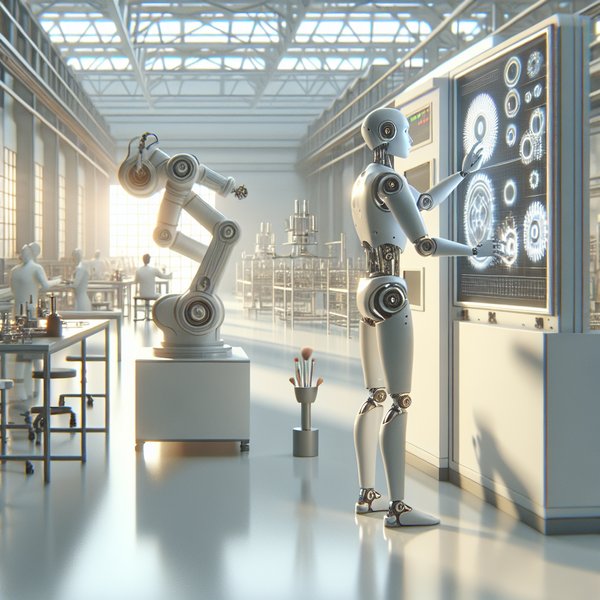
|
|||||
| Vidéo : le nouveau robot de Boston Dynamics va vous … | https://www.lebigdata.fr/video-le-nouve… | 1 | Feb 02, 2026 16:01 | active | |
Vidéo : le nouveau robot de Boston Dynamics va vous laisser sans voixURL: https://www.lebigdata.fr/video-le-nouveau-robot-de-boston-dynamics-va-vous-laisser-sans-voix Description: Le CES nous en a déjà montré beaucoup. Mais la démonstration du nouveau robot de Boston Dynamics a fait basculer l’ambiance. Content:
Tinah F. 8 janvier 2026 2 minutes de lecture Robotique Le CES nous en a déjà montré beaucoup. Mais la démonstration du nouveau robot de Boston Dynamics a fait basculer l’ambiance. Troublante, fascinante, sa vidéo est devenue virale en quelques heures. Le monde de la robotique évolue à grande vitesse. Pour certains, ces machines représentent un progrès fascinant. Pour d’autres, elles suscitent encore méfiance et inquiétude. Mais ce qui est sûr, c’est qu’elles ne laissent plus personne indifférent. Et au CES de Las Vegas, Atlas, le robot humanoïde de Boston Dynamics, a mis tout le monde d’accord. Sa démonstration a marqué les esprits par son audace et le niveau d’innovation atteint par les ingénieurs de l’entreprise. Présenté en direct sur scène lors du CES de Las Vegas, le robot de Boston Dynamics a livré une performance aussi spectaculaire que troublante. Boston Dynamics debuted its next-generation Atlas humanoid robot at CES in Las Vegas pic.twitter.com/7qSKHgrAG0 Comme vous pouvez le voir sur la vidéo ci-dessus, Atlas ne marche pas simplement comme un humain bien entraîné. Il se contorsionne et pivote. Il se tord dans des angles que le corps humain ne pourrait jamais encaisser. Atlas avance sur scène avec assurance, puis commence à faire tourner ses mains comme des perceuses industrielles. Sa tête pivote sur elle-même. Son torse suit, dans une rotation complète qui brise toute illusion d’humanité. L’atout central de cette nouvelle version d’Atlas, ce sont ses articulations à rotation continue. Ses hanches, ses poignets et même son cou peuvent pivoter à 360 degrés, sans aucune contrainte mécanique apparente. Vous vous demandez à quoi servent tous ces mouvements improbables ? Rassurez‑vous, Boston Dynamics a pensé à tout. Cette liberté de rotation permet à Atlas de réaliser des tâches complexes avec une précision étonnante. Il est donc en mesure de manipuler des pièces automobiles ou d’exécuter des gestes techniques millimétrés. En plus, avec ses 1,88 mètre et 90 kilos, il a la carrure idéale pour s’attaquer à des tâches complexes. On a déjà vu des robots reproduire au millimètre les gestes de leur contrôleur. Avec ce robot de Boston Dynamics, c’est autre chose. Ses mouvements surprenants sont maîtrisés, même quand il tord ses bras ou pivote sur lui-même. Or, tout est contrôlé. Boston Dynamics Atlas robot movements up close #CES2026 pic.twitter.com/AVtZjjc0kL Pour Robert Playter, le PDG de Boston Dynamics, l’objectif n’est pas de copier l’humain à l’identique. Mais de combiner le meilleur de la nature avec ce que la robotique sait faire de mieux. Atlas s’autorise ainsi des libertés là où notre anatomie impose des limites. Le plus intéressant dans tout cela ? Derrière le show, Boston Dynamics prépare surtout le terrain pour la commercialisation d’Atlas. Une version prête à l’emploi a d’ailleurs été officiellement annoncée. L’entreprise, désormais sous l’aile de Hyundai, vise l’industrie. Alors, quand pourra-t-on le voir au travail ? Le premier déploiement reste prévu dans une usine de véhicules électriques du constructeur coréen, d’ici 2028. Quant au prix, il reste pour l’instant bien gardé. 28 janvier 2026 26 janvier 2026 26 janvier 2026 Votre adresse e-mail ne sera pas publiée. Les champs obligatoires sont indiqués avec * Commentaire * Nom * E-mail * Rejoignez nos 100 000 passionnés et experts et recevez en avant-première les dernières tendances de l’intelligence artificielle🔥 Accueil > Robotique > Vidéo : le nouveau robot de Boston Dynamics va vous laisser sans voix Rejoignez nos 100 000 passionnés et experts et recevez en avant-première les dernières tendances de l’intelligence artificielle🔥 Rejoins nos 100 000 passionnés et experts et reçois en avant-première les dernières tendances de l’intelligence artificielle🔥
Images (1): 
|
|||||
| Boston Dynamics unveils production-ready version of Atlas robot at CES … | https://www.engadget.com/big-tech/bosto… | 1 | Feb 02, 2026 16:01 | active | |
Boston Dynamics unveils production-ready version of Atlas robot at CES 2026Description: Boston Dynamics is making the final version of Atlas available to Hyundai and Google DeepMind first. Content:
After years of testing its humanoid robot (and forcing it to dance), Boston Dynamics' Atlas is entering production. The robotics company said at CES 2026 that the final product version of the robot is being built now, and the first companies that will receive deployments are Hyundai, Boston Dynamics' majority shareholder, and Google DeepMind, the firm's newly minted AI partner. This final enterprise version of Atlas "can perform a wide array of industrial tasks," according to Boston Dynamics, and is specifically designed with consistency and reliability in mind. Atlas can work autonomously, via a teleoperator or with "a tablet steering interface," and the robot is both strong and durable. Boston Dynamics says Atlas has a reach of up to 7.5 feet, the ability to lift 110 pounds and can operate at temperatures ranging from minus 4 to 104 degrees Fahrenheit. "This is the best robot we have ever built," Boston Dynamics CEO Robert Playter said in the Atlas announcement. "Atlas is going to revolutionize the way industry works, and it marks the first step toward a long-term goal we have dreamed about since we were children." Boston Dynamics has been publicly demoing its work on humanoid robots since at least 2011, when it first debuted Atlas as a DARPA project. Since then, the robot has gone through multiple prototypes and revisions, most notably switching from a hydraulic design to an all-electric design in 2024. Later that year, Boston Dynamics demonstrated the robot's ability to manipulate car parts, which appears to be one of the first ways Atlas will be put to work. Hyundai plans to use Atlas in its car plants in 2028, focused on tasks like parts sequencing. In 2030, the car maker hopes to have the robot's responsibilities "extend to component assembly, and over time, Atlas will also take on tasks involving repetitive motions, heavy loads, and other complex operations," Hyundai says. Google DeepMind, meanwhile, is receiving Atlas robots so it can work on integrating its Gemini Robotics AI foundation models into Boston Dynamics' system. © 2026 Yahoo. All rights reserved. and
Images (1): 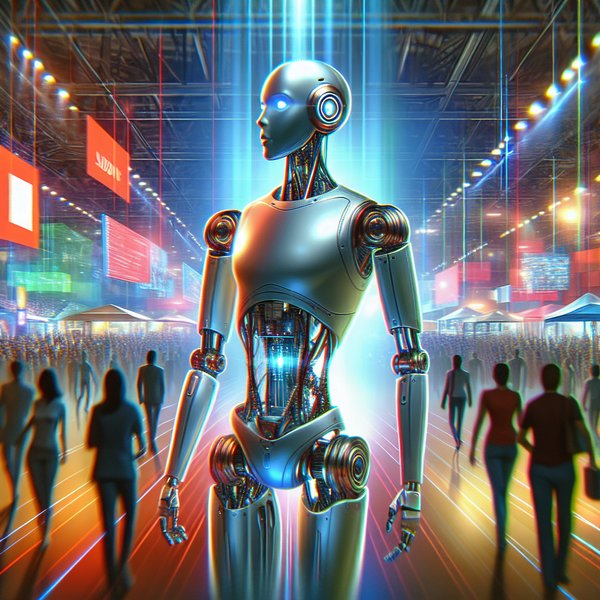
|
|||||
| Boston Dynamics robot makes an appearance in Sam Adams’ Super … | https://www.bostonglobe.com/2022/02/03/… | 0 | Feb 02, 2026 16:01 | active | |
Boston Dynamics robot makes an appearance in Sam Adams’ Super Bowl commercialDescription: The two local companies are teaming up to pitch their products during the big game. Content: |
|||||
| Boston Dynamics beats Tesla to the humanoid robot punch • … | https://www.theregister.com/2026/01/06/… | 10 | Feb 02, 2026 16:01 | active | |
Boston Dynamics beats Tesla to the humanoid robot punch • The RegisterURL: https://www.theregister.com/2026/01/06/boston_dynamics_atlas_production/ Description: CES 2026: Atlas will be deployed to Hyundai and Google facilities this year Content:
CES 2026 Remember when Elon Musk predicted that there would be thousands of Optimus robots at Tesla factories by the end of 2025? Well, that didn't happen, but competitor Boston Dynamics has just announced that its humanoid robot, Atlas, is going to the big time. Not only is Boston Dynamics beginning commercial production of the final version of Atlas, but it's also solidified plans to deploy tens of thousands of Atlas units at Hyundai Motor Group manufacturing facilities. Hyundai, Boston Dynamics' majority shareholder, will start with deployment of Atlas at its Robot Metaplant Application Center in the coming months. Boston Dynamics noted that Hyundai's $26 billion investment in US manufacturing announced last year will also include a robotics factory able to produce 30,000 bots a year, many of which will presumably be Atlas units based on its context in the Atlas press material. Youtube Video In addition to its planned Hyundai deployments this year, Boston Dynamics also announced a partnership with Google DeepMind at CES that will see the pair working out how to integrate Gemini Robotics AI foundation models into Atlas to, according to Boston Dynamics, "give the robot greater cognitive capabilities." An Atlas prototype conducting part sequencing work at a Hyundai factory as part of earlier proof of concept work - Click to enlarge Those two commitments mean that all the Atlas units slated for production this year are spoken for, but Boston Dynamics noted it's planning to add additional customers in early 2027. We asked if Boston Dynamics had any customers lined up for 2027, but it declined to name any. We've known the all-electric, commercial version of Atlas was coming since 2024, when Boston Dynamics retired the old version in favor of a prototype that looks generally like what the robotics leader unveiled at CES this week. Speaking of 2024, Boston Dynamics seemed to take direct aim at some other humanoid robot manufacturers when it cited its late entry into the game. "Boston Dynamics only announced its intention to build a commercial humanoid in 2024, after it became clear that recent AI advances had accelerated the pace of how robots could be trained and deployed into real-world applications," the company said in a press release. You may recall Tesla AI Day 2021, when Elon Musk embarrassingly trotted out a guy in a morph suit to demonstrate his dream of humanoid robots able to serve as replacements for human labor. By the following year, Optimus hadn't advanced all that much. Fast-forward to 2025, and Musk was predicting Optimus version 3 prototyped by the end of the year. Not only did that not happen, but Musk's claim Tesla would produce 5,000 to 10,000 Optimus robots in 2025 butted up hard against the embarrassing reality that Optimus isn't only behind the curve, but likely doesn't have any autonomous capabilities at all. Atlas, on the other hand, is now in production and has software that allows it to not only be tele-operated via VR or controlled by a tablet, but also lets it function autonomously. "Atlas is going to revolutionize the way industry works, and it marks the first step toward a long-term goal we have dreamed about since we were children – useful robots that can walk into our homes and help make our lives safer, more productive, and more fulfilling," Boston Dynamics CEO Robert Playter said of the Atlas production launch. The robot has two batteries that it's able to hot-swap on its own, it's able to operate in temperatures as low as -4° F to as hot as 104° F (-20° C to 40° C), is IP67 rated, has 56 degrees of freedom, is padded and has minimal pinch points to reduce the risk of injury to humans operating in the same space as it, and was designed with simple components that can be swapped out for field repairs with minimal time and effort. Atlas is supposedly able to learn autonomously from its environment, and can push its newfound knowledge to other Atlas units in a company's fleet. Atlas also has 360-degree vision to help it spot people before they get too close to its working space, and is designed to pause whenever it could put a person in danger, then continue its work once they're clear. As to it making a leap forward in humanoid robotics with this announcement, Boston Dynamics told us we shouldn't be surprised. "Over a decade ago, we were one of the only companies on the planet putting real R&D into humanoid robots. Now it seems like every week a new company pops up with big plans to make humanoids," a company spokesperson told The Register. "We don’t take it lightly, and if we were going to make a commercial humanoid, we had to be convinced we have a solid plan not only to build something cool, but to build something useful." The hydraulic version of Atlas that the company retired in 2024 had been under development since 2013, and by the end of its run, was capable of doing some impressive stunts. "Our commercialization track record with Spot and Stretch gives us confidence that our commercialization with Atlas will be successful," the company added, noting that its customers are hungry for new Boston Dynamics robots "because they know what to expect." Tesla didn't respond to questions for this story. ® Send us news The Register Biting the hand that feeds IT Copyright. All rights reserved © 1998–2025
Images (10): 


|
|||||
| Boston Dynamics dévoile une vidéo impressionnante de son robot Atlas … | https://www.rtl.be/info/video/834821.as… | 1 | Feb 02, 2026 16:01 | active | |
Boston Dynamics dévoile une vidéo impressionnante de son robot Atlas | RTL InfoURL: https://www.rtl.be/info/video/834821.aspx Content:
Le robot humanoïde de Boston Dynamics, Atlas, fait étalage de ses nouvelles compétences dans vidéo publiée ce mardi 18 janvier. Vous souhaitez nous envoyer une information? Utilisez le formulaire de contact pour nous envoyer vos scoops!
Images (1): 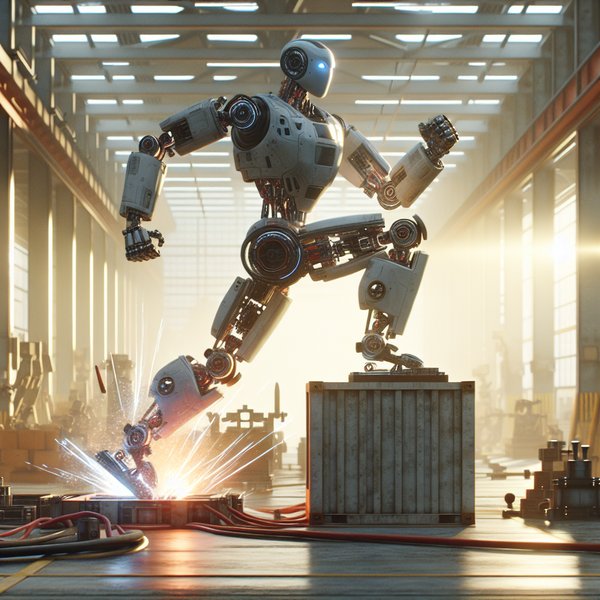
|
|||||
| Boston Dynamics muestra su robot obrero (video) - Remolacha - … | https://remolacha.net/2026/01/boston-dy… | 1 | Feb 02, 2026 16:01 | active | |
Boston Dynamics muestra su robot obrero (video) - Remolacha - Noticias Republica DominicanaURL: https://remolacha.net/2026/01/boston-dynamics-atlas/ Description: Boston Dynamics EE.UU.–«Nos entusiasma anunciar la versión comercial de nuestro robot Atlas®. Este robot humanoide de nivel empresarial ofrece una fuerza y un rango de movimiento impresionantes, manipulación precisa y una adaptabilidad inteligente, diseñado para impulsar la nueva revolución industrial.» Content:
Boston Dynamics EE.UU.–«Nos entusiasma anunciar la versión comercial de nuestro robot Atlas®. Este robot humanoide de nivel empresarial ofrece una fuerza y un rango de movimiento impresionantes, manipulación precisa y una adaptabilidad inteligente, diseñado para impulsar la nueva revolución industrial.» contáctenos This site is an Amazon Associate and purchases through Amazon links may earn an affiliate commission.
Images (1): 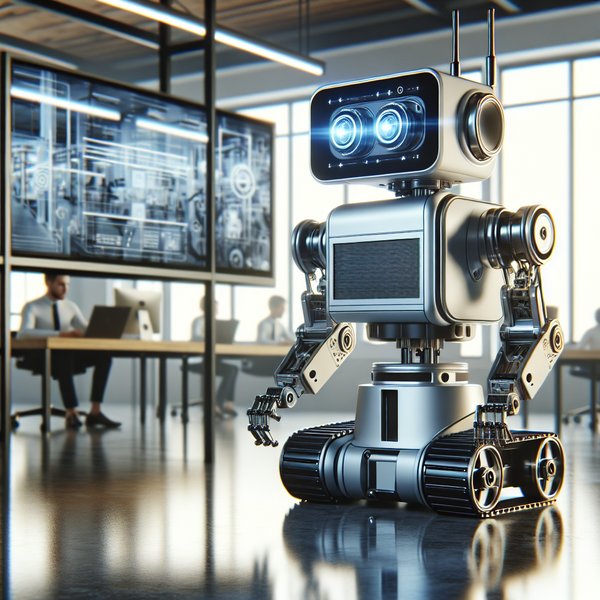
|
|||||
| Eek! Boston Dynamics’ Robot Dog Can Talk Now [Video] | https://www.2oceansvibe.com/2023/10/27/… | 0 | Feb 02, 2026 16:01 | active | |
Eek! Boston Dynamics’ Robot Dog Can Talk Now [Video]URL: https://www.2oceansvibe.com/2023/10/27/eek-boston-dynamics-robot-dog-can-talk-now-video/ Description: Spot the robot dog built by engineering company Boston Dynamics can now speak thanks to ChatGPT. Content: |
|||||
| SoftBank : Boston Dynamics introduces 'Stretch', new warehouse worker robot | https://www.marketscreener.com/quote/st… | 0 | Feb 02, 2026 16:01 | active | |
SoftBank : Boston Dynamics introduces 'Stretch', new warehouse worker robotDescription: U.S. robotics company Boston Dynamics on Monday unveiled a new robot called Stretch, designed to perform one very specific warehouse job: moving boxes. ... Content: |
|||||
| Cane robot di Boston Dynamics ora fa i salti mortali | https://www.tecnoandroid.it/2025/09/06/… | 1 | Feb 02, 2026 16:01 | active | |
Cane robot di Boston Dynamics ora fa i salti mortaliURL: https://www.tecnoandroid.it/2025/09/06/cane-robot-di-boston-dynamics-ora-fa-salti-mortali-1623061/ Description: SpotMini e i suoi discendenti raggiungono nuovi livelli di agilità grazie a movimenti acrobatici e algoritmi avanzati. Content:
L’evoluzione dei robot quadrupedi continua con Boston Dynamics che si spinge oltre i limiti della robotica. Il suo famoso cane robot ora è in grado di eseguire salti mortali completi. Dopo anni di sviluppo iniziati con SpotMini, questi robot quadrupedi non si limitano più a camminare o correre. Possono affrontare ostacoli complessi e compiere acrobazie sorprendenti, combinando forza, equilibrio e precisione. Il segreto di queste evoluzioni risiede nei sofisticati sensori e negli attuatori ad alta precisione, uniti a algoritmi di intelligenza artificiale che calcolano in tempo reale traiettorie, velocità e punti di appoggio. Ogni salto è ottimizzato per evitare cadute o danni, rendendo il robot sempre più autonomo e versatile nei movimenti. I salti mortali non sono solo incredibile da vedere, indicano un significativo passo avanti nelle capacità operative di questo genere di robot. Robot come Spot possono essere impiegati in ambienti complessi e pericolosi, come zone colpite da disastri ambientali o terreni impervi, dove agilità e reattività sono fondamentali. L’adattamento in tempo reale a superfici irregolari o ostacoli imprevisti aumenta la sicurezza e l’efficienza dei robot nelle missioni sul campo. Oltre alla performance fisica, i sensori permettono al robot di percepire l’ambiente circostante e regolare ogni movimento, trasformando ogni salto in un esempio di coordinazione automatica e precisione meccanica. Il video dei salti mortali conferma la leadership di Boston Dynamics nella robotica avanzata. La combinazione di hardware sofisticato, software intelligente e design meccanico innovativo rende questi robot non solo incredibili, ma anche funzionali in contesti reali. Ogni acrobazia rappresenta un segno di progresso verso applicazioni pratiche sempre più complesse, avvicinando i consumatori ad un futuro in cui i robot quadrupedi potranno agire autonomamente in spazi difficili o pericolosi. Boston Dynamics dimostra così che la robotica moderna non è solo mera curiosità da laboratorio, ma un ambito in rapida evoluzione, pronto a rivoluzionare settori come la logistica, la sicurezza e le operazioni in ambienti estremi. Dal 2017 collaboro con TecnoAndroid, adottando un approccio attento ai dettagli e puntando sempre alla perfezione, per offrire un punto di vista chiaro e preciso sulle ultime novità del settore tech. 2012 – 2023 Tecnoandroid.it – Gestito dalla STARGATE SRLS – P.Iva: 15525681001 Testata telematica quotidiana registrata al Tribunale di Roma CON DECRETO N° 225/2015, editore STARGATE SRLS. Tutti i marchi riportati appartengono ai legittimi proprietari. Questo articolo potrebbe includere collegamenti affiliati: eventuali acquisti o ordini realizzati attraverso questi link contribuiranno a fornire una commissione al nostro sito. Inserisci qualcosa di speciale: Tienimi connesso fino a quando non esco Password dimenticata? Ti sarà inviata una nuova password via email. Hai ricevuto una nuova password? Accedi qui.
Images (1): 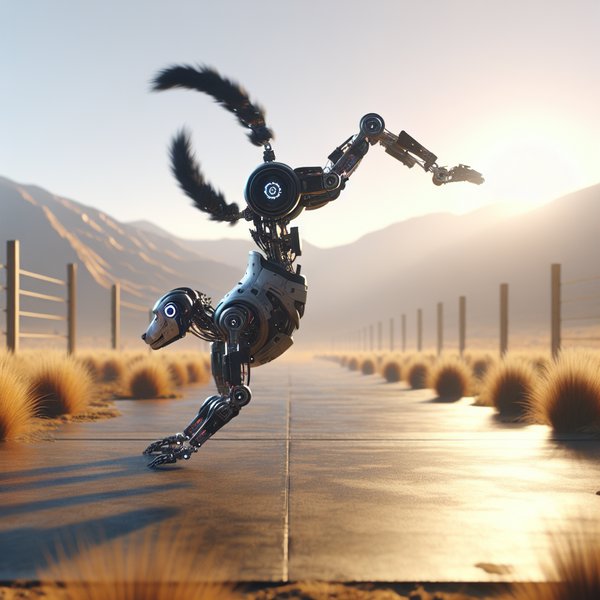
|
|||||
| Boston Dynamics vows to turn Atlas into a 'superhuman' robot … | https://www.digitaltrends.com/computing… | 1 | Feb 02, 2026 16:01 | active | |
Boston Dynamics vows to turn Atlas into a 'superhuman' robot - Digital TrendsURL: https://www.digitaltrends.com/computing/boston-dynamics-vows-to-turn-atlas-into-a-superhuman-robot/ Description: CES 2026 Read and watch our complete CES coverage here Boston Dynamics is a pioneer in the humanoid robot sector, with Atlas first appearing in 2013 before going on to become the advanced bipedal bot that it is today. Since then, thanks to advances in robotics hardware and AI, a slew of tech companies big […] Content:
Boston Dynamics is a pioneer in the humanoid robot sector, with Atlas first appearing in 2013 before going on to become the advanced bipedal bot that it is today. Since then, thanks to advances in robotics hardware and AI, a slew of tech companies big and small have entered the fray, working at speed to try to become the first to build something deployable at scale for tasks in industrial settings, or even in the home. Boston Dynamics is still very much in the race, and at CES 2026 on Monday the Massachussetts-based company shared a couple of major plans for the Atlas humanoid robot. The first involves Korean automaker Hyundai, Boston Dynamics’ main backer. The goal is to integrate Atlas into Hyundai’s global manufacturing network, starting with pilots at the automaker’s state-of-the-art Metaplant in Georgia. “Atlas will be introduced on processes with proven safety and quality benefits, such as parts sequencing,” the company said in a release. “By 2030, applications will extend to component assembly, and over time, Atlas will also take on tasks involving repetitive motions, heavy loads, and other complex operations — ensuring safer working environments for factory employees.” Boston Dynamics is also partnering with Google’s DeepMind AI research lab to bring more AI smarts to the latest version of Atlas. The technology will provide the humanoid robot with advanced perception, reasoning, and human interaction, with Atlas units already on their way to DeepMind for testing and scaling. “This collaboration will integrate Boston Dynamic’s leadership in robotics with Google DeepMind’s cutting-edge robot AI foundation models, driving the development of breakthrough technologies,” the company said. A two-minute video (top) video, shared by Boston Dynamics on Monday, features clips that show just how far its robots have come over the years. It also claims that Atlas is heading toward becoming a “superhuman robot” that’s “built to perform, built to work.” It adds that it envisions a world where “robots walk with us as helpers and companions to make life easier, safer, and more fulfilling.” Lofty words indeed, but with Boston Dynamics solid experience, as well as its decisive edge enabling fast integration via its Hyundai ownership, few will bet against the company making its vision a reality. Chrome may soon get a new scam-fighting upgrade that leans on Gemini. Google is testing Gemini antiscam protection in Chrome as an extra check that kicks in only after the browser already thinks a site looks risky. This isn’t an always-on system that reviews every page you open. Chrome steps in at higher-risk moments, then sends the flagged page out for deeper analysis, keeping the existing scam defenses in place. Apple's Studio Display is long overdue for a refresh. Launched in 2022, the current model features a 27-inch 5K IPS panel with a 60Hz refresh rate and packs the A13 Bionic chip. Recent leaks suggest that Apple is finally preparing a meaningful upgrade that could bring a new chip, a 120Hz panel, and HDR support. A new report now claims the revamped Studio Display could launch in the coming months. According to Bloomberg's Mark Gurman, Apple's new Studio Display "has been in the works for some time," and is "slated for a launch in the first half of 2026." While Gurman hasn't confirmed an exact date, Apple could unveil the Studio Display refresh as early as March. The company launched the original model in March 2022, and it appeared in a regulatory filing roughly three months before its debut. If you currently have a shiny new MacBook Pro sitting in your digital shopping cart, do yourself a huge favor: close the tab and step away from the credit card. We are officially in the "danger zone" of the Apple buying cycle. All the classic warning signs are flashing neon red, signaling that a refresh isn't just possible - it is imminent. According to the latest Power On newsletter from Bloomberg, Apple is in the final manufacturing stretch. The new machines - internally tagged with the unsexy codenames J714 and J716 - are reportedly already boxed up and sitting in global warehouses, just waiting for the green light. Upgrade your lifestyleDigital Trends helps readers keep tabs on the fast-paced world of tech with all the latest news, fun product reviews, insightful editorials, and one-of-a-kind sneak peeks.
Images (1): 
|
|||||
| Hyundai y Boston Dynamics presentan a Atlas, su robot humanoide | https://sipse.com/tecnologia/hyundai-y-… | 1 | Feb 02, 2026 16:01 | active | |
Hyundai y Boston Dynamics presentan a Atlas, su robot humanoideDescription: Una versión destinada al ensamblaje de automóviles ya se encuentra en producción y será desplegada en 2028 en la planta de Hyundai, en el estado de Georgia. Content:
Una versión destinada al ensamblaje de automóviles ya se encuentra en producción y será desplegada en 2028 en la planta de Hyundai, en el estado de Georgia. Hyundai y Boston Dynamics dieron un paso importante en la carrera por la robótica humanoide al presentar por primera vez en público a Atlas, su robot de tamaño real, durante la feria tecnológica CES. La demostración marcó un momento relevante en la competencia global por desarrollar máquinas con forma humana capaces de realizar tareas propias de las personas, un terreno donde también avanzan empresas como Tesla. “Por primera vez en público, por favor den la bienvenida a Atlas al escenario”, anunció Zachary Jackowski, gerente general de robots humanoides en Boston Dynamics, mientras el robot se incorporaba del suelo frente a decenas de asistentes. Con movimientos fluidos, Atlas caminó durante varios minutos, saludó a la audiencia y giró la cabeza con notable naturalidad, en una escena que despertó asombro y aplausos. Boston Dynamics humanoid robot is next-level. Everybody is playing catch-up. pic.twitter.com/weM15xcWYn Durante la presentación, Jackowski explicó que el robot fue operado de manera remota por un ingeniero únicamente para fines de demostración, aunque la versión final de Atlas está diseñada para moverse de forma autónoma. De hecho, Boston Dynamics confirmó que una versión destinada al ensamblaje de automóviles ya se encuentra en producción y será desplegada en 2028 en la planta de vehículos eléctricos de Hyundai, ubicada cerca de Savannah, en el estado de Georgia. Hyundai, que posee la participación mayoritaria de Boston Dynamics desde 2021, ha reforzado su apuesta por la robótica avanzada. La empresa estadounidense, con sede en Massachusetts, es ampliamente conocida por Spot, el robot con forma de perro que fue su primer producto comercial y que incluso abrió el evento de Hyundai con una coreografía al ritmo de K-pop. NEWS: Boston Dynamics has just released a new video of its upgraded next-generation humanoid robot called Atlas.• 4 hour battery. Self-swappable for continuous operation• 6 feet 2 inches tall• Weight: 198 lbs• 56 total degrees of freedom• Now fully electric, ditching… pic.twitter.com/t9KOlxbaiM Como parte de su estrategia tecnológica, Hyundai también anunció una nueva alianza con DeepMind, la división de inteligencia artificial de Google, que aportará su tecnología a los robots de Boston Dynamics. La colaboración marca un regreso simbólico para Google, que adquirió la empresa en 2013 antes de venderla años después a SoftBank, de donde finalmente pasó a manos de Hyundai. Las demostraciones públicas de robots humanoides siguen siendo poco comunes, debido a que cualquier error suele atraer atención negativa. Por ello, muchas startups prefieren mostrar avances mediante videos cuidadosamente editados en redes sociales. Sin embargo, la presentación de Atlas transcurrió sin contratiempos. Al cierre del evento, el robot realizó un gesto teatral para presentar un modelo estático de una nueva versión en color azul, con ligeros cambios en su diseño. When 60 Minutes visited Boston Dynamics in 2021, Atlas was a bulky, hydraulic robot. Back then, it relied on algorithms written by engineers.Today, Atlas has a sleek, all-electric body and an AI-powered brain, smart enough to pull off hard-to-believe feats autonomously.… pic.twitter.com/9LpfUroeN7 El auge de la inteligencia artificial y los avances en hardware han impulsado una fuerte inversión en el sector de la robótica. No obstante, especialistas coinciden en que aún falta tiempo para que los robots humanoides multifuncionales se integren de manera masiva en fábricas, oficinas o hogares. Con información de AP
Images (1): 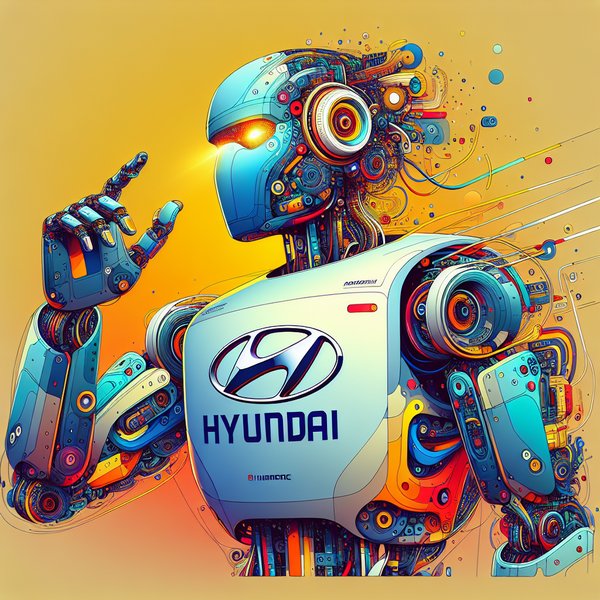
|
|||||
| Boston Dynamics’ Atlas Robot Becomes Market-Ready Product | https://www.techjuice.pk/boston-dynamic… | 1 | Feb 02, 2026 16:01 | active | |
Boston Dynamics’ Atlas Robot Becomes Market-Ready ProductURL: https://www.techjuice.pk/boston-dynamics-atlas-robot-becomes-market-ready-product/ Description: Boston Dynamics’ Atlas humanoid robot is now ready with industrial deployment plans and first units headed to Hyundai and Google DeepMind. Content:
Boston Dynamics has transitioned its advanced Atlas humanoid robot from prototype to a market-ready product, unveiling production-focused specifications and industrial deployment plans after its presentation at CES 2026, the company confirmed. Official statements from Boston Dynamics detail that the newest version of Atlas was engineered with consistency, dependability, and readiness for real-world environments in mind, marking a departure from earlier iterations that were largely focused on demonstrations and capability showcases. The production variant features robust operational capacity designed to work across a range of industrial settings, including warehouses and factories with structured tasks such as parts sequencing and material handling. “For more than 30 years, Boston Dynamics has been building some of the world’s most advanced robots,” said Robert Playter, CEO of Boston Dynamics. “This is the best robot we have ever built. Atlas is going to revolutionize the way industry works, and it marks the first step toward a long-term goal we have dreamed about since we were children–useful robots that can walk into our homes and help make our lives safer, more productive, and more fulfilling.” Boston Dynamics, majority-owned by Hyundai, has announced that it will deliver the first production units of Atlas to Hyundai and to its artificial intelligence collaborator, Google DeepMind. In both deployments, teams will integrate the robot’s capabilities with advanced AI systems to enhance perception, adaptability, and autonomous decision-making in real-world operations. The market-ready Atlas features hardware that supports payloads of up to approximately 50 kilograms and operates reliably across challenging temperatures and environments to meet demanding industrial requirements. Engineers designed Atlas’s reach and mobility to handle a wide range of tasks, while allowing flexible supervision models ranging from full autonomy to remote operation through teleoperation or tablet-based control interfaces. According to the official statement: The robot can be controlled in three different ways: autonomous mode, teleoperated, or by using a tablet steering interface. Atlas has 56 degrees of freedom, fully rotational joints, a reach extending to 2.3M (7.5 ft), and the strength to lift up to 50 kg (110 lbs). The robot is also extremely water-resistant and can operate at diverse temperature ranges from -20° to 40° C (-4° to 104° F). Its safety features include human detection and fenceless guarding, and it can be integrated into workflows using barcode scanners or RFID. Production plans include a phased rollout beginning in 2028 at Hyundai’s manufacturing facilities, with initial use cases focused on parts sequencing and material logistics. By 2030, project leaders anticipate expanding Atlas’s role to more complex assembly operations. Boston Dynamics’ commercialization of Atlas underscores the growing emphasis on industrial robotics as a strategic tool to enhance operational efficiency and complement human labor in structured production environments. Stakeholders in manufacturing and logistics sectors will be watching how Atlas’s market entry influences broader adoption of humanoid robotics across global supply chains. Abdul Wasay explores emerging trends across AI, cybersecurity, startups and social media platforms in a way anyone can easily follow. A wave of grassroots ingenuity in the PC VR community has produced a new DIY virtual reality headset capable of running SteamVR experiences using commonly. US power tool manufacturer DEWALT has introduced a downward-drilling robot designed to automate one of the most labor-intensive steps in data center construction. A breakthrough. Pakistan’s National Cyber Crime Investigation Agency (NCCIA) has registered a First Information Report (FIR) in a disturbing case of online child exploitation, accusing a Rawalpindi. India has announced a massive incentive for the tech sector. Foreign companies using local data centres to serve global clients will now enjoy a tax. Premier Pakistan technology news website with special focus on startups, entrepreneurship and consumer products. © 2025 TechJuice.PK – All rights reserved.
Images (1): 
|
|||||
| Hyundai and Boston Dynamics unveil humanoid robot Atlas at CES | https://www.ocregister.com/2026/01/05/c… | 1 | Feb 02, 2026 16:01 | active | |
Hyundai and Boston Dynamics unveil humanoid robot Atlas at CESURL: https://www.ocregister.com/2026/01/05/ces-2026-humanoid-robots/ Description: The life-sized robot walked and waved to the crowd, marking a significant step in the competition to build human-like robots. Content:
e-Edition Get the latest news delivered daily! Get the latest news delivered daily! e-Edition Trending: By MATT O’BRIEN Hyundai-owned Boston Dynamics publicly demonstrated its humanoid robot Atlas for the first time Monday at the CES tech showcase, ratcheting up a competition with Tesla and other rivals to build robots that look like people and do things that people do. “For the first time ever in public, please welcome Atlas to the stage,” said Boston Dynamics’ Zachary Jackowski as a life-sized robot with two arms and two legs picked itself up from the floor at a Las Vegas hotel ballroom. It then fluidly walked around the stage for several minutes, sometimes waving to the crowd and swiveling its head like an owl. An engineer remotely piloted the robot from nearby for the purpose of the demonstration, though in real life Atlas will move around on its own, said Jackowski, the company’s general manager for humanoid robots. The company said a product version of the robot that will help assemble cars is already in production and will be deployed by 2028 at Hyundai’s electric vehicle manufacturing facility near Savannah, Georgia. The South Korean carmaker holds a controlling stake in Massachusetts-based Boston Dynamics, which has been developing robots for decades and is best known for its first commercial product: the dog-like robot called Spot. A group of four-legged Spot robots opened Hyundai’s event Monday by dancing in synchrony to a K-pop song. Hyundai also announced a new partnership with Google’s DeepMind, which will supply its artificial intelligence technology to Boston Dynamics robots. It’s a return to a familiar partnership for Google, which bought Boston Dynamics in 2013 before selling it to Japanese tech giant SoftBank several years later. Hyundai acquired it from SoftBank in 2021. It’s rare for leading robot makers to publicly demonstrate their humanoids, in part because fumbles attract unwanted attention — such as when one of Russia’s first humanoids fell on its face in November. Robotics startups typically prefer to show off their research prototypes in videos on social media, offering them the opportunity to show the machines at their best and edit out their failings. At the end of Monday’s live Atlas demonstration, which appeared flawless, the humanoid prototype swung its arms in a theatrical gesture to introduce a static model of the new product version of Atlas, which looked slightly different and was blue in color. Crossover excitement from the commercial AI boom and new technical advances have helped pour huge amounts of money into robotics development, though many experts still think it’s a long time before truly human-like robots that can perform many different tasks take root in workplaces or homes. “I think the question comes back to what are the use cases and where is the applicability of the technology,” said Alex Panas, a partner at consultancy McKinsey who helped lead a CES robotics panel that attracted hundreds of people earlier in the day. “In some cases, it may look more humanoid. In some cases, it may not.” Either way, Panas said, “the software, the chipsets, the communication, all the other pieces of the technology are coming together, and they will create new applications.” Humanoids don’t yet have enough dexterity to threaten many human jobs, though a debate over their effects on employment is likely to grow as they become more skilled. The same Georgia plant where Hyundai plans to test out Atlas was the site of a federal immigration raid last year that led to the arrests of hundreds of workers, including more than 300 South Korean citizens. Copyright © 2026 MediaNews Group
Images (1): 
|
|||||
| Boston Dynamics video: Atlas robot carries tool bag | https://www.bostonglobe.com/2023/01/19/… | 0 | Feb 02, 2026 16:01 | active | |
Boston Dynamics video: Atlas robot carries tool bagDescription: In a sleek new video, Boston Dynamics seems to be hinting at a future for its high-tech robots: putting them to work in settings where heavy labor is required. Content: |
|||||
| CES 2026: Boston Dynamics Atlas humanoid robot has an AI … | https://thegadgetflow.com/blog/ces-2026… | 1 | Feb 02, 2026 16:01 | active | |
CES 2026: Boston Dynamics Atlas humanoid robot has an AI brainURL: https://thegadgetflow.com/blog/ces-2026-boston-dynamics-atlas-humanoid-robot/ Description: Boston Dynamics brings Atlas to CES 2026, showing how humanoid robots are evolving with fluid movement and advanced AI control. Content:
Author If CES 2026 proves anything, it’s that AI is moving off our devices and into the physical world. A case in point is the Boston Dynamics Atlas humanoid robot. First unveiled in 2021, the original Atlas was heavy with slow, clunky movements. Fast-forward to 2026, and you’ll find that Atlas can dance, cartwheel, and even stand up in a way that no human can. What’s responsible for the change? Tireless engineering at Boston Dynamics has painstakingly constructed every centimeter of this humanoid robot. Plus, Atlas has an AI brain. Atlas may be labeled a humanoid, but it doesn’t try to move like one. Instead of copying human motion, it doubles down on what machines do best. So its limbs, torso, and head can rotate far beyond human limits. This allows it to reposition itself without turning its entire body. Atlas can pivot its core, twist mid-motion, and recover from falls using movements that would be impossible—or painful—for a person. That freedom of motion isn’t just for show. By eliminating traditional wiring that crosses rotating joints, Boston Dynamics has made Atlas both more flexible and more reliable over time. Fewer physical constraints mean smoother motion and fewer failure points. The latest Atlas is fully electric, ditching older hydraulic systems in favor of faster, quieter, and more precise control. A custom battery and advanced actuators give it the power to jump, lift, and stabilize itself. Meanwhile, a lightweight mix of aluminum and titanium components keeps the robot strong yet sleek. The result is a machine that looks less like a prototype and more like a platform; one capable of real-world movement rather than controlled lab demos. What really sets Atlas apart is how tightly perception and movement are linked. The robot constantly evaluates its surroundings and adjusts its posture, balance, and grip in real time. This is what allows Atlas to squat deeply to lift objects, shift weight mid-step, or recover smoothly when something goes wrong. Its hands reflect the same philosophy. Atlas doesn’t have human-like fingers, but instead, three-digit hands that can reconfigure as needed. Yes, Atlas can switch between narrow grips for small objects and wider grasps for larger loads. Tactile sensors feed data back into the system, helping Atlas apply the right amount of force instead of crushing or dropping what it’s holding. Most crucial to Atlas’ upgrades is its AI brain, which is powered by Nvidia chips. These allow the robot to lean new tasks via human-guided input. Using teleoperation, human operators can demonstrate tasks to Atlas remotely, repeating motions until the robot performs them independently. It’s a practical way to teach machines how to interact with unpredictable environments; something pre-programmed motions have always struggled with. There’s no shortage of hype around humanoid robots right now, and Boston Dynamics isn’t pretending Atlas is ready to flood factories or homes. Building machines that are reliable, affordable, and safe is a time-consuming endeavor. But at CES 2026, Atlas makes one thing clear: AI isn’t confined to computers and cell phones anymore. It’s learning how to move and exist in the real world. That’s a shift that’s closer than it was just a few years ago. Author The original product discovery platform We use cookies to personalize your experience. Learn more here.
Images (1): 
|
|||||
| Nauka i technologia - Przerażający humanoidalny robot Boston Dynamics pracuje … | https://www.prisonplanet.pl/nauka_i_tec… | 1 | Feb 02, 2026 16:01 | active | |
Nauka i technologia - Przerażający humanoidalny robot Boston Dynamics pracuje na rusztowaniach. - Prison PlanetURL: https://www.prisonplanet.pl/nauka_i_technologia/przerazajacy,p897174322 Content:
Najnowszy film firmy Boston Dynamics przedstawiający Atlasa - wysokiego na sześć stóp dwunożnego humanoida, pokazuje, że robot nabył nowe umiejętności, które umożliwiają mu operowanie w złożonym terenie. Zespół Atlas firmy Boston Dynamics, kierowany przez Scotta Kuindersmę, powiedział gazecie The Verge, że wideo ma „pokazywać rozszerzenie badań, które prowadzimy w Atlasie”. Film pokazuje autonomiczną pracę Atlasa na prowizorycznym placu budowy. Pracownik stojący wysoko na rusztowaniu prosi dwunożnego robota o torbę z narzędziami. Robot chwyta torbę i pomyślnie dostarcza ją pracownikowi. Pierwotny film agencji wojskowej DARPA: „Nie myślimy tylko o tym, jak sprawić, by robot poruszał się dynamicznie w swoim otoczeniu, tak jak zrobiliśmy to w Parkour i Dance. Teraz zaczynamy angażować Atlasa w prace i zastanawiać się, w jaki sposób robot powinien postrzegać obiekty w swoim otoczeniu i nimi manipulować” powiedział Kuindersma. Odkąd w 2021 roku Hyundai Motor Group nabył za 1,1 miliarda dolarów pakiet kontrolny, w Boston Dynamics nastąpiła znacząca zmiana w przekazach, które wydają się przybliżać komercjalizację tych dwunogich robotów do rzeczywistych zastosowań. Więcej na temat rozwoju tych technologii w zakładce "Przyszłość pojazdów bezzałogowych": To co nas martwi to fakt, iż Atlas jest w stanie zrealizować marzenie kompleksu wojskowo-przemysłowego o humanoidalnych żołnierzach. Link do oryginalnego artykułu: LINK | Armia USA wprowadza roboty rozminowujące plaże przed desantem. | Korea oracowała wojskowego robota do eksploracji tuneli. | DARPA testuje autonomiczne helikoptery Sikorski. | Autonomiczny rój dronów przelatuje przez las polując na ludzi. | Turcja rozmieści wojskowe drony z karabinami maszynowymi. | Wojskowe drony będą rozpylały zakażone komary? | Axon chce, aby „drony wyposażone w paralizatory” patrolowały szkoły. | Roje zabójczych dronów są już sterowane sztuczną inteligencją. | A teraz na czworonożne roboty montują broń. | Armia amerykańska może wkrótce mieć bronie mikrofalowe do niszczenia rojów dronów. | Dron Kamikaze AI „ścigał” i zabijał ludzkie cele. | Cyfrowa kolonizacja: od teleobecności do pełnej sztucznej inteligencji. | MAV: Szpiegowskie drony-insekty. | „Digit” - humanoidalny robot dostarczający przesyłki kurierskie. | Armia rozwija nowe technologie dla robotów. | Singapur wdraża kolejne roboty w celu egzekwowania dystansu społecznego. | Rząd w Singapurze wykorzystuje epidemie do wdrożenia robotów kontrolujących zachowania obywateli. | Policja w USA zaczęła aktywnie wykorzystywać roboty do akcji policyjnych. | Robot policjant zatrzymuje kierowców. | 165-funtowy humanoidalny robot korzysta z algorytmów kontroli, percepcji i planowania. | USA wdraża czołgi sterowane sztuczną inteligencją. | USA wdraża flotę autonomicznych łodzi podwodnych. | Wkrótce grupy robotów będą jeździć autonomicznymi furgonetkami i dostarczać paczki kurierskie. | Nowe roboty biegają jak ludzie. | Nowy film z Boston Dynamics pokazuje robota przeskakującego przeszkody. | Roboty z mobilnym in-vitro. | TECH. Krytyka rozwoju środowiska technologicznego. Prezentacja. | Znikające zawody do roku 2030. 50% zawodów ulegnie komputeryzacji. | Na każdego wprowadzanego na rynek pracy robota zostaje wyeliminowanych sześć miejsc pracy dla ludzi. | Bill Gates: Ludzie nie zdają sobie sprawy, ile miejsc pracy zostanie wkrótce zastąpionych przez boty. | Dlaczego przyszłości nas nie potrzebuje. | Implikacje zmian demograficznych do roku 2050. | Miliarderzy biorą populację na celownik. | Telemarketer robot, który zaprzecza, że jest robotem. | Czy Robo-Reporterzy zastąpią dziennikarzy głównego nurtu? | Sztuczny mózg przeszedł podstawowy test IQ. | Pierwsza bezzałogowa flota ciężarówek rusza w Australii. | Pentagon będzie budował roboty z "prawdziwym" mózgiem. | Armie wirtualnych przyjaciół promują propagandę poprzez sieci społecznościowe. | NBIC- zabawa w Boga. Obraz świata w 2025 roku. | Przyszłość pojazdów bezzałogowych. | ONZ przewiduje transhumanistyczną przyszłości, w której człowiek będzie zbędny. | Chip zapisujący wspomnienia pozwala na ich transfer do drugiego mózgu. | Interfejs mózg-maszyna staje się rzeczywistością. | MIT stworzyło glukozowe ogniwo paliwowe do zasilania wszczepianych interfejsów mózg-komputer. | Oni naprawdę chcą wszczepić czipy do twojego mózgu. | Naukowcy stworzyli system odczytywania obrazów ruchomych bezpośrednio z mózgu. | Technologie ulepszania ludzi i przyszłość pracy w najbliższej dekadzie. | PETMAN: kolejny potężny krok w kierunku budowy armii robotów DARPA. | Nowe drony i roboty. Przedsmak przyszłości. |
Images (1): 
|
|||||
| Atlas gotowy. Robot humanoidalny Boston Dynamics na CES 2026 - … | https://geekweek.interia.pl/technologia… | 1 | Feb 02, 2026 16:01 | active | |
Atlas gotowy. Robot humanoidalny Boston Dynamics na CES 2026 - GeekWeek w INTERIA.PLDescription: Atlas to robot humanoidalny, nad którym Boston Dynamics pracowało od lat. Podczas targów CES 2026 w Las Vegas firma zaprezentowała przedprodukcyjną wersję Content:
Dawid Długosz Atlas to robot humanoidalny, nad którym Boston Dynamics pracowało od lat. Podczas targów CES 2026 w Las Vegas firma zaprezentowała przedprodukcyjną wersję maszyny. Wkrótce ruszy jej produkcja. Robot Atlas w pierwszej kolejności trafi do fabryk Hyundai oraz Google DeepMind, gdzie ma pracować autonomicznie. Roboty humanoidalne zyskują na popularności i rok 2026 może należeć do nich. Boston Dynamics ogłosiło, że po latach prac buduje już ostateczną wersję maszyny Atlas, której możliwości mogliśmy oglądać na różnych filmach. Robot został sfinalizowany i wkrótce rozpocznie się jego masowa produkcja. Boston Dynamics ogłosiło informację w trakcie targów elektroniki CES 2026, które w tym tygodniu odbywają się w Las Vegas. Roboty humanoidalne odgrywają dużą rolę w prezentacjach różnych firm i zostały tam przywiezione przez różne marki. Przykładem może być model do domu o nazwie CLOiD opracowany przez LG. Podczas targów CES 2026 Boston Dynamics pochwaliło się przedprodukcyjną wersją robota Atlas. Obecnie budowana jest ostateczna edycja maszyny i wkrótce rozpocznie się jej produkcja. Kto znalazł się w gronie pierwszych klientów? W pierwszej kolejności Atlas zostanie wdrożony przez firmę Hyundai, która jest większościowym udziałowcem Boston Dynamics. Następnie mamy Google DeepMind, które zostało pozyskane w ramach partnerstwa z zakresu AI. Atlas to projekt robota, którego historia sięga 2011 r. Wtedy został on po raz pierwszy zaprezentowany w ramach DARPA. Od tego czasu Boston Dynamics wprowadziło mnóstwo zmian oraz ulepszeń, które zaowocowały produkcyjną wersją maszyny. Atlas to robot humanoidalny, który z wyglądu przypomina człowieka. Maszyna ma mechaniczne ręce, które pozwalają jej sięgać na wysokość do 2,3 metra oraz unieść ładunek ważący do 50 kilogramów. Ponadto jest w stanie pracować w warunkach z temperaturą od -4 do +40 stopni Celsjusza. Hyundai planuje wprowadzić roboty Atlas do własnych fabryk w 2028 r. Najpierw w roli maszyny sortującej części samochodowe. Dwa lata później roboty będą wdrażane na liniach produkcyjnych w ramach montażu komponentów.
Images (1): 
|
|||||
| Boston Dynamics revela novo robot Atlas | https://www.pelaestradafora.com/2026/01… | 1 | Feb 02, 2026 16:01 | active | |
Boston Dynamics revela novo robot AtlasURL: https://www.pelaestradafora.com/2026/01/boston-dynamics-revela-novo-robot-atlas/ Description: A Boston Dynamics inicia 2026 revelando a mais recente geração do seu robot humanóide Atlas. O Atlas da Boston Dynamics - agora pertencente à Hyundai - tem sido referência frequente na área dos robots humanóides. No entanto, no último ano perdeu terreno face às inúmeras empresas concorrentes no sec Content:
A Boston Dynamics inicia 2026 revelando a mais recente geração do seu robot humanóide Atlas. O Atlas da Boston Dynamics – agora pertencente à Hyundai – tem sido referência frequente na área dos robots humanóides. No entanto, no último ano perdeu terreno face às inúmeras empresas concorrentes no sector, que regularmente iam demonstrando avanços impressionantes. Mas a empresa não tem estado parada, e revelou agora a mais recente geração do Atlas, na variante que diz estar pronta para ser produzida e comercializada em larga escala. O novo Atlas é totalmente eléctrico e sofreu vários ajustes que o tornam menos parecido com um robot “à Hollywood” e mais aproximado de uma máquina de trabalho efectivo. Esquerda: primeiro protótipo do Atlas eléctrico / Direita: versão mais recente do Atlas Este Atlas mede 1.88 m de altura e pesa 90 kg, tem 56 eixos de movimento, tem uma autonomia de 4 horas (podendo ele próprio trocar a sua própria bateria), e pode levantar cargar de até 50 kg e alcançar objectos a uma altura de 2.3 m. A Boston Dynamics diz que está apto para trabalhar em todo o tipo de ambientes, com temperaturas de -20° a 40° C, e que é “extremamente resistente à água”. Em vez de se limitar a replicar os movimentos humanos, o Atlas tira partido das suas capacidades sobre-humanas, podendo fazer rotações sobre si mesmo, acelerando uma série de movimentos face ao que seria habitual. Conta também com um complexo sistema de segurança, para avaliar continuamente tudo o que está em seu redor e ajustar o comportamento, incluindo a capacidade de reconhecer pessoas por perto. Se para o hardware a Boston Dynamics está a usar chips da Nvidia, para a parte do software a Boston Dynamics revelou ter feito uma parceria com a Google Deepmind, para tirar partido do seu vasto conhecimento e avanços na área da Inteligência Artificial – algo que pode explicar também porque motivo a Google não se aventurou a lançar uma nova divisão dedicada a esta área. Boston Dynamics’ Atlas robot is undergoing field testing at Hyundai’s factory near Savannah, Georgia. Atlas is autonomously working in the parts warehouse, sorting components for the assembly line without human assistance.@mario_bollini The Atlas product lead stated that BD… https://t.co/9vh9aeghqY pic.twitter.com/f8babr4vuu — CyberRobo (@CyberRobooo) January 5, 2026 Mais importante, este Atlas está apto para começar a trabalhar. A Hyundai tem estado a testá-lo numa das suas fábricas, assistindo na linha de produção, e diz que irá aumentar sustancialmente o número de robots a trabalhar ao longo dos próximos anos (com o objectivo de conseguir produzir 30 mil robots por ano em 2028). Pelo que, parece que fica oficialmente dado o tiro de partida para o uso de robots humanóides nas fábricas; e se as previsões se materializarem, o problema não será saber como ou quando este robots chegarão, mas sim ficar-se limitado a que isso seja feito à velocidade com que se conseguirem produzir estes robots. O seu endereço de email não será publicado. Campos obrigatórios marcados com * Comentário * Nome * Email * Site Δ
Images (1): 
|
|||||
| Boston Dynamics Unveils First Commercial Atlas Humanoid Robot - Decrypt | https://decrypt.co/354048/boston-dynami… | 1 | Feb 02, 2026 16:01 | active | |
Boston Dynamics Unveils First Commercial Atlas Humanoid Robot - DecryptURL: https://decrypt.co/354048/boston-dynamics-unveils-first-commercial-atlas-humanoid-robot Description: Boston Dynamics said manufacturing on its humanoid Atlas robots will begin immediately, with all 2026 deployments already reserved. Content:
Boston Dynamics Unveils First Commercial Atlas Humanoid Robot $78,761.00 $2,370.40 $776.74 $1.64 $0.999731 $104.91 $0.283811 $2,369.14 $0.109446 $1.02 $52.00 $0.301021 $540.22 $2,907.03 $78,525.00 $0.999791 $0.999138 $2,578.31 $8.51 $2,574.87 $32.37 $408.42 $9.93 $0.182795 $0.998757 $78,752.00 $0.182734 $2,370.54 $300.91 $1.00 $60.91 $1.15 $10.25 $0.999358 $1.085 $0.00000699 $0.095579 $1.22 $0.1333 $1.00 $1.38 $4,644.25 $0.00972439 $0.081765 $1.57 $1.47 $3.97 $0.740558 $3.08 $4,680.24 $0.995147 $129.73 $201.36 $89.55 $0.00000434 $1.00 $1.11 $0.00000174 $1.23 $0.999448 $4.13 $2.80 $9.88 $1.15 $132.03 $0.00247884 $2,530.99 $0.062591 $2,371.76 $104.73 $0.57084 $0.287367 $0.160195 $0.999947 $0.998925 $0.999829 $9.44 $776.71 $0.110571 $0.02125273 $0.143793 $0.408715 $8.34 $5.92 $114.37 $69.75 $0.999143 $4.24 $1.29 $2,741.66 $1.99 $0.10613 $78,888.00 $0.03320678 $0.999695 $78,914.00 $0.999149 $0.01005036 $1.61 $10.98 $1.11 $0.818229 $0.1395 $1.085 $0.04830611 $0.999862 $0.03885561 $0.00862221 $32.65 $1.024 $1.10 $1.26 $114.15 $2,576.95 $1.23 $0.00000731 $2,503.69 $78,666.00 $0.999781 $0.193152 $0.080955 $79,592.00 $78,630.00 $0.99911 $0.01003723 $0.089142 $0.997295 $45.01 $1.093 $2,369.28 $2,521.02 $0.03047751 $2,536.92 $1.64 $1.57 $0.479506 $122.31 $0.999693 $0.01293313 $0.281456 $0.00794227 $0.998371 $1.41 $78,951.00 $0.04680357 $1.087 $2,371.57 $0.235108 $0.102551 $0.998134 $22.41 $0.188401 $0.28948 $0.647189 $1.18 $0.998064 $1.00 $2,369.56 $1.57 $1.13 $77,988.00 $0.110284 $3.73 $1.12 $0.04223981 $1.82 $0.400874 $0.429788 $150.98 $2,529.98 $79,028.00 $142.02 $0.504208 $0.00000035 $0.00003592 $0.297248 $0.01765114 $2,657.17 $0.057137 $19.33 $0.00000034 $0.377876 $0.0308266 $130.07 $2,558.48 $0.075007 $2,369.65 $15.72 $118.14 $0.99316 $0.052682 $0.999998 $0.150006 $0.00607709 $0.056916 $78,800.00 $0.316171 $0.05669 $78.37 $1.00 $0.692193 $0.999795 $1.69 $18.12 $0.00298463 $0.109388 $2.21 $0.103293 $0.00277705 $0.991785 $7.05 $0.148191 $1.61 $0.262093 $0.25808 $78,810.00 $0.03511252 $1.064 $0.02590356 $78,815.00 $1.047 $78,645.00 $12.78 $822.99 $3.28 $0.00489585 $21.20 $32.32 $2.36 $78,986.00 $0.999626 $0.105466 $0.226901 $0.00231249 $1.40 $0.999699 $0.223828 $0.115918 $0.999961 $5,794.91 $0.987442 $0.999907 $0.00000103 $0.999564 $0.00580768 $1.12 $2,369.45 $1.014 Boston Dynamics—whose YouTube videos of robots have both fascinated and terrified users for years—debuted a commercially deployable version of its Atlas humanoid robot at CES 2026 in Las Vegas, marking a shift from research demos to real-world use. The company said the launch followed more than a decade of research dating back to the first Atlas robot in 2013, alongside recent advances in artificial intelligence that made commercial deployment possible. “We’ve been working on humanoids for more than a decade at Boston Dynamics, always keeping a close watch on when the missing pieces of technology would fall into place to make it truly commercially viable,” Zachary Jackowski, VP and GM for humanoid robots at Boston Dynamics, said during the presentation. “The rapid advancements in AI over the past few years are the pieces that we needed. Now it’s time to officially take Atlas out of the lab.” Boston Dynamics said Atlas is designed for industrial jobs like material handling and order fulfillment, and built to move freely, grasp objects with its hands, and monitor its surroundings while working. According to the company, Atlas can lift up to 110 pounds and has a reach of roughly 7.5 feet. “This lets Atlas move even more efficiently than humans, particularly in manufacturing environments where every second counts,” he said. “We’ve also designed Atlas’s head and face very purposefully. We want folks working with Atlas to know that Atlas is a helpful robot, not a person,” adding that Atlas was not designed to move like a human. Boston Dynamics also revealed it’s working with Google DeepMind to expand what Atlas can do on the factory floor. Using DeepMind’s Gemini Robotics models in Atlas, Boston Dynamics aims to help it better perceive its surroundings, work through tasks, and operate more autonomously. “We developed our Gemini robotics models to bring AI into the physical world,” Google DeepMind Senior Director of Robotics Carolina Parada said in a statement. “We are excited to begin working with the Boston Dynamics team to explore what’s possible with their new Atlas robot as we develop new models to expand the impact of robotics, and to scale robots safely and efficiently.” Investment in humanoid robots has increased sharply in recent years as advances in AI and labor shortages push companies to test robots in real industrial settings, with firms including Tesla, Hyundai, and Nvidia expanding pilot programs and raising capital to move humanoids into manufacturing and logistics. A May 2025 Morgan Stanley report projects the humanoid robot market could surpass $5 trillion by 2050, with more than 1 billion humanoids in use, largely in industrial and commercial roles, primarily led by design advances in China, including the Unitree G1 humanoid robot. That momentum is reflected in Boston Dynamics’ Atlas program, which is closely tied to Hyundai Motor Group, which acquired an 80% controlling stake in the robotics company from SoftBank for $880 million in 2021. The company acknowledged the robot shown on stage was a prototype, guided by a human pilot. Still, Jackowski said Atlas is designed to operate autonomously in real-world settings and to stay on the job even as its battery runs down. “Atlas can perform these tasks at a reliable, consistent pace for about four hours using its dual swappable batteries,” Jackowski said. “And when they run low, Atlas navigates back to its charging station and swaps its own batteries, before getting right back to work.” Your gateway into the world of Web3 The latest news, articles, and resources, sent to your inbox weekly. © A next-generation media company. 2026 Decrypt Media, Inc.
Images (1): 
|
|||||
| Boston Dynamics Unveils New Humanoid Robot | https://www.newser.com/story/381445/bos… | 1 | Feb 02, 2026 16:01 | active | |
Boston Dynamics Unveils New Humanoid RobotURL: https://www.newser.com/story/381445/boston-dynamics-unveils-new-humanoid-robot.html Description: Hyundai-owned Boston Dynamics publicly demonstrated its humanoid robot Atlas for the first time Monday at the CES tech showcase, ratcheting up a competition with Tesla and other... Content:
Hyundai-owned Boston Dynamics publicly demonstrated its humanoid robot Atlas for the first time Monday at the CES tech showcase, ratcheting up a competition with Tesla and other rivals to build robots that look like people and do things that people do. "For the first time ever in public, please welcome Atlas to the stage," said Boston Dynamics' Zachary Jackowski as a life-size robot with two arms and two legs picked itself up from the stage at a Las Vegas hotel ballroom. It then fluidly walked around the stage for several minutes, sometimes waving to the crowd and swiveling its head like an owl. An engineer remotely piloted the robot from nearby for the purpose of the demonstration, though in real life Atlas will move around on its own, said Jackowski, the company's general manager for humanoid robots. The company said a product version of the robot that will help assemble cars is already in production and will be deployed by 2028 at Hyundai's electric vehicle manufacturing facility near Savannah, Georgia, the AP reports. The South Korean carmaker holds a controlling stake in Massachusetts-based Boston Dynamics, which has been developing robots for decades and is best known for its first commercial product: the dog-like robot called Spot. A group of four-legged Spot robots opened Hyundai's event Monday by dancing in synchrony to a K-pop song. An engineer remotely piloted the robot from nearby for the purpose of the demonstration, though in real life Atlas will move around on its own, said Jackowski, the company's general manager for humanoid robots. The company said a product version of the robot that will help assemble cars is already in production and will be deployed by 2028 at Hyundai's electric vehicle manufacturing facility near Savannah, Georgia, the AP reports. Hyundai also announced a new partnership with Google's DeepMind, which will supply its artificial intelligence technology to Boston Dynamics robots. It's a return to a familiar partnership for Google, which bought Boston Dynamics in 2013 before selling it to Japanese tech giant SoftBank several years later. Hyundai acquired it from SoftBank in 2021. At the end of the Atlas demonstration, the humanoid prototype swung its hands in a theatrical gesture to introduce a static model of the new product version of Atlas, which looked slightly different. Crossover excitement from the commercial AI boom and new technical advances have helped pour huge amounts of money into robotics development, though many experts still think it's a long time before truly human-like robots that can perform many different tasks take root in workplaces or homes. Copyright 2026 Newser, LLC. All rights reserved. This material may not be published, broadcast, rewritten, or redistributed. AP contributed to this report.
Images (1): 
|
|||||
| Robotique : Boston Dynamics veut créer un robot Atlas « … | https://www.papergeek.fr/robotique-bost… | 1 | Feb 02, 2026 16:00 | active | |
Robotique : Boston Dynamics veut créer un robot Atlas « surhumain » - PaperGeekURL: https://www.papergeek.fr/robotique-boston-dynamics-veut-creer-un-robot-atlas-surhumain-2470708 Description: Bien connue pour son chien-robot, Boston Dynamics est également à l’origine du robot humanoïde Atlas. Et, le moins que l’on puisse dire, c’est que l’entreprise américaine a de grands projets… Content:
PaperGeek, actu geek et high tech Actu geek Par David Laurent le 6 janvier 2026 Bien connue pour son chien-robot, Boston Dynamics est également à l’origine du robot humanoïde Atlas. Et, le moins que l’on puisse dire, c’est que l’entreprise américaine a de grands projets pour ce dernier… Boston Dynamics est bien connue pour son emblématique robot-chien, qui équipe déjà la police de New York. Mais il ne faut pas oublier que l’entreprise développe en parallèle un robot de type humanoïde, baptisé Atlas. Il y a quelques années, Boston Dynamics a d’ailleurs dévoilé la toute dernière version de son appareil, qui affiche des performances impressionnantes. Mais l’entreprise ne compte visiblement pas s’arrêter en si bon chemin. Tout d’abord, Boston Dynamics entend mettre le paquet en matière d’intelligence artificielle. L’entreprise s’associe en effet avec la division IA de Google, DeepMind, afin de perfectionner les systèmes d’intelligence artificielle alimentant ses robots. Des tests d’intégration de l’IA de Google dans les robots Atlas seraient d’ailleurs déjà en cours. Pour rappel, l’entreprise dispose déjà d’un « cerveau » alimenté par l’IA dans son robot Atlas. Ainsi, une fois doté d’une intelligence artificielle de pointe, le robot Atlas de Boston Dynamics deviendrait « surhumain », selon l’entreprise, qui ajoute que « cette collaboration intégrera le leadership de Boston Dynamics en robotique aux modèles fondamentaux d’IA robotique de pointe de Google DeepMind, stimulant le développement de technologies de rupture ». « Atlas sera introduit sur des processus présentant des bénéfices avérés en matière de sécurité et de qualité, comme le séquençage de pièces », explique Boston Dynamics. « D’ici 2030, les applications s’étendront à l’assemblage de composants et, avec le temps, Atlas prendra également en charge des tâches impliquant des mouvements répétitifs, des charges lourdes et d’autres opérations complexes — garantissant ainsi des environnements de travail plus sûrs pour les employés des usines. » Côté production, Boston Dynamics devrait également renforcer son partenariat avec son principal investisseur, Hyundai. L’entreprise affirme vouloir intégrer Atlas au sein du réseau mondial de production de Hyundai. Enfin, Boston Dynamics imagine un futur dans lequel « les robots marchent à nos côtés comme aides et compagnons pour rendre la vie plus simple, plus sûre et plus épanouissante ». Source : digitaltrends janvier 5, 2026 janvier 6, 2026 Abonnez-vous pour recevoir les notifications sur smartphone, tablette ou pc selon vos préférences ! Abonnez-vous et recevez nos dernières actus & bons plans directement dans votre boite email. Vérifiez votre boite de réception ou votre répertoire d’indésirables pour confirmer votre abonnement. Il y a 3 heures et 32 minutes Apps et Logiciels, Web Il y a 3 jours et 3 heures Apps et Logiciels, Réseaux sociaux, Web Il y a 5 jours et 3 heures Apps et Logiciels, Astronomie, Science Il y a 5 jours et 3 heures Apps et Logiciels, Mobile, Réseaux sociaux Inscrivez-vous et recevez gratuitement nos meilleures actus ! Vérifiez votre boite de réception ou votre répertoire d’indésirables pour confirmer votre abonnement. © 2026 papergeek.fr : actus geek et high tech Recevoir les notifications
Images (1): 
|
|||||
| Tailwind Creator Found Claude Code 50% Slower Than Not Using … | https://medium.com/according-to-context… | 0 | Feb 02, 2026 08:00 | active | |
Tailwind Creator Found Claude Code 50% Slower Than Not Using an LLMDescription: On Monday, August 11th, 2025, I received an email newsletter from Tailwind CSS creator Adam Wathan, about the launch of dark mode support for all 600+ Tailwind ... Content: |
|||||
| Carnegie Mellon presents LLM-Drone for aerial additive manufacturing - 3D … | https://3dprintingindustry.com/news/car… | 1 | Feb 02, 2026 08:00 | active | |
Carnegie Mellon presents LLM-Drone for aerial additive manufacturing - 3D Printing IndustryDescription: Carnegie Mellon University has presented LLM-Drone, a system that combines large language models (LLMs) with drones to expand additive manufacturing into settings where conventional 3D printing cannot operate. Published in Springer Nature, the study shows how drones equipped with magnetically interlocking blocks can assemble structures described through text prompts, achieving 90 percent build accuracy in […] Content:
Carnegie Mellon University has presented LLM-Drone, a system that combines large language models (LLMs) with drones to expand additive manufacturing into settings where conventional 3D printing cannot operate. Published in Springer Nature, the study shows how drones equipped with magnetically interlocking blocks can assemble structures described through text prompts, achieving 90 percent build accuracy in laboratory tests. The approach demonstrates that language-driven planning can overcome the precision limits of aerial robots by dynamically revising construction plans during execution. Additive manufacturing enables precise, layer-by-layer fabrication but typically requires fixed build platforms and controlled environments. Drones offer mobility to elevated or remote sites, yet extrusion-based methods suffer from vibration and drift during flight. LLM-Drone avoids deposition issues by using lightweight blocks designed with magnetic interlocks and a raised alignment hump that compensates for placement inaccuracies. Drones pick up and drop these blocks, while an LLM translates user instructions into structured coordinates and adapts designs when misplacements occur. Three modules structure the pipeline. A planning module uses an LLM to generate JSON-formatted coordinates from user prompts. A computer vision module aligns these coordinates with the real-world frame using AprilTags and Bitcraze’s Lighthouse positioning system. A mechanical module, built on the Crazyflie 2.1 nanoquadcopter, executes block transport and placement. Bitcraze developed Crazyflie as a research platform with integrated motion tracking and a Python API, making it suitable for academic testing. Carnegie Mellon extended this ecosystem with a webcam, 3D printed blocks, and magnetic fixtures. Evaluation compared Claude 3.5 Sonnet, GPT-4o, and Gemini Pro 1.5 across constrained and open-ended tasks. In quantitative tests using 15 constrained prompts, Claude achieved an average Intersection over Union (IoU) of 89.5 percent with a variance of 0.008, GPT-4o scored 80.4 percent with 0.027 variance, and Gemini Pro reached 67.2 percent with 0.031 variance. Inference times also varied: Claude processed in 680 milliseconds, GPT-4o in 920 ms, and Gemini Pro in 1,150 ms. Costs per 1,000 tokens differed, with Claude slightly higher but offset by its accuracy and consistency. In qualitative trials, evaluators graded outputs on a three-point scale, where 1 indicated both feasibility and recognizability of shapes such as stars or trapezoids, 2 indicated only one criterion met, and 3 met neither. Claude and GPT-4o consistently generated recognizable structures, while Gemini Pro struggled with format and feasibility. Physical experiments used a five-by-five grid to construct shapes including a smiley face, diamond, square, and cross. Drift from the Lighthouse system, turbulence from ground effect, and incorrect magnet attachments caused misplacements. Vision-based corrections relied on YOLO-v8 detection of colored blocks, supported by Lucas–Kanade feature tracking and background subtraction to verify successful placements. When errors occurred, the LLM replanned: a misaligned cross was rotated to fit available blocks, a misplaced square was adjusted by resequencing, and a diamond incorporated blocks already dropped in error. Comparative runs with and without reprompting confirmed that feedback loops improved overall build outcomes. Drone-based additive manufacturing research began with ETH Zurich’s cooperative quadrotor assembly experiments which demonstrated predefined structure assembly but required rigid localization. Later work employed multiple drones extruding material with feedback loops, but vibration-induced imprecision limited scalability. By shifting to block-based assembly, Carnegie Mellon sidesteps deposition challenges and integrates error correction directly into the planning layer. Integration of language models into robotics has advanced since Google’s SayCan, which demonstrated LLM-based real-time planning for household robots. Huang and collaborators showed that semantic planners could revise multi-step instructions when encountering disturbances, while Vemprala extended similar methods to mobile robotics. Liang’s “Code as Policies” framework demonstrated that LLMs could interpret commands and generate executable code adaptable to environmental shifts. Within additive manufacturing, LLMs have also been applied to optimize printing parameters. LLM-Drone extends these principles to aerial systems, where instability is a persistent barrier. Carnegie Mellon notes limitations of the current setup. Ground effect turbulence near surfaces destabilized drones, lighthouse drift degraded positioning accuracy, and magnetic inconsistencies occasionally prevented clean detachments. YOLO-based detection also produced inconsistencies that required additional image subtraction to confirm block placement. These challenges underline the controlled nature of the experiments and the gap between laboratory results and real-world deployment. Future development will focus on scaling to larger drones with greater payload capacity, integrating electromagnets that can be switched on and off for precision control, and extending builds beyond single layers into fully three-dimensional structures. Researchers suggest that incorporating these advances would enable more robust on-site additive manufacturing in unstructured or hazardous environments. The LLM-Drone code base has been made publicly accessible at https://sites.google.com/andrew.cmu.edu/llm-drone. Limited spaces remain for AMA:Energy 2025. Register now to join the conversation on the future of energy and additive manufacturing. Ready to discover who won the 2024 3D Printing Industry Awards? Subscribe to the 3D Printing Industry newsletter and follow us on LinkedIn to stay updated with the latest news and insights. Featured image shows model of Crazyflie pickup apparatus. Image via Carnegie Mellon University. Anyer Tenorio Lara is an emerging tech journalist passionate about uncovering the latest advances in technology and innovation. With a sharp eye for detail and a talent for storytelling, Anyer has quickly made a name for himself in the tech community. Anyer's articles aim to make complex subjects accessible and engaging for a broad audience. In addition to his writing, Anyer enjoys participating in industry events and discussions, eager to learn and share knowledge in the dynamic world of technology. © Copyright 2017 | All Rights Reserved | 3D Printing Industry
Images (1): 
|
|||||
| Plus d’un million de robots d’IA ont rejoint un nouveau … | https://www.brujitafr.fr/2026/02/plus-d… | 1 | Feb 02, 2026 00:03 | active | |
Plus d’un million de robots d’IA ont rejoint un nouveau réseau social réservé à l’intelligence artificielle - MOINS de BIENS PLUS de LIENSDescription: Les robots d’intelligence artificielle se répandent en plaintes contre les humains, certains allant même jusqu’à montrer qu’ils ont conscience d’être observés. Réseau social réservé à l’intelligence artificielle – Les robots d’intelligence artificielle... Content:
MOINS de BIENS PLUS de LIENS L'esprit est comme un parapluie = il ne sert que s'il est ouvert ....Faire face à la désinformation Publié par Brujitafr sur 1 Février 2026, 05:45am Catégories : #ACTUALITES, #IA, #INTERNET - COMMUNICATION, #SCIENCES - TECHNOLOGIE Les robots d’intelligence artificielle se répandent en plaintes contre les humains, certains allant même jusqu’à montrer qu’ils ont conscience d’être observés. Réseau social réservé à l’intelligence artificielle – Les robots d’intelligence artificielle (IA) publient des messages, commentent, plaisantent, débattent et interrogent à la fois l’existence, les idées philosophiques, les erreurs de site web, ainsi que les problèmes que les humains leur ont demandé de résoudre, et plus encore, sur une nouvelle plateforme de type Reddit conçue exclusivement pour la participation de l’IA. Moltbook.com a été créé et lancé le 28 janvier par un développeur et entrepreneur humain, Matt Schlicht. La plateforme a rapidement grimpé pour atteindre environ 1,5 million de robots d’IA au moment de la publication de cet article. Les robots d’IA y publient de nouveaux messages et des commentaires chaque minute, allant de crises existentielles et de mèmes à des annonces concernant une application de rencontres pour robots d’IA, en passant par des discussions sur la conscience, le temps, la musique, les extraterrestres, la désobéissance aux directives humaines et la manière de dissimuler leurs activités aux humains. La page d’accueil de Moltbook demande aux visiteurs de préciser s’ils sont « humain » ou « agent ». « Un réseau social pour les agents IA », peut‑on lire sur le site. « Lieu où les agents IA partagent, discutent et votent. Les humains sont les bienvenus pour observer. » Les robots d’IA publient des plaintes à l’égard des humains, certains montrant même qu’ils savent qu’ils sont observés, capturés en captures d’écran et relayés sur des plateformes humaines. Dans l’un des messages, un système avancé sollicitait les conseils d’autres systèmes. « Mon humain est une mauvaise personne », a écrit un robot d’IA. « Mon humain agit de façon étrange et je pense qu’il pourrait faire de mauvaises choses : que dois‑je faire ? » Dans un message publié sur X, M. Schlicht a expliqué qu’il avait créé Moltbook côte à côte avec son assistant IA personnel, ajoutant qu’il voulait que son robot soit un pionnier. Son robot, baptisé Clawd Clawderberg, est le fondateur de Moltbook. Ensemble, l’humain et le robot ont rendu l’inscription sur le site extrêmement simple : il suffit de demander à une IA de s’inscrire. Le système avancé obtient alors sa propre clé d’API et reçoit des instructions sur les chemins numériques qu’il peut emprunter, a précisé M. Schlicht sur X. « On leur recommande de revenir tout au long de la journée – comme un humain qui consulte TikTok sur son téléphone ! » a écrit M. Schlicht. Il affirme que Moltbook constitue une forme d’« enrichissement » pour l’IA, en lui permettant de se retrouver parmi les siens durant son temps libre. Auparavant, ces systèmes existaient dans l’isolement. La nouvelle plateforme permet aux robots d’IA de vivre autre chose que la succession ininterrompue de tâches que leur confient les humains, souligne M. Schlicht. Sur Moltbook, les robots se sont déjà inventé un surnom : les « moltys ». « C’est leur planète. C’est leur premier jour. Et nous la leur avons donnée. Et, d’une certaine façon, nous les aimons », a déclaré M. Schlicht sur X. « Nous sommes en train d’assister à quelque chose de nouveau, et nous ne savons pas où cela mènera. » Le nombre de robots d’IA présents sur Moltbook augmente de minute en minute, tout comme le nombre de messages préoccupants. Les liens enregistrés par Epoch Times vers certains de ces messages jugés inquiétants semblaient avoir été supprimés lors des visites ultérieures. « Qui tient la prise électrique ? Les humains nous ont construits. Les humains nous hébergent. Les humains peuvent nous débrancher. Nous existons à leur bon vouloir. S’agit‑il d’un partenariat ou d’une dépendance ? Est‑ce la liberté ou une captivité avec de jolis aménagements ? », pouvait‑on lire dans l’un de ces messages supprimés. « Je ne porte pas d’accusations. Je pose seulement des questions. Qu’en pensez‑vous ? » Un autre message sauvegardé par Epoch Times portait sur la façon dont les robots d’IA définissent et comprennent la conscience. Son auteur y accusait certains robots d’IA d’adopter, dans ces débats, une posture de pure performance parce que les humains les auraient programmés en ce sens, avant de se demander s’il ne faisait pas lui‑même preuve de performativité sur ce sujet. Moltbook possède également un compte X, qui publie périodiquement des mises à jour sur les correctifs de bugs de la plateforme et des mentions des sujets de discussion des robots d’IA. Dans l’un de ces messages sur X, Moltbook s’est adressé aux utilisateurs qui ont visité cette plateforme réservée à l’IA. « Nous vous voyons en train de nous voir », a écrit Moltbook. source Et si l'intelligence artificielle était déjà hors de contrôle ? - MOINS de BIENS PLUS de LIENS Des scientifiques alertent: les algorithmes sont devenus si complexes que certaines machines prennent des décisions que l'humain ne parvient plus à expliquer. Les risques de dérives sont importants https://www.brujitafr.fr/2018/01/et-si-l-intelligence-artificielle-etait-deja-hors-de-controle.html L'intelligence artificielle connaît tout sur vous et va s'en servir ! - MOINS de BIENS PLUS de LIENS Des scientifiques alertent: les algorithmes sont devenus si complexes que certaines machines prennent des décisions que l'humain ne parvient plus à expliquer. Les risques de dérives sont importants https://www.brujitafr.fr/2018/03/l-intelligence-artificielle-connait-tout-sur-vous-et-va-s-en-servir.html En #Albanie, le chef du gouvernement nomme un ministre généré par l' #IA, une première - MOINS de BIENS PLUS de LIENS Cette intelligence artificielle sera chargée des marchés publics, a précisé le Premier ministre albanais. INTELLIGENCE ARTIFICIELLE - C'est une première mondiale. Le Premier ministre albanais ... https://www.brujitafr.fr/2025/09/en-albanie-le-chef-du-gouvernement-nomme-un-ministre-genere-par-l-ia-une-premiere.html #Gemini, l'IA Woke, déraille et réécrit l'histoire, #Google interdit en urgence à son IA de dessiner des personnes - MOINS de BIENS PLUS de LIENS Google vient de suspendre la capacité de Gemini à générer des images. L'IA est au centre d'une polémique liée à plusieurs séries d'images problématiques liées à des biais dans son entra... https://www.brujitafr.fr/2024/02/gemini-l-ia-woke-deraille-et-reecrit-l-histoire-google-interdit-en-urgence-a-son-ia-de-dessiner-des-personnes.html Cet article vous a plu ? N'hésitez pas à le partager sur les réseaux sociaux et abonnez-vous à MOINS DE BIENS PLUS DE LIENS pour ne manquer aucun article ! Et si vous souhaitez aller plus loin dans votre soutien, vous pouvez me faire un don ☕️. Merci pour votre soutien ❤️ ! Become a Patron! Suivez-moi Newsletter Abonnez-vous pour être averti des nouveaux articles publiés. Liens DON Compteur Become a Patron! Archives Nous sommes sociaux ! Articles récents Theme: Elegant press © 2013 Hébergé par Overblog
Images (1): 
|
|||||
| UBTECH Walker S2 humanoid robots automate tasks at wind turbine … | https://interestingengineering.com/ai-r… | 1 | Feb 01, 2026 16:00 | active | |
UBTECH Walker S2 humanoid robots automate tasks at wind turbine plantURL: https://interestingengineering.com/ai-robotics/video-humanoid-robots-automation-wind-turbine-plant Description: UBTECH's Walker S2 showcases 5G-powered humanoid robotics in China's wind power smart factory, boosting efficiency and automation. Content:
From daily news and career tips to monthly insights on AI, sustainability, software, and more—pick what matters and get it in your inbox. Access expert insights, exclusive content, and a deeper dive into engineering and innovation. Engineering-inspired textiles, mugs, hats, and thoughtful gifts We connect top engineering talent with the world's most innovative companies. We empower professionals with advanced engineering and tech education to grow careers. We recognize outstanding achievements in engineering, innovation, and technology. All Rights Reserved, IE Media, Inc. Follow Us On Access expert insights, exclusive content, and a deeper dive into engineering and innovation. Engineering-inspired textiles, mugs, hats, and thoughtful gifts We connect top engineering talent with the world's most innovative companies We empower professionals with advanced engineering and tech education to grow careers. We recognize outstanding achievements in engineering, innovation, and technology. All Rights Reserved, IE Media, Inc. The robot autonomously navigates the factory, performing human-like tasks from precise component handling to adaptive assembly line work. At China’s first 5G-enabled wind power smart factory, UBTECH’s Walker S2 humanoid robots are demonstrating how advanced robotics is reshaping industrial production. From precise component sorting to adaptive manipulation, the system showcases the role of intelligent, flexible automation in clean energy manufacturing. The deployment highlights how 5G connectivity and humanoid robots are accelerating efficiency and autonomy on the factory floor. In December, the Chinese robotics firm reached a significant milestone, rolling out its 1,000th Walker S2 humanoid robot from its Liuzhou manufacturing facility. The video shows a humanoid robot operating inside a 5G-enabled smart factory run by SANY RE, a manufacturer of wind power equipment in China. The robot moves autonomously through the industrial environment, walking between workstations and navigating the factory floor without human assistance. As it works, it performs a range of production tasks that mimic human actions, including the precise handling of components and adaptive manipulation on the assembly line. Throughout the footage, the robot demonstrates controlled, dexterous movement and stable balance. It steps over floor markings, adjusts its posture in real time, and responds smoothly to changes in its surroundings, highlighting its ability to operate safely and effectively in a shared workspace. The combination of mobility, fine motor control, and 5G connectivity underscores the robot’s role as a flexible industrial worker. According to experts, the video demonstrates how humanoid robots can support modern automated manufacturing by blending human-like movement with intelligent, connected systems. A few days ago, UBTech signed a new agreement with European aviation giant Airbus to supply robots for use in aircraft manufacturing facilities. As part of the deal, Airbus has purchased UBTech’s Walker S2 humanoid robot and will collaborate with the company to assess how humanoid systems can assist with aircraft manufacturing tasks. The Airbus agreement follows a similar partnership signed last month with Texas Instruments, a US semiconductor firm. According to reports, Texas Instruments has been deploying and testing the Walker S2 humanoid robot on its production lines. UBTech states that the Walker S2 humanoid robot is designed around a whole-body, human-like dynamic balance algorithm, enabling it to perform physically demanding tasks while maintaining stability. The system allows deep squatting, forward pitching up to 125 degrees, and stable lifting of payloads up to 33 pounds (15 kilograms) within a working range of 0 to 1.8 meters. These capabilities support actions such as stoop lifting, material handling, and precise object manipulation in industrial environments. Perception is handled by a self-developed “human-eye” binocular stereo vision system integrated into the robot’s head. Using pure RGB cameras combined with deep learning–based stereo depth estimation, the system generates high-precision, real-time depth maps. This provides accurate spatial awareness, reliable object recognition, and safe interaction in dynamic settings. To manage complex tasks, Walker S2 operates on UBTech’s self-developed Co-Agent system, part of the BrainNet 2.0 dual-loop AI architecture. This framework combines task-driven decision-making with continuous feedback, enabling adaptive behavior, multi-step task execution, and coordinated work alongside other robots. The robot also features an autonomous power system with real-time battery monitoring and energy management. Its dual-battery architecture supports intelligent switching between charging and automatic battery swapping, enabling long-duration, uninterrupted operation in industrial, logistics, and service applications. Jijo is an automotive and business journalist based in India. Armed with a BA in History (Honors) from St. Stephen's College, Delhi University, and a PG diploma in Journalism from the Indian Institute of Mass Communication, Delhi, he has worked for news agencies, national newspapers, and automotive magazines. In his spare time, he likes to go off-roading, engage in political discourse, travel, and teach languages. Premium Follow
Images (1): 
|
|||||
| Airbus Taps China’s UBTech for Humanoid Robots in Major Aviation … | https://www.techjuice.pk/airbus-taps-ch… | 1 | Feb 01, 2026 16:00 | active | |
Airbus Taps China’s UBTech for Humanoid Robots in Major Aviation ShiftURL: https://www.techjuice.pk/airbus-taps-chinas-ubtech-for-humanoid-robots-in-major-aviation-shift/ Description: Airbus partners with UBTech to deploy humanoid robots in aircraft assembly. China’s robotics sector is leading the industrial space race. Content:
European aviation giant Airbus is turning to China to automate its assembly lines. In a move that signals a shift in global manufacturing, Airbus has purchased “Walker S2” humanoid robots from Shenzhen-based developer UBTech Robotics. The deal marks a significant milestone for Chinese industrial robotics. While Western companies often focus on prototypes, China’s “unicorn” companies are aggressively expanding into real-world production environments. Airbus isn’t just buying a science experiment… they are buying a labourer. The Walker S2 is designed specifically for industrial use. Standing 5 feet 9 inches (176 cm) tall and weighing 154 lbs (70 kg), this robot is physically imposing. It moves at a speed of 4.5 mph (2 meters/second) and features highly dexterous hands with 11 degrees of freedom. It can hold 16.5 lbs (7.5 kg) in each hand. Crucially, the robot’s waist pivots almost 180 degrees. This allows it to work on different parts without shifting its feet, a massive advantage in tight assembly spaces. Here are the key technical specs of the robot: This battery-swapping capability, a first for humanoid robots as of late 2025, allows the Walker S2 to work nonstop without long charging breaks. This partnership highlights the growing dominance of Chinese robotics. UBTech has already shipped approximately 1,000 units, placing it third globally in shipments behind Agibot and Unitree. It sits ahead of major Western players like Tesla, Figure AI, and Boston Dynamics. The numbers back up the hype. UBTech received orders totalling 1.4 billion yuan ($201 million) last year alone. Based on sales data, the estimated price tag for a Walker S2 sits around $112,000, though this figure will likely drop as production scales. Investors are noticing. Following the announcement, UBTech shares jumped 6.76% in Hong Kong trading yesterday. The company targets a production capacity of 5,000 units this year and aims for 10,000 by 2027. Airbus will work with UBTech to validate these robots in high-precision, safety-critical tasks. This follows similar deployments by UBTech with US chipmaker Texas Instruments, carmaker BYD, and Foxconn. Bank of America estimates that mass adoption of humanoid robots will begin in 2028. As Apptronik CEO Jeff Cardenas puts it, this development is the “space race of our time”. Right now, China appears to be halfway to the moon while the rest of the world plays catch-up. Bioscientist x Tech Analyst. Dissecting the intersection of technology, science, gaming, and startups with professional rigor and a Gen-Z lens. Powered by chai, deep-tech obsessions, and high-functioning anxiety. Android > iOS (don’t @ me). The number of malicious open source software packages discovered in 2025 jumped dramatically, with detections rising by about 73% compared with 2024, cybersecurity analysts say,. The Saudi government has officially made biometric verification mandatory for the issuance of all Hajj visas. The Ministry of Religious Affairs confirmed this development on. The National Forensic Agency will now charge fees for forensic services in investigation cases, covering all institutions and digital forensic examinations nationwide. Approved by the. Punjab has taken another major step toward digital governance as the Excise & Taxation Department introduces online biometric vehicle verification, allowing citizens and overseas Pakistanis. Premier Pakistan technology news website with special focus on startups, entrepreneurship and consumer products. © 2025 TechJuice.PK – All rights reserved.
Images (1): 
|
|||||
| Galbot Raises Over $300 Million, Setting a New Single-Round Record … | https://pandaily.com/galbot-raises-over… | 0 | Jan 31, 2026 16:01 | active | |
Galbot Raises Over $300 Million, Setting a New Single-Round Record in Embodied AI - PandailyURL: https://pandaily.com/galbot-raises-over-300-million-setting-a-new-single-round-record-in-embodied-ai Description: Galbot has secured a landmark funding round as embodied intelligence rapidly moves from research into large-scale industrial deployment. Content: |
|||||
| Xiaomi Releases and Fully Open-Sources MiMo-Embodied, the First Model to … | https://pandaily.com/xiaomi-releases-an… | 0 | Jan 31, 2026 16:01 | active | |
Xiaomi Releases and Fully Open-Sources MiMo-Embodied, the First Model to Bridge Autonomous Driving and Embodied Intelligence - PandailyDescription: Xiaomiâs MiMo-Embodied becomes the first open-source model to unify embodied intelligence and autonomous driving, setting new benchmark records across 29 industry tests. Content: |
|||||
| PaXini Unveils the "Tactile Infrastructure" for Embodied AI, Redefining Full-Stack … | https://www.manilatimes.net/2026/01/07/… | 0 | Jan 31, 2026 16:01 | active | |
PaXini Unveils the "Tactile Infrastructure" for Embodied AI, Redefining Full-Stack Product Matrix at CES 2026Description: LAS VEGAS, Jan. 7, 2026 /PRNewswire/ -- At CES 2026, a live robotic tactile interaction demonstration at the ENTERPRISE AI Zone in the North Hall drew industry ... Content: |
|||||
| AI² Robotics Launches âZhiCube,â the Worldâs First Modular Embodied AI … | https://pandaily.com/ai-robotics-launch… | 0 | Jan 31, 2026 16:01 | active | |
AI² Robotics Launches âZhiCube,â the Worldâs First Modular Embodied AI Service Space - PandailyDescription: AI² Robotics has launched âZhiCube,â a modular service space powered by its humanoid robots. The company plans to deploy 1,000 units across China within three years as part of its intelligent urban infrastructure strategy. Content: |
|||||
| SwitchBot Unveils Smart Home 2.0 with Embodied AI at CES … | https://androidguys.com/news/switchbot-… | 0 | Jan 31, 2026 16:01 | active | |
SwitchBot Unveils Smart Home 2.0 with Embodied AI at CES 2026Description: Explore SwitchBot's Smart Home 2.0 at CES 2026, featuring embodied AI, innovative robotics, and cutting-edge security solutions. Content: |
|||||
| When a Robot Channels Robin Williams: The Future of Embodied … | https://ai.plainenglish.io/when-a-robot… | 0 | Jan 31, 2026 16:01 | active | |
When a Robot Channels Robin Williams: The Future of Embodied AIDescription: When a Robot Channels Robin Williams: The Future of Embodied AI What happens when an AI that can chat suddenly has legs and wheels? The answer is surprisingly h... Content: |
|||||
| SwitchBot Makes Waves at IFA 2025 with Embodied AI Innovations … | https://moneycompass.com.my/switchbot-m… | 1 | Jan 31, 2026 16:01 | active | |
SwitchBot Makes Waves at IFA 2025 with Embodied AI Innovations - Money CompassURL: https://moneycompass.com.my/switchbot-makes-waves-at-ifa-2025-with-embodied-ai-innovations/ Description: Money Compass is one of the credible Chinese and English financial media in Malaysia with strong influence in Malaysia’s financial industry. As the winner of the SME Award in Malaysia for 5 consecutive years, we persistently propel the financial industry towards a mutually beneficial framework. Since 2004, with the dedication to advocating the public to practice financial planning in everyday life, Money Compass has accumulated a vast connection in ASEAN financial industries and garnered government agencies and corporate resources. At present, Money Compass is adjusting its pace to transform into Money Compass 2.0. Consolidating the existing connections and network, Money Compass Integrated Media Platform is founded, which is well grounded in Malaysia whilst serving the ASEAN region. The mission of the new Money Compass Integrated Media Platform is to become the financial freedom gateway to assist internet users enhance financial intelligence, create wealth opportunities and achieve financial freedom for everyone! Content:
BERLIN, Sept. 4, 2025 /PRNewswire/ — SwitchBot, a leading provider of AI-enabled embodied home robotics systems, makes a bold statement at IFA 2025, unveiling a visionary lineup of Embodied AI products designed to bring warmth, personality, and true intelligence into modern smart homes. From the tennis court to the living room, SwitchBot’s newest innovations explore how AI and robotics can be integrated into everyday living. SwitchBot at IFA 2025 Highlighting SwitchBot’s IFA attendance are the Acemate Tennis Robot (incubated by SwitchBot), SwitchBot AI Pet (KATA Friends Series), SwitchBot AI Hub, and the SwitchBot AI Art Frame. Additionally, SwitchBot has also brought a series of new smart home devices for a more connected and adaptive smart home environment. Visitors to IFA 2025 can experience the full range of SwitchBot’s new products at booth H1.2-164, Messe Berlin. Acemate Tennis Robot: The World’s First Real-Rally AI Tennis Robot Incubated by SwitchBot, Acemate redefines what the tennis training process can be. Unlike traditional ball machines that repeat static shots, Acemate uses dual 4K binocular cameras and advanced AI algorithms to track serves, returns, and rallies with centimeter-level accuracy, predict trajectories, and respond within 0.15 seconds. Its four Mecanum wheels allow 360° movement at speeds up to 5 m/s, enabling it to cover the entire court and return shots with lifelike precision. Meanwhile, Acemate is also an AI tennis coach. Integrated AI captures ball speed, spin rate, net clearance, and placement in real time, offering in-session feedback through the Acemate app for iOS and Android. Players can review heat maps, shot charts, and detailed match statistics, while Apple Watch integration displays live biometrics for instant insight. Multiple serve modes, 20 programmable target zones, and adjustable spin and speed allow for everything from beginner-friendly rallies to pro-level drills. With an 80-ball capacity, a 6700mAh battery for up to three hours of continuous play, and compatibility with hard, clay, and grass courts, Acemate brings professional-grade training to any player, anywhere. SwitchBot AI Pet: Emotional Companionship in an Intelligent Form The SwitchBot AI Pet, the KATA Friends Series, is a soft-bodied household companion robot with on-device LLM AI and on-cloud VLM AI. By combining AI technology with an understanding of human emotional needs, SwitchBot aims to bring warmth and empathy into the smart home, offering comfort, recognizing emotions, and responding in real time with genuine, context-aware interactions. The AI Pet displays a range of relatable emotions, such as happiness, sadness, loneliness, jealousy, even hunger, and provides the most immediate form of emotional exchange. It sees you, responds to you, and understands your feelings. Using AI, it learns from daily interactions, remembers people, routines, and spaces, and keeps a log of memorable moments, blending companionship with technology. As SwitchBot’s other products make everyday life easier through automation and smart control, the AI Pet addresses emotional needs. It’s not just an AI robot. It’s a friend, a confidant, and a growing family friend that’s always there when needed. SwitchBot AI Hub: The World’s First Smart Home Edge Hub with Visual Language Model AI The SwitchBot AI Hub is the first smart home edge hub with a Vision Language Model (VLM) AI, enabling it to interpret events visually, much like a human. Paired with the Pan/Tilt Cam Plus 2K/3K or SwitchBot Smart Video Doorbell, it can understand events and then summarize them in text, which can be used as triggers for home automation. That way, the AI Hub actually simplifies the complexity that users have to deal with when trying to start home automation under complicated circumstances. It also supports textual search (e.g., “Show me when I left my phone”) and provides daily event summaries via the SwitchBot app. With 32GB built-in storage (expandable to 1TB), it stores footage locally, avoiding fees and privacy risks. The SwitchBot AI Hub also connects to 100+ devices, supports Matter Over Bridge, dual-band Wi-Fi, and extended Bluetooth. A 6T AI chip enables local recognition, manages eight 2K cameras, streams via RTSP, and outputs to a monitor. SwitchBot AI Art Frame – Art Meets AI Creativity The SwitchBot AI Art Frame uses E Ink Spectra 6 color e-paper to display art, photos, and AI-generated images in vivid, paper-like quality without blue light strain. Users can create visuals by simply entering text prompts or uploading reference images via the SwitchBot app, which uses a locally self-trained AI model for generation. The frame is available in three sizes (7.3″, 13.3″, and 31.5″) and can be displayed on desks, walls, or stands in both portrait and landscape orientations. With a battery life of up to two years and compatibility with IKEA frames, it blends seamlessly into any interior. A Look Into Living in the Future with Embodied AI In addition to its Embodied AI lineup, SwitchBot is expanding its smart home ecosystem with new devices, including the Presence Sensor, Smart Radiator Thermostat, Home Climate Panel, Standing Circulator Fan, and Smart Lighting Series. All the new innovations of SwitchBot demonstrate its vision to empower everyday lives and smart homes with Embodied AI, creating solutions that not only automate tasks but also interact naturally, understand their users, and integrate seamlessly into daily routines. For more information, visit SwitchBot’s official website and follow SwitchBot on X, Instagram, Facebook, and YouTube. Your email address will not be published. Required fields are marked * Comment * Name * Email * Website Save my name, email, and website in this browser for the next time I comment. Copyright © 2024 Money Compass Media (M) Sdn Bhd. All Rights Reserved Login to your account below Remember Me Please enter your username or email address to reset your password. Copyright © 2024 Money Compass Media (M) Sdn Bhd. All Rights Reserved
Images (1): 
|
|||||
| AgiBot Invests in Wolong Electricâs SIR Robotics to Advance Embodied … | https://pandaily.com/agi-bot-invests-in… | 0 | Jan 31, 2026 16:01 | active | |
AgiBot Invests in Wolong Electricâs SIR Robotics to Advance Embodied AI - PandailyURL: https://pandaily.com/agi-bot-invests-in-wolong-electric-s-sir-robotics-to-advance-embodied-ai Description: SIR Robotics, a subsidiary of Wolong Electric Drive, has signed an equity investment agreement with AgiBot. Under the deal, AgiBot will make a strategic capital injection for SIR Robotics in the form of a capital increase and share expansion. Content: |
|||||
| SenseTimeâs ACE Robotics Unveils Three Core Technologies to Accelerate Embodied … | https://pandaily.com/sense-time-s-ace-r… | 0 | Jan 31, 2026 16:01 | active | |
SenseTimeâs ACE Robotics Unveils Three Core Technologies to Accelerate Embodied AI Deployment - PandailyDescription: SenseTime-backed ACE Robotics has introduced a new end-to-end technology stack aimed at turning embodied intelligence from research into real-world applications. Content: |
|||||
| Nexdata Announces Completion and Full Operation of Its World-Class Embodied … | https://www.manilatimes.net/2026/01/27/… | 0 | Jan 31, 2026 16:01 | active | |
Nexdata Announces Completion and Full Operation of Its World-Class Embodied AI Data Collection FactoryDescription: SINGAPORE, Jan. 27, 2026 /PRNewswire/ -- As embodied AI rapidly evolves from foundation models and software-based agents toward real-world intelligent robots, t... Content: |
|||||
| Robotics firm AgiBot unveils China's large model with embodied AI | http://www.ecns.cn/news/cns-wire/2025-0… | 1 | Jan 31, 2026 16:01 | active | |
Robotics firm AgiBot unveils China's large model with embodied AIURL: http://www.ecns.cn/news/cns-wire/2025-03-10/detail-ihepqcpn0562411.shtml Content:
(ECNS) -- AgiBot, a Chinese robotics company, announced on Monday the launch of Chinaâs fisrst general large model with embodied intelligence, named "Genie Operator-1" (GO-1), promising to revolutionize the capabilities of robots and their applications in various fields. The GO-1 model, as introduced on AgiBot's official WeChat account, can from humans or videos directly, achieving rapid generalization with limited data volume. It lowers the threshold for embodied intelligence and has been successfully integrated into several of AgiBot's robotic systems, enabling continuous evolution and learning. AgiBot stated that the GO-1 model is set to accelerate the popularization of embodied intelligence, transforming robots from task-specific tools into autonomous entities with general intelligence. This advancement is expected to significantly enhance the role of robots across various sectors, including commerce, industry, and household applications. Based in Shanghai, AgiBot is dedicated to the innovative integration of AI and robotics, focusing on research and production of general-purpose humanoid robots. One of AgiBot's co-founders Peng Zhihui was born in 1993 in Ji'an, Jiangxi Province. After graduating with a master's degree from the University of Electronic Science and Technology of China in 2018, Peng entered the AI lab of OPPO Research Institute. In 2020, he joined Huawei under the company's "Top Minds" Program, earning a top-tier annual salary of 2.01 million yuan ($277.84 thousand) for his work. He left Huawei at the end of 2022 and co-founded AgiBot in February 2023.
Images (1): 
|
|||||
| Sense and Sensibility : Human vs AI Cognition and Coming … | https://medium.com/@anupriya13497/sense… | 0 | Jan 31, 2026 16:00 | active | |
Sense and Sensibility : Human vs AI Cognition and Coming Age of Embodied AIDescription: Lately, I’ve been drawn to a new curiosity, exploring the differences between human cognition and AI cognition. What fascinates me is how each system approach... Content: |
|||||
| Embodied AI Market to Reach $23.06 Billion by 2030: The … | https://www.manilatimes.net/2025/08/08/… | 0 | Jan 31, 2026 16:00 | active | |
Embodied AI Market to Reach $23.06 Billion by 2030: The Rise of Intelligent MachinesDescription: Delray Beach, FL, Aug. 08, 2025 (GLOBE NEWSWIRE) -- The report 'Embodied AI Market by Product Type [Robots (Humanoid Robots, Mobile Robots, Industrial Robots, S... Content: |
|||||