AUTOMATION HISTORY
1513
Total Articles Scraped
4666
Total Images Extracted
Scraped Articles
New Automation| Action | Title | URL | Images | Scraped At | Status |
|---|---|---|---|---|---|
| Humans, Computers, Robots… Oh My! A Fun Dive into HCI … | https://medium.com/@akhilait00/humans-c… | 0 | Dec 26, 2025 00:03 | active | |
Humans, Computers, Robots… Oh My! A Fun Dive into HCI & HRIURL: https://medium.com/@akhilait00/humans-computers-robots-oh-my-a-fun-dive-into-hci-hri-a6b463bdfc6c Description: Humans, Computers, Robots… Oh My! A Fun Dive into HCI & HRI Lately, I’ve been diving into Human Computer Interaction (HCI) and its fascinating subtopic, Hum... Content: |
|||||
| Lighthouse Localization of Miniature Wireless Robots - Archive ouverte HAL | https://hal.science/hal-05289429v1 | 1 | Dec 26, 2025 00:03 | active | |
Lighthouse Localization of Miniature Wireless Robots - Archive ouverte HALURL: https://hal.science/hal-05289429v1 Description: In this paper, we apply lighthouse localization, originally designed for virtual reality motion tracking, to positioning and localization of indoor robots. We first present a lighthouse decoding and tracking algorithm on a low-power wireless microcontroller with hardware implemented in a cmscale form factor. One-time scene solving is performed on a computer using a variety of standard computer vision techniques. Three different robotic localization scenarios are analyzed in this work. The first is a planar scene with a single lighthouse with a four-point pre-calibration. The second is a planar scene with two lighthouses that self calibrates with either multiple robots in the experiment or a single robot in motion. The third extends to a 3D scene with two lighthouses and a self-calibration algorithm. The absolute accuracy, measured against a camerabased tracking system, was found to be 7.25 mm RMS for the 2D case and 11.2 mm RMS for the 3D case, respectively. This demonstrates the viability of lighthouse tracking both for smallscale robotics and as an inexpensive and compact alternative to camera-based setups. Content:
In this paper, we apply lighthouse localization, originally designed for virtual reality motion tracking, to positioning and localization of indoor robots. We first present a lighthouse decoding and tracking algorithm on a low-power wireless microcontroller with hardware implemented in a cmscale form factor. One-time scene solving is performed on a computer using a variety of standard computer vision techniques. Three different robotic localization scenarios are analyzed in this work. The first is a planar scene with a single lighthouse with a four-point pre-calibration. The second is a planar scene with two lighthouses that self calibrates with either multiple robots in the experiment or a single robot in motion. The third extends to a 3D scene with two lighthouses and a self-calibration algorithm. The absolute accuracy, measured against a camerabased tracking system, was found to be 7.25 mm RMS for the 2D case and 11.2 mm RMS for the 3D case, respectively. This demonstrates the viability of lighthouse tracking both for smallscale robotics and as an inexpensive and compact alternative to camera-based setups. Connectez-vous pour contacter le contributeur https://hal.science/hal-05289429 Soumis le : lundi 29 septembre 2025-20:53:08 Dernière modification le : vendredi 3 octobre 2025-08:56:50 Contact Ressources Informations Questions juridiques Portails CCSD
Images (1): 
|
|||||
| Geospatial Computer Vision Powers the Next Generation of Farming | https://medium.com/@carolinedotxyz/geos… | 0 | Dec 26, 2025 00:03 | active | |
Geospatial Computer Vision Powers the Next Generation of FarmingDescription: In 2024, more than a third of the world’s food is still lost before it ever reaches a plate, often because farmers can’t see crop stress, disease, or drough... Content: |
|||||
| Advances In Computer Vision Propel Transportation Autonomy | https://www.forbes.com/sites/sabbirrang… | 0 | Dec 26, 2025 00:03 | active | |
Advances In Computer Vision Propel Transportation AutonomyDescription: Vision is a powerful human sensory input. It enables complex tasks and processes we take for granted. With an increase in AoT™ (Autonomy of Things) in diver... Content: |
|||||
| Computer Vision Market to Grow at Healthy CAGR as the | https://www.globenewswire.com/news-rele… | 1 | Dec 26, 2025 00:03 | active | |
Computer Vision Market to Grow at Healthy CAGR as theDescription: Global Computer Vision market was valued at USD 11.02 Billion in 2021, and it is expected to reach a value of USD 30.94 Billion by 2028, at a CAGR of... Content:
August 04, 2022 08:23 ET | Source: SkyQuest Technology Consulting Pvt. Ltd. SkyQuest Technology Consulting Pvt. Ltd. Westford, USA, Aug. 04, 2022 (GLOBE NEWSWIRE) -- Computer vision market has seen a rapid increase in popularity recently, with businesses and consumers alike turning to the technology for a number of applications. Some of the most common uses for computer vision include recognizing objects, identifying faces, and tracking vehicles. As computer vision becomes more prevalent, there is an increasing need for developers who can build and maintain these applications. This is where the computer vision workforce comes in; skilled professionals who can design algorithms, develop software, and deploy computer vision solutions. According to SkyQuest, the global computer vision workforce will grow from 190,000 in 2016 to almost 485,000 by the end of 2023. This growth is due in part to the growing demand for applications such as facial recognition and autonomous driving. Thanks to advancements in digital photography and video processing, businesses and individuals are increasingly turning to computer vision technology to improve their productivity. This field of study deals with the application of artificial intelligence algorithms to image or video data in order to make decision or create new products or services. Get sample copy of this report: https://skyquestt.com/sample-request/computer-vision-market Start-ups in Computer Vision Market are Poured with Funding Global computer vision market is booming. With the development of autonomous cars, Internet of things, and medical devices, demand for computer vision technology is on the rise. However, funding for computer vision companies can be difficult to come by. This is due in part to the complex and abstract nature of the field. Additionally, the technology is still in its early stages and does not have a widespread consumer uptake. Fortunately, there are a number of sources of funding for computer vision startups. Investors can provide funds either through Angel investing or venture capital. In addition, governments and universities are also active in funding computer vision research. In 2021, the global computer vision market witnessed influx of around $21.1 billion in fundings as per SkyQuest study. The huge investment was spanned across 900+ companies. Globally, more than 1,700 start-ups are active in the global computer vision market. Wherein, these start-ups raised around half of the funding in just last 3 years. In the last few years, Techstars, Y Combinator, Plug and Play Tech Center, Deep Learning, and Venture Kick remained the largest investors in the computer vision market. Following are some of the key investments in the global computer vision market: SkyQuest has published a report that provides a detailed insights into global computer vision market. The report covers in depth analysis of the influx of funding being raised by the start-ups and inclination of investors towards the computer vision. The report would help you identify where the market is leading and what start-up are doing with the money that they have raised. The report also focuses on future prospective of the start-up environment. Top 5 Trends in Computer Vision Market Computer Vision has Potential to Make Urban Transportation More Efficient and Sustainable Urban transportation is vexingly frustrating, time-consuming, and expensive. But with the help of computer vision, there is potential to make it more efficient and sustainable. One example is using computer vision to optimize route selection for buses or bikes. By better understanding where pedestrians and cyclists are located, buses and bikes can travel through dense traffic more quickly and without wasting time waiting in line. This could make a big difference in cutting down on transportation delays, which would also save people money on their commute in the global computer vision market. Computer vision can also be used to monitor traffic conditions on a wider scale. If a person sees an area near a bus stop becoming congested, they could send out a notification to the bus driver so that the bus can avoid that area. By optimizing traffic flows on an individual level, we can tackle larger issues such as congestion on major streets. All of these applications of computer vision market have the potential to make urban transportation more efficient and sustainable. By looking at transportation from a different perspective, we may be able to make it easier for people to get around town without wasting time or money. One company, Citymapper, is using computer vision to identify pedestrians and cyclists in city streets. This information is used to create digital maps of the city that show where people are located at any given time. The digital maps are then used to calculate how much traffic is flowing around each street, and this information is used to modify traffic signals accordingly. This system has already resulted in significant reductions in traffic congestion in some cities, and it is expected to play a similar role in other cities in the future. Similarly, Google has developed an algorithm called Street View that captures images of city streets from orbit. This data is then used to create 3-D models of the city that can be used for navigation purposes or for planning road repairs. Street View has also been used to generate detailed maps of major Olympic venues, such as the Olympic Stadium in London. Browse summary of the report and Complete Table of Contents (ToC): https://skyquestt.com/report/computer-vision-market Demand for Computer Vision is on the Rise in AR and VR A lot has changed in the world of computer vision market over the past few years. With the introduction of virtual reality and its growing popularity, there is an increasing need for accurate and efficient methods of recognition and analysis. By leveraging this technology, developers can create truly immersive and exciting experiences for users. One such application is facial recognition. In VR, users are already accustomed to being surrounded by other people. Requiring them to look at a computer screen to input information can be jarring and frustrating. Facial recognition solves this problem by allowing users to interact with software without having to look away from their surroundings. Starbreeze Studios, a player in computer vision market, has been using facial recognition in its own VR games such as Dead by Daylight and Surviving Mars. The company was recently acquired by Warner Bros., which indicates that the technology is likely to become more prevalent in the near future. With so many potentials use for computer vision in VR, developers are currently racing to develop innovative ways to apply the technology. There are still many breakthroughs left to be made, but this field is poised for explosive growth in the coming years. In addition, the report provides complete market analysis, market dynamics, market trends, growth forecast, pricing analysis, competitive landscape, market share analysis. What Does Future Holds for Computer Vision Market? The market for computer vision is expanding tremendously, with new products and services being developed every day. This trend is likely to continue in the coming years, as businesses around the world begin to realize the value of artificial intelligence (AI) and machine learning (ML). One of the most important aspects of AI is understanding what people are doing. This is where computer vision comes in. Computer vision can be used to track objects and people as they move around a scene, capturing detailed information about their surroundings. This information can then be used to generate 3D models, which can be used for a variety of applications. As this computer vision market continues to grow, so too will the number of companies that are able to use computer vision technology. This will lead to more innovative products and services, and greater improvements in our understanding of how people interact with the world around them. Some of the leading vendors in the computer vision market are companies such as Google, Amazon, and Microsoft. These companies offer a range of software products that allow users to capture images, track objects, and create 3D models. These vendors are also focusing on developing augmented reality (AR) and virtual reality (VR) applications. Speak to Analyst for your custom requirements: https://skyquestt.com/speak-with-analyst/computer-vision-market Leading Players in Computer Vision Market Related Reports in SkyQuest’s Library: Global Field Service Management (FSM) Market Global Smart Label Market Global Human Resource (HR) Technology Market Global Electronic Data Interchange (EDI) Software Market Global Core Banking Software Market About Us: SkyQuest Technology is leading growth consulting firm providing market intelligence, commercialization and technology services. It has 450+ happy clients globally. Address: 1 Apache Way, Westford, Massachusetts 01886 Phone: USA (+1) 617-230-0741 Email: sales@skyquestt.com LinkedIn Facebook Twitter
Images (1): 
|
|||||
| Computer Vision Startup Tractable Hits $1 Billion Valuation - Markets … | https://markets.businessinsider.com/new… | 1 | Dec 26, 2025 00:03 | active | |
Computer Vision Startup Tractable Hits $1 Billion Valuation - Markets InsiderDescription: Tractable uses artificial intelligence to help insurers assess car damage and estimate repair costs. Content:
Tractable says it is the UK's first computer vision unicorn, after raising a $60 million in fresh funding at a valuation above $1 billion. The round was led by existing backers Insight Partners and Georgian. Company president Adrien Cohen said the firm had grown revenue to eight figures, thanks to the startup landing major insurers as clients in the last year. The London startup, founded in 2014, has primarily applied computer vision capabilities to assess car damage after an accident. It partners with insurers to help make an initial assessment and estimate repair costs, something which can reduce the time a car spends in the body shop. The firm has trained its algorithms on scores of photos of damaged cars, and claims the system is as accurate as a human. Tractable was cofounded by computer scientist and former hedge fund quant Alex Dalyac, machine learning specialist Razvan Ranca, and ex-Lazada exec Adrien Cohen. "Reaching this milestone is not important, per se, but it's what it says about the impact and scale of our technology, the validation of reaching this scale," Cohen said of the firm's unicorn status. The startup counts around 20 insurance clients across the US, Europe, and Asia, including Berkshire Hathaway affiliate Geico. Though initially specializing in auto repair assessments and estimates, the firm is now expanding into analyzing property damage and even car purchasing. "We're going to go deeper, we think our AI can deal with cases where you want to inspect a vehicle's condition, not just in an accident, so when you purchase, sell, or lease" said Cohen. "All these events, where you can accelerate the process by understanding the vehicle condition from photos." In theory, the platform could partner with a used-car platform like Cazoo to assess the condition of a car placed for sale. Cohen said auto rental firms and auto manufacturers are also potential clients. Asked about revenue growth, Cohen said the firm was privately held and would not reveal specific numbers. "It's an 8-figure revenue [number], with 600% growth in the past 24 months," he said, adding that the firm had only raised $55 million in outside capital prior to the new round. Tractable is one of a wave of startups benefiting from the maturation of computer vision. According to this year's edition of the annual AI Index, collated with Stanford University, computer vision is becoming increasingly "industrialized." Alessio Petrozziello, machine learning research engineer at London data extraction startup Evolution AI, says that more broadly computer vision has some hurdles to clear before it goes fully mainstream. "There's certainly a push to commercialize these models, but it's been clear they are not at the level where you can [fully] rely on them," he said. "For example for a self-driving car, it can't make any mistakes, certainly no more than a human." Apart from accuracy, he added, there's the issue of responsibility. "You use a model, and the model makes a mistake, who's responsible? There isn't a clear-cut answer." Eleonora Ferrero, director of operations at Evolution AI, added that success for startups like Tractable was as much about execution as the fundamental computer vision tech. "Their go-to-market was partnerships with key insurance companies that provided data, it's an advantage," she said, adding that Tractable had been smart to identify something that insurers sought — increased operational efficiency. Karen Burns, founder of computer vision platform Fyma, said adoption depended on clients being ready for the tech. Fyma's platform, trained on anonymized data, analyzes what's going on in a physical space — whether that's a firm tracking the movements of its autonomous robots for safety; or a retailer measuring footfall. "Before you can adopt AI, you have to go through a big transformation," she said. Tractable's Cohen agreed, saying that the firm had relied on the quality of its AI development but also selling the usefulness of AI to enterprise clients. "A big playbook we've cracked is how to deploy and capture the value of artificial intelligence in an enterprise context," he said. "This is very challenging, and something we've had to figure out." Copyright © 2025 Insider Inc and finanzen.net GmbH (Imprint). All rights reserved. Registration on or use of this site constitutes acceptance of our Terms of Service and Privacy Policy.
Images (1): 
|
|||||
| Computer Vision Startup Tractable Hits $1 Billion Valuation - Business … | https://www.businessinsider.com/compute… | 1 | Dec 26, 2025 00:03 | active | |
Computer Vision Startup Tractable Hits $1 Billion Valuation - Business InsiderURL: https://www.businessinsider.com/computer-vision-startup-tractable-1-billion-valuation-2021-6 Description: Tractable uses artificial intelligence to help insurers assess car damage and estimate repair costs. Content:
Tractable says it is the UK's first computer vision unicorn, after raising a $60 million in fresh funding at a valuation above $1 billion. The round was led by existing backers Insight Partners and Georgian. Company president Adrien Cohen said the firm had grown revenue to eight figures, thanks to the startup landing major insurers as clients in the last year. The London startup, founded in 2014, has primarily applied computer vision capabilities to assess car damage after an accident. It partners with insurers to help make an initial assessment and estimate repair costs, something which can reduce the time a car spends in the body shop. The firm has trained its algorithms on scores of photos of damaged cars, and claims the system is as accurate as a human. Tractable was cofounded by computer scientist and former hedge fund quant Alex Dalyac, machine learning specialist Razvan Ranca, and ex-Lazada exec Adrien Cohen. "Reaching this milestone is not important, per se, but it's what it says about the impact and scale of our technology, the validation of reaching this scale," Cohen said of the firm's unicorn status. The startup counts around 20 insurance clients across the US, Europe, and Asia, including Berkshire Hathaway affiliate Geico. Though initially specializing in auto repair assessments and estimates, the firm is now expanding into analyzing property damage and even car purchasing. "We're going to go deeper, we think our AI can deal with cases where you want to inspect a vehicle's condition, not just in an accident, so when you purchase, sell, or lease" said Cohen. "All these events, where you can accelerate the process by understanding the vehicle condition from photos." In theory, the platform could partner with a used-car platform like Cazoo to assess the condition of a car placed for sale. Cohen said auto rental firms and auto manufacturers are also potential clients. Asked about revenue growth, Cohen said the firm was privately held and would not reveal specific numbers. "It's an 8-figure revenue [number], with 600% growth in the past 24 months," he said, adding that the firm had only raised $55 million in outside capital prior to the new round. Tractable is one of a wave of startups benefiting from the maturation of computer vision. According to this year's edition of the annual AI Index, collated with Stanford University, computer vision is becoming increasingly "industrialized." Alessio Petrozziello, machine learning research engineer at London data extraction startup Evolution AI, says that more broadly computer vision has some hurdles to clear before it goes fully mainstream. "There's certainly a push to commercialize these models, but it's been clear they are not at the level where you can [fully] rely on them," he said. "For example for a self-driving car, it can't make any mistakes, certainly no more than a human." Apart from accuracy, he added, there's the issue of responsibility. "You use a model, and the model makes a mistake, who's responsible? There isn't a clear-cut answer." Eleonora Ferrero, director of operations at Evolution AI, added that success for startups like Tractable was as much about execution as the fundamental computer vision tech. "Their go-to-market was partnerships with key insurance companies that provided data, it's an advantage," she said, adding that Tractable had been smart to identify something that insurers sought — increased operational efficiency. Karen Burns, founder of computer vision platform Fyma, said adoption depended on clients being ready for the tech. Fyma's platform, trained on anonymized data, analyzes what's going on in a physical space — whether that's a firm tracking the movements of its autonomous robots for safety; or a retailer measuring footfall. "Before you can adopt AI, you have to go through a big transformation," she said. Tractable's Cohen agreed, saying that the firm had relied on the quality of its AI development but also selling the usefulness of AI to enterprise clients. "A big playbook we've cracked is how to deploy and capture the value of artificial intelligence in an enterprise context," he said. "This is very challenging, and something we've had to figure out." Jump to
Images (1): 
|
|||||
| AI In Computer Vision Market worth $45.7 billion by 2028 … | https://www.prnewswire.com/news-release… | 1 | Dec 26, 2025 00:03 | active | |
AI In Computer Vision Market worth $45.7 billion by 2028 - Exclusive Report by MarketsandMarkets™Description: /PRNewswire/ -- The global AI in computer vision market is expected to be valued at USD 17.2 billion in 2023 and is projected to reach USD 45.7 billion by... Content:
Searching for your content... In-Language News Contact Us 888-776-0942 from 8 AM - 10 PM ET Feb 27, 2023, 11:30 ET Share this article CHICAGO, Feb. 27, 2023 /PRNewswire/ -- The global AI in computer vision market is expected to be valued at USD 17.2 billion in 2023 and is projected to reach USD 45.7 billion by 2028; it is expected to grow at a CAGR of 21.5% from 2023 to 2028 according to a new report by MarketsandMarkets™. Advancements in deep learning algorithms increased data availability, faster and cheaper computing power, and advancements in hardware technology like GPU and TPU are the driving factors of the market. Download PDF Brochure: https://www.marketsandmarkets.com/pdfdownloadNew.asp?id=141658064 Browse in-depth TOC on "AI In Computer Vision Market" 142 – Tables60 – Figures255 – Pages Several trends and disruptions are impacting customer businesses in Al computer vision; advancements in deep learning; deep learning is a subfield of machine learning that has revolutionized the field of Al computer vision. With the development of deep learning algorithms and the availability of large datasets, Al computer vision is becoming increasingly accurate and effective. Increased use of edge computing is a distributed computing paradigm that involves processing data close to the source of data rather than sending it to a central location for processing. This trend is becoming increasingly popular in Al computer vision as it enables real-time processing and reduces latency. With the growing popularity of Al computer vision, there is increasing competition in the market. Companies seek ways to differentiate their offerings and stand out by offering innovative and unique solutions. Increasing use of AI computer vision in autonomous systems The increasing use of AI computer vision in autonomous systems, such as self-driving cars, drones, and robots, leads to new and innovative applications. This is because AI computer vision technology allows these systems to perceive and understand their environments, making it possible for them to make decisions and act accordingly. AI computer vision is a critical component in the development of self-driving cars. AI algorithms can be used to process the data from cameras and sensors installed in the car to identify objects, such as pedestrians, other vehicles, road signs, and traffic signals, in real-time. This allows the car to make decisions on how to react to its environment and drive safely without the need for human intervention. GPU is expected to hold the highest CAGR for the hardware segment during the forecast period. In the consumer market, graphic processing units (GPUs) are widely used in computing systems. These processors are preferred over central processing units (CPUs), as the former can handle a more complex set of data with greater efficiency. Graphic processing units (GPUs) are mainly used for 3D applications, such as computer games and 3D authorizing software. The major companies that provide processors are NVIDIA (US), Qualcomm (US), and Intel (US). In real-time, Nvidia GPUs are used in industrial inspection systems to process and analyze image data from cameras and other sensors. Several companies in the industrial inspection space use Nvidias Jetson platform to perform AI vision tasks such as image classification, image segmentation, object detection, and more. In NVIDIA Jetson 256-core, NVIDIA Pascal GPU architecture with 256 NVIDIA CUDA cores is used for high scalability and performance. Request Sample Pages: https://www.marketsandmarkets.com/requestsampleNew.asp?id=141658064 AI in the computer vision market in North America to hold the highest market share during the forecast period Startups in the US are receiving funds from various organizations to research AI technology, which finds applications in autonomous drones and other aerial vehicles. The countrys primary focus is to overcome reliability, safety, and autonomy challenges faced by industrial drones. Thus, companies have developed solutions that combine computer vision and deep learning algorithms to identify potential hazards and increase the endurance of industrial drones. Additionally, universities and research institutions in the US also have strong computer vision programs and are actively contributing to the development of the field. NVIDIA Corporation (US), Intel Corporation (US), Microsoft (US), IBM Corporation (US), Qualcomm Technologies Inc. (US), Advanced Micro Devices, Inc (US), Alphabet, Inc. (US), Amazon (US), Basler AG (Germany), Hailo (US), and Groq, Inc. (US). The other company profiles included in the scope are Sighthound, Inc. (US), Neurala, Inc. (US), Datagen (Israel), Graphcore (UK), Groopic (US), Ultraleap (US), Algolux (US), Athena Security (US), Snorkel AI (US), Vizseek (US), Robotic Vision Technologies (US), AMP Robotics (US), CureMetrix (US), and Creative Virtual (UK) are among the many players in the AI in computer vision market. Get 10% Free Customization on this Report: https://www.marketsandmarkets.com/requestCustomizationNew.asp?id=141658064 Browse Adjacent Market: Semiconductor and Electronics Market Research Reports &Consulting Related Reports: Machine Vision Market by Component (Hardware, Software), Deployment (General, Robotic Cells), Product (PC-based Machine Vision System, Smart Camera-based Machine Vision System), End-user Industry, Region – 2030 3D Machine Vision Market with COVID-19 impact Analysis by Offering (Hardware and Software), Product (PC-based and Smart Camera-based), Application, Vertical (Industrial and Non-Industrial) & Geography - Global Forecast till 2025 Computer Vision Market by Component (Hardware (Camera, Frame Grabber, Optics, Processor) and Software (Deep Learning and Traditional Software)), Product (PC Based and Smart Camera Based), Application, Vertical - Global Forecasts to 2023 Artificial Intelligence (Chipsets) Market by Technology (Machine learning, Natural Language Processing, Context Aware Computing, Computer Vision), Hardware (Processor, Memory, Network), End-User Industry, and region - Global Forecast to 2026 Industrial Control & Factory Automation Market by Component, Solution (SCADA, PLC, DCS, MES, Industrial Safety, PAM), Industry (Process Industry and Discrete Industry) and Region (North America, Europe, APAC, RoW) – Global Forecast to 2027 About MarketsandMarkets™ MarketsandMarkets™ is a blue ocean alternative in growth consulting and program management, leveraging a man-machine offering to drive supernormal growth for progressive organizations in the B2B space. We have the widest lens on emerging technologies, making us proficient in co-creating supernormal growth for clients. The B2B economy is witnessing the emergence of $25 trillion of new revenue streams that are substituting existing revenue streams in this decade alone. We work with clients on growth programs, helping them monetize this $25 trillion opportunity through our service lines - TAM Expansion, Go-to-Market (GTM) Strategy to Execution, Market Share Gain, Account Enablement, and Thought Leadership Marketing. Built on the 'GIVE Growth' principle, we work with several Forbes Global 2000 B2B companies - helping them stay relevant in a disruptive ecosystem. Our insights and strategies are molded by our industry experts, cutting-edge AI-powered Market Intelligence Cloud, and years of research. The KnowledgeStore™ (our Market Intelligence Cloud) integrates our research, facilitates an analysis of interconnections through a set of applications, helping clients look at the entire ecosystem and understand the revenue shifts happening in their industry. To find out more, visit www.MarketsandMarkets™.com or follow us on Twitter, LinkedIn and Facebook. Contact: Mr. Aashish MehraMarketsandMarkets™ INC. 630 Dundee RoadSuite 430Northbrook, IL 60062USA: +1-888-600-6441Email: [email protected]Visit Our Web Site: https://www.marketsandmarkets.com/Research Insight: https://www.marketsandmarkets.com/ResearchInsight/ai-in-computer-vision-market.aspContent Source: https://www.marketsandmarkets.com/PressReleases/ai-in-computer-vision.asp Logo: https://mma.prnewswire.com/media/660509/MarketsandMarkets_Logo.jpg SOURCE MarketsandMarkets According to MarketsandMarkets™, the Oil and Gas NDT and Inspection Market is projected to expand steadily from USD 4.06 billion in 2025 to USD 6.20... According to MarketsandMarkets™, the RTLS market in manufacturing & automotive is projected to grow from USD 1.19 billion in 2025 to USD 2.94 billion ... Computer & Electronics Computer Software Computer Software Artificial Intelligence Do not sell or share my personal information:
Images (1): 
|
|||||
| Computer Vision Market Size Worth $85.92 Billion by 2032: | https://www.globenewswire.com/news-rele… | 1 | Dec 26, 2025 00:03 | active | |
Computer Vision Market Size Worth $85.92 Billion by 2032:Description: The global Computer Vision market is anticipated to grow from USD 15.19 billion to USD 85.92 billion in 10 years. The expanding utilization of computer... Content:
November 27, 2023 12:00 ET | Source: The Brainy Insights The Brainy Insights Newark, Nov. 27, 2023 (GLOBE NEWSWIRE) -- The Brainy Insights estimates that the USD 15.19 billion in 2022 global Computer Vision market will reach USD 85.92 billion by 2032. The adoption of computer vision for remote patient monitoring, telemedicine, and virtual healthcare visits is expected to grow, especially as healthcare systems seek ways to increase accessibility and reduce in-person interactions. Computer vision is increasingly used for precision agriculture, enabling the monitoring of crop health, automated harvesting, and efficient pesticide and fertilizer application, contributing to improved crop yields and sustainable farming practices. Furthermore, the rise of autonomous delivery robots and drones presents opportunities for computer vision to enhance navigation, obstacle detection, and delivery efficiency in the e-commerce and logistics sectors. Computer vision can enhance the educational experience with interactive and adaptive learning platforms, personalized tutoring, and student engagement analytics. Additionally, As AR and VR applications expand, computer vision plays a pivotal role in improving real-world tracking, object recognition, and natural interaction, creating opportunities in gaming, training, and virtual tourism. Moreover, computer vision can be employed for environmental monitoring, including wildlife conservation, pollution detection,and disaster response, contributing to the preservation of ecosystems. Besides, implementing smart city initiatives offers opportunities for computer vision in traffic management, public safety, and environmental monitoring, contributing to more efficient and sustainable urban living. Get more insights from the 230-page market research report @ https://www.thebrainyinsights.com/enquiry/sample-request/13807 Key Insight of the global Computer Vision market Asia Pacific is expected to witness the highest market growth over the forecast period. The Asia-Pacific region is undergoing quick economic growth, leading to increased consumer spending and business investment. This growth fuels the demand for innovative technologies like computer vision across various industries. Several nations in the Asia-Pacific region, such as China and India, are considered emerging markets. These markets are witnessing increased adoption of computer vision technologies for diverse applications. Additionally, governments in the region are supporting the development and deployment of AI and computer vision technologies through policies, funding, and regulatory frameworks. These initiatives create a favourable environment for market growth. The region's healthcare sector is also expanding, and computer vision plays an important function in diagnostics, medical imaging, and telemedicine. The increasing healthcare needs provide a substantial growth opportunity. Furthermore, precision agriculture is gaining traction in the Asia-Pacific region, with computer vision being used for crop monitoring, disease detection, and automation. This factor aligns with the region's agricultural needs. Besides, the region's universities and research institutions actively collaborate with industry players on computer vision research. This synergy between academia and industry has accelerated advancements in the field. In 2022, the hardware segment held the largest market share at 70.25% and a market revenue of 10.67 billion. The component segment is divided into hardware, software and service. In 2022, the hardware segment held the largest market share at 70.25% and a market revenue of 10.67 billion. In 2022, the PC-based computer vision system segment dominated the market with the largest share of 62.48% and revenue of 9.49 billion. The product type segment includes PC-based computer vision system and smart camera-based computer vision system. In 2022, the PC-based computer vision system segment dominated the market with the largest share of 62.48% and revenue of 9.49 billion. In 2022, the quality assurance & inspection segment dominated the market with the highest share of 28.31% and market revenue of 4.30 billion. The application segment is classified into 3D visualization & interactive 3D modelling, identification, measurement, positioning & guidance, predictive maintenance, and quality assurance & inspection. In 2022, the quality assurance & inspection segment dominated the market with the highest share of 28.31% and market revenue of 4.30 billion. In 2022, the industrial segment held the largest market share at 53.68% and a market revenue of 8.15 billion. The vertical segment is split into industrial and non-industrial. In 2022, the industrial segment held the largest market share at 53.68% and a market revenue of 8.15 billion. Advancement in market In October 2023: Cadence Design Systems, Inc. has successfully acquired Intrinsix Corporation. This strategic acquisition enriches Cadence with a team of highly proficient engineers specializing in security algorithms, mixed-signal, radio frequency and cutting-edge nodes. As a result, Cadence's capabilities in the system and IC design services are significantly bolstered. At the same time, its footprint in critical high-growth sectors, such as aerospace and defence, is substantially broadened. In September 2023: Matterport, Inc. has unveiled the latest iteration of intelligent digital twins, enriched with robust new features driven by the company's remarkable progress in AI and data science. Currently available in beta, customers can tap into various automated functions encompassing measurements, layouts, editing, and reporting, all derived from their digital twins. This automation represents a significant milestone, streamlining customer workflows by eliminating the necessity for manual measurements and reporting, thanks to the automatic processing of the vast troves of 3D data points captured within a Matterport digital twin. Custom Requirements can be requested for this report @ https://www.thebrainyinsights.com/enquiry/request-customization/13807 Market Dynamics Driver: Security and surveillance. Computer vision is the backbone of modern video surveillance systems. These systems employ cameras with computer vision algorithms to monitor and analyze the environment in real time. This technology enables a multitude of security functions. Computer vision can track objects, vehicles, or individuals as they move within the surveillance area, ensuring nothing goes unnoticed. These characteristics are particularly important for tracking suspicious activities. In parking facilities and at entry points, computer vision can recognize and log license plate information. This feature is invaluable for security and access control, allowing for the identification of authorized vehicles or the tracking of suspicious ones. Additionally, through the analysis of video feeds, computer vision systems can identify anomalies or unusual behaviour, such as loitering in restricted areas, unauthorized access, or objects left unattended. When such anomalies are detected, security personnel can be alerted in real-time. Furthermore, facial recognition is a prominent computer vision application in the security domain. This technology captures, analyzes, and matches faces against databases of known individuals. Restraint: Limited robustness. Computer vision systems are immensely powerful in various applications, but they do face challenges in complex and dynamic environments. One of the primary challenges is dealing with diverse lighting conditions. Computer vision systems rely on consistent lighting to detect and recognize objects accurately. Changes in lighting, such as strong shadows, reflections, or low light conditions, can make it difficult for the system to identify objects correctly. For example, in surveillance applications, shifts in lighting can obscure important details, making it challenging to track or identify individuals or objects effectively. Objects in the real world often exhibit variations in size, shape, colour, and texture. Computer vision standards should be trained on different variations to perform well in diverse scenarios. However, the presence of unexpected variations can pose a challenge. For instance, in manufacturing, the assembly line may produce products with slight variations in size or appearance, making it difficult for the system to identify and inspect them consistently. Furthermore, environmental factors, like rain, snow, fog, or dust, can disrupt computer vision systems. These factors can obstruct the camera's view and reduce the quality of the captured images. For autonomous vehicles, these environmental challenges can affect the vehicle's ability to detect obstacles and navigate safely. Also, many applications of computer vision require real-time processing. Ensuring a system can process and interpret visual data within strict time constraints can be challenging, especially in complex environments with rapidly changing conditions. Opportunity: Augmented and virtual reality (AR/VR). Augmented Reality and Virtual Reality applications have significantly expanded in various sectors, including gaming, education, training, and virtual tourism. Computer vision technology plays a central role in these applications, enabling real-world tracking and interaction. It is a key industry driver, facilitating immersive and interactive experiences. AR games like "Pokémon GO" overlay virtual details onto the real world, letting participants interact with digital objects and characters in their physical surroundings. Computer vision recognizes and tracks the environment, making these interactions possible. In VR gaming, computer vision can recognize hand and body movements, enabling gesture-based controls and enhancing player immersion. Players can reach out, grab objects, and perform actions in the virtual world, creating a more intuitive and engaging gaming experience. In addition, computer vision can map the player's surroundings in real-time, adapting the virtual environment to match the physical space. This factor ensures that virtual objects and characters interact realistically with the player's surroundings. Besides, AR apps provide interactive learning experiences where students can explore virtual objects and simulations overlaid on their textbooks or physical surroundings. Computer vision recognizes the target objects and enhances the educational content. VR simulations also can transport students to virtual environments, such as historical sites, the human body, or outer space. Computer vision ensures that students can interact with and explore these environments as if they were physically present. Challenge: Data annotation and quality. Annotating data is a labour-intensive process that requires human annotators to review each image or video frame and add descriptive labels or tags. The time required for annotation depends on the complexity of the data and the desired level of detail. For large datasets, the time investment can be significant, leading to delays in model development. Additionally, hiring and retaining skilled annotators can be costly. Annotators must be trained to understand the annotation guidelines and maintain a consistent labelling approach. Additionally, the scale of annotation projects, especially for extensive datasets, can result in substantial expenses related to labour and infrastructure. Furthermore, annotating data can be error-prone, as annotators may need to correct labelling or tagging images. This factor can lead to inaccuracies in the training data, which, in turn, affect the performance of computer vision models. Consistency and quality control are crucial to minimize errors, but they can be challenging to maintain across large annotation projects. Report Scope Have a question? Speak to Research Analyst @ https://www.thebrainyinsights.com/enquiry/speak-to-analyst/13807 Some of the major players operating in the global Computer Vision market are: • Baumer• Basler AG• Cognex Corporation• Cadence Design Systems, Inc.• CEVA Inc.• Intel Corporation• IBM• KEYENCE Corporation• Matterport, Inc.• MediaTek Inc.• Microsoft• National Instruments Corporation• NVIDIA• Omron Corporation• Qualcom• SAS Institute • Synopsys, Inc. • Teledyne Technologies Incorporated.• Texas Instruments Incorporated• Tordivel As Key Segments cover in the market: By Component • Hardware • Software• Service By Product Type • PC-Based Computer Vision System• Smart Camera-Based Computer Vision System By Application • 3D Visualization & Interactive 3D Modelling• Identification• Measurement• Positioning & Guidance• Predictive Maintenance• Quality Assurance & Inspection By Vertical • Industrial • Non-Industrial By Region • North America (U.S., Canada, Mexico) • Europe (Germany, France, the UK, Italy, Spain, Rest of Europe)• Asia-Pacific (China, Japan, India, Rest of APAC)• South America (Brazil and the Rest of South America)• The Middle East and Africa (UAE, South Africa, Rest of MEA) About the report: The market is analyzed based on value (USD Billion). All the segments have been analyzed worldwide, regional, and country basis. The study includes the analysis of more than 30 countries for each part. The report analyses driving factors, opportunities, restraints, and challenges to gain critical market insight. The study includes Porter's five forces model, attractiveness analysis, Product analysis, supply, and demand analysis, competitor position grid analysis, distribution, and marketing channels analysis. About The Brainy Insights: The Brainy Insights is a market research company, aimed at providing actionable insights through data analytics to companies to improve their business acumen. We have a robust forecasting and estimation model to meet the clients' objectives of high-quality output within a short span of time. We provide both customized (clients' specific) and syndicate reports. Our repository of syndicate reports is diverse across all the categories and sub-categories across domains. Our customized solutions are tailored to meet the clients' requirements whether they are looking to expand or planning to launch a new product in the global market. Contact Us Avinash DHead of Business DevelopmentPhone: +1-315-215-1633Email: sales@thebrainyinsights.com Web: www.thebrainyinsights
Images (1): 
|
|||||
| AI and Computer Vision: A Comprehensive Guide from SaM Solutions | https://samsolutions.medium.com/ai-and-… | 0 | Dec 26, 2025 00:03 | active | |
AI and Computer Vision: A Comprehensive Guide from SaM SolutionsDescription: AI and Computer Vision: A Comprehensive Guide from SaM Solutions Imagine a factory camera catching a bad product before it even leaves the factory building. Or ... Content: |
|||||
| Artificial Intelligence (AI) in Computer Vision Market to | https://www.globenewswire.com/news-rele… | 1 | Dec 26, 2025 00:03 | active | |
Artificial Intelligence (AI) in Computer Vision Market toDescription: Westford USA, June 05, 2024 (GLOBE NEWSWIRE) -- SkyQuest projects that Artificial Intelligence (AI) in Computer Vision Market will attain a value of USD... Content:
June 05, 2024 09:00 ET | Source: SkyQuest Technology Consulting Pvt. Ltd. SkyQuest Technology Consulting Pvt. Ltd. Westford USA, June 05, 2024 (GLOBE NEWSWIRE) -- SkyQuest projects that Artificial Intelligence (AI) in Computer Vision Market will attain a value of USD 81.68 Billion by 2031, with a CAGR of 21.5% over the forecast period (2024-2031). AI computer vision revolutionizes industry 4.0 by enabling self-driven cars to understand visual data. When combined, artificial intelligence and computer vision empowers having a squadron of superpowered robots working in warehouse and logistics functions. Based on its observations, such contraptions can perceive, comprehend, and decide. As a result, the workflow becomes more streamlined, accurate, and productive, increasing profitability. Download a detailed overview: https://www.skyquestt.com/sample-request/ai-in-computer-vision-market Browse in-depth TOC on the " Artificial Intelligence (AI) in Computer Vision Market " Artificial Intelligence (AI) in Computer Vision Market Overview: The Dominant Stance of PC-Based Computer Vision Systems Is Made Possible by High Processing Power and Flexibility Systems for computer vision in computers based on PC are leading AI systems for computer vision on a global scale. They demonstrate a high level of adaptability and have high processing capabilities. One of the reasons computer-based systems own a significant share in the market for complex vision assignments is related to better GPU performance, an increase in the number of high-resolution images requiring processing as well as scalability demands. Urgent Need for Precise Diagnosis and Improved Patient Care Propels Healthcare Industry to Emerge as Fastest-Growing Sector As the healthcare industry is the leading global AI in computer vision market due to the urgent need for accurate diagnosis and enhanced patient care, it is at the forefront. Some of the reasons behind this dominance are the increased application of AI in medical imaging, the requirement for automated diagnostic tools as well as machine learning algorithms that boost diagnostic precision and operational effectiveness in healthcare. North America Dominant with its Favorable Government Measures Designed to Promote Use of Computer Vision The computer vision AI market in North America is anticipated to grow at the fastest rate during the projected period. The number could have been potentially increased by the province’s supportive government programmes aimed at promoting the usage of computer vision. For realistic tests and applications, the revolution brought computer vision and artificial intelligence into public health departments. The United States General Services Administration Artificial Intelligence Center of Excellence also assists entities through NLP, deep learning, machine vision, robotic process automation, smart process development and organisations across create AI applications. Request Free Customization of this report: https://www.skyquestt.com/speak-with-analyst/ai-in-computer-vision-market Artificial Intelligence (AI) in Computer Vision Market Insight Drivers: Restraints: Prominent Players in Global Artificial Intelligence (AI) in Computer Vision Market View report summary and Table of Contents (TOC): https://www.skyquestt.com/report/ai-in-computer-vision-market Key Questions Answered in Global Artificial Intelligence (AI) in Computer Vision Market Report This report provides the following insights: Related Reports: Global Artificial Intelligence Market Global Artificial Intelligence of Things (AIoT) Market Global Edge Artificial Intelligence (AI) Market Global Artificial Intelligence (AI) Hardware Market Global Artificial Intelligence (AI) in Banking, Financial Services, and Insurance (BFSI) Market About Us: SkyQuest is an IP focused Research and Investment Bank and Accelerator of Technology and assets. We provide access to technologies, markets and finance across sectors viz. Life Sciences, CleanTech, AgriTech, NanoTech and Information & Communication Technology. We work closely with innovators, inventors, innovation seekers, entrepreneurs, companies and investors alike in leveraging external sources of R&D. Moreover, we help them in optimizing the economic potential of their intellectual assets. Our experiences with innovation management and commercialization have expanded our reach across North America, Europe, ASEAN and Asia Pacific. Contact: Mr. Jagraj Singh Skyquest Technology 1 Apache Way, Westford, Massachusetts 01886 USA (+1) 351-333-4748 Email: sales@skyquestt.com Visit Our Website: https://www.skyquestt.com/
Images (1): 
|
|||||
| Computer Vision: A Comprehensive Guide to Machine Perception | https://medium.com/@thecodeyatri/comput… | 0 | Dec 26, 2025 00:03 | active | |
Computer Vision: A Comprehensive Guide to Machine PerceptionDescription: Computer Vision: A Comprehensive Guide to Machine Perception Computer vision represents one of the most transformative fields in artificial intelligence, enabli... Content: |
|||||
| AI and Computer Vision: The Future of Visual Intelligence | https://samsolutions.medium.com/ai-and-… | 0 | Dec 26, 2025 00:03 | active | |
AI and Computer Vision: The Future of Visual IntelligenceDescription: AI and Computer Vision: The Future of Visual Intelligence Machines are watching us and the world around, it’s true. Computer vision has moved from research la... Content: |
|||||
| Computer Vision | https://tareqshahalam.medium.com/comput… | 0 | Dec 26, 2025 00:03 | active | |
Computer VisionURL: https://tareqshahalam.medium.com/computer-vision-2c32aaeea29d Description: Computer Vision Computer Vision is a field of computer science that enables machines to ‘see’ and understand the visual world. It involves to teach computer... Content: |
|||||
| Computer Vision: 2025 Trends & Insights | https://medium.com/@API4AI/computer-vis… | 0 | Dec 26, 2025 00:03 | active | |
Computer Vision: 2025 Trends & InsightsURL: https://medium.com/@API4AI/computer-vision-milestones-trends-future-insights-2d75bd6af985 Description: A clear guide to computer vision’s key breakthroughs, 2025 trends, and smart adoption strategies using ready-to-use APIs or custom AI tools. Content: |
|||||
| Robots Finally Get Active, Human-Like Vision - Hackster.io | https://www.hackster.io/news/robots-fin… | 1 | Dec 26, 2025 00:03 | active | |
Robots Finally Get Active, Human-Like Vision - Hackster.ioURL: https://www.hackster.io/news/robots-finally-get-active-human-like-vision-93ef3aff167c Description: EyeVLA is a robotic “eyeball” that actively moves and zooms to gather clearer visuals, giving robots more human-like, flexible perception. Content:
Please ensure that JavaScript is enabled in your browser to view this page. The way that a computer analyzes a visual scene is vastly different from how humans process visual information. Modern computer vision algorithms are typically fed a static image, which they then analyze to identify certain types of objects, make a classification, or some other related task. Humans understand visual data in a far different, and much more interactive, way. We don’t just take one quick look, then draw all of our conclusions about a scene. Rather, we look around, zoom in on certain areas, and focus on items of interest to us. A group led by researchers at the Shanghai Jiao Tong University realized that by adopting a similar approach, artificial systems might be able to improve their performance. For this reason, they developed what they call EyeVLA, a robotic eyeball for active visual perception. Using this system, robots can take proactive measures that help them in better understanding — and interacting with — their surroundings. In most embodied AI systems, cameras are mounted in fixed positions. These setups work well for acquiring broad overviews of an environment but struggle to capture fine-grained details without expensive, high-resolution sensors. EyeVLA directly tackles this limitation by mimicking the mobility and focusing ability of the human eye. Built on a simple 2D pan-tilt mount paired with a zoomable camera, the system can rotate, tilt, and adjust its focal length to gather more useful visual information on demand. The team adapted the Qwen2.5-VL (7B) vision-language model and trained it, via reinforcement learning, to interpret both visual scenes and natural-language instructions. Instead of passively analyzing whatever image it receives, EyeVLA predicts a sequence of “action tokens” — discrete commands that correspond to camera movements. These tokens let the model plan viewpoint adjustments in much the same way that language models plan the next word in a sentence. To guide these decisions, the researchers integrated 2D bounding-box information into the model’s reasoning chain. This allows EyeVLA to identify areas of potential interest and then zoom in to collect higher-quality data. Their hierarchical token-based encoding scheme also compresses complex camera motions into a small number of tokens, making the system efficient enough to run within limited computational budgets. Experiments in indoor environments showed that EyeVLA can actively acquire clearer and more accurate visual observations than fixed RGB-D camera systems. Even more impressively, the model learned these capabilities using only about 500 real-world training samples, thanks to reinforcement learning and pseudo-labeled data expansions. By combining wide-area awareness with the ability to zoom in on fine details, EyeVLA gives embodied robots a more human-like awareness of their surroundings. The researchers envision future applications for this technology in areas such as infrastructure inspection, warehouse automation, household robotics, and environmental monitoring. As robotic systems take on increasingly complex tasks, technologies like EyeVLA may become essential for enabling them to perceive — and interact with — the world as flexibly as humans do. Hackster.io, an Avnet Community © 2025
Images (1): 
|
|||||
| What is Computer Vision? Explained Simply | https://pub.aimind.so/what-is-computer-… | 0 | Dec 26, 2025 00:03 | active | |
What is Computer Vision? Explained SimplyDescription: Uncover the transformative power of AI Computer Vision in our comprehensive guide. Explore its history, applications, future, and ethical implications. Content: |
|||||
| Computer Vision in 2025: From Fundamentals to Ethical Applications | https://medium.com/@angelosorte1/comput… | 0 | Dec 26, 2025 00:03 | active | |
Computer Vision in 2025: From Fundamentals to Ethical ApplicationsDescription: Computer Vision in 2025: From Fundamentals to Ethical Applications Introduction: What is Computer Vision? Computer Vision (CV) is a branch of artificial intelli... Content: |
|||||
| MIT Teaches Soft Robots Body Awareness Through AI And Vision | https://www.forbes.com/sites/jenniferki… | 0 | Dec 26, 2025 00:03 | active | |
MIT Teaches Soft Robots Body Awareness Through AI And VisionDescription: MIT’s CSAIL researchers developed a system that lets soft robots learn how their bodies move using only vision and AI with no sensors, models or manual progra... Content: |
|||||
| Computer Vision: The Eyes of Artificial Intelligence | https://medium.com/@kashifabdullah581/c… | 0 | Dec 26, 2025 00:03 | active | |
Computer Vision: The Eyes of Artificial IntelligenceDescription: Computer vision is like giving computers eyes and a brain to understand photos and videos. Just like you can look at a picture and recognize a cat, computer vis... Content: |
|||||
| Teaching Robots to See: Building a Computer Vision System for … | https://medium.com/@beyondbytes2/teachi… | 0 | Dec 26, 2025 00:03 | active | |
Teaching Robots to See: Building a Computer Vision System for Warehouse AutomationDescription: Computer vision is revolutionizing warehouse automation, enabling robots to navigate complex environments and perform precise operations with unprecedented accu... Content: |
|||||
| Florida is deploying robot rabbit lures that cost $4,000 apiece … | https://biztoc.com/x/ead6c6333c451586?r… | 0 | Dec 25, 2025 08:00 | active | |
Florida is deploying robot rabbit lures that cost $4,000 apiece in a desperate push to solve the Everglades’ python problemURL: https://biztoc.com/x/ead6c6333c451586?ref=ff Description: They look, move and even smell like the kind of furry Everglades marsh rabbit a Burmese python would love to eat. But these bunnies are robots meant to lure… Content: |
|||||
| Amazon acelera la era de los robots: 600.000 empleos en … | https://www.elcolombiano.com/inicio/emp… | 1 | Dec 25, 2025 08:00 | active | |
Amazon acelera la era de los robots: 600.000 empleos en riesgoURL: https://www.elcolombiano.com/inicio/empleos-en-riesgo-inteligencia-artificial-HC30541152 Description: Una serie de documentos revelada por The New York Times y The Verge indican que Amazon planea reemplazar 600.000 trabajadores con sistemas robóticos y... Content:
3 y 4 3 y 4 0 y 2 0 y 2 1 y 8 1 y 8 5 y 7 5 y 7 no no no no 6 y 9 6 y 9 Un informe filtrado sobre los planes de Amazon para reemplazar a cientos de miles de trabajadores con robots confirma que la inteligencia artificial (IA) está transformando el empleo más rápido de lo previsto. Una serie de documentos revelada por The New York Times y The Verge indican que Amazon planea reemplazar 600.000 trabajadores con sistemas robóticos y de inteligencia artificial, automatizando hasta el 75% de sus operaciones antes de 2033. Solo en Estados Unidos, la empresa eliminarÃa más de 160.000 puestos de trabajo hacia 2027. Aunque la compañÃa insiste en que continúa contratando, los analistas coinciden en que el caso de Amazon refleja un fenómeno global: la automatización avanza a un ritmo que supera la capacidad de adaptación de empresas y empleados. âEl caso de Amazon es solo la punta del iceberg. La IA no solo sustituirá empleos: está reconfigurando la forma en que trabajamos y qué habilidades seguirán siendo esencialesâ, explicó un vocero del equipo editorial de LiveCareer, entidad que analiza las tendencias laborales derivadas del avance tecnológico. Según el nuevo estudio de LiveCareer, los diez trabajos con mayor riesgo de automatización a corto plazo son aquellos con tareas repetitivas, estructuradas o fácilmente digitalizables. El informe también sugiere rutas de transición profesional para quienes deseen adaptarse. La lista es extensa: Empleados de introducción de datos: automatizados por sistemas de reconocimiento óptico y machine learning. La ruta sugerida es el análisis y gestión de datos (Excel avanzado, SQL, Python). Teleoperadores sustituidos por IA de voz y chatbots conversacionales, para quienes se aconseja el marketing digital, ventas consultivas, gestión de CRM. Agentes de atención al cliente: desplazados por chatbots 24/7. Aquà se sugieren experiencia del cliente (CX) y soporte técnico avanzado. Cajeros de tienda reemplazados por cajas automáticas y tiendas sin personal, con ruta escape en la gestión de retail, operaciones y logÃstica. Correctores y editores de texto superados por herramientas como Grammarly o ChatGPT, para lo que se sugieren estrategia de contenidos, comunicación y SEO. Asistentes legales afectados por la revisión documental automatizada quienes deben capacitarse en legal tech, compliance y gestión de proyectos legales. Los contables reemplazados por software de IA para conciliaciones y reportes, deben apostar por análisis financiero y planeación estratégica. También figuran los trabajadores de restaurantes sustituidos por robots de cocina y autoservicio, quienes deben inclinarse por la gestión gastronómica y la tecnologÃa alimentaria. Mozos de almacén desplazados por robots logÃsticos e inventarios inteligentes, van a migrar a las supervisión logÃstica y robótica aplicada, y los analistas de mercado junior afectados por la automatización del análisis de datos se enrutarán a la data storytelling y la estrategia comercial. El estudio de LiveCareer advierte que la IA no destruirá el empleo humano, sino que lo transformará profundamente. Según sus datos, el 41% de las empresas espera reducir personal antes de 2030, pero se crearán cerca de 170 millones de nuevos empleos, lo que dejarÃa un saldo neto positivo de 78 millones de puestos. Los sectores administrativos, de ventas y soporte técnico serán los más afectados, pero surgirán nuevas oportunidades en análisis de datos, tecnologÃa, educación y creatividad. âLos robots pueden ejecutar tareas, pero no pueden liderar equipos, inspirar o tomar decisiones éticas. La nueva ventaja competitiva será humana: pensamiento crÃtico, empatÃa y adaptabilidadâ, señaló LiveCareer. El informe recomienda a los trabajadores fortalecer sus competencias digitales y analÃticas, dominando herramientas como Power BI, Python o plataformas de IA generativa. También sugiere potenciar habilidades blandas como liderazgo, comunicación, resolución de problemas y toma de decisiones. Asimismo, invita a actualizar currÃculums y perfiles profesionales para resaltar la capacidad de adaptación y el aprendizaje continuo, factores clave en un mercado laboral en transformación. Las empresas, por su parte, deberÃan concebir la inteligencia artificial como una aliada estratégica, no solo como una herramienta de reducción de costos, sino como un medio para aumentar la productividad y abrir nuevos modelos de negocio. La alerta de LiveCareer coincide con las declaraciones del Nobel de EconomÃa Daron Acemoglu, quien advirtió que si Amazon logra automatizar de forma rentable, âotras empresas seguirán el mismo caminoâ, convirtiendo a uno de los mayores empleadores del planeta en un posible destructor neto de empleos. El análisis se nutre de datos de la Organización Internacional del Trabajo (OIT), CNN Business y CIO, y consolida una conclusión contundente: la inteligencia artificial marcará un antes y un después en el mundo laboral, y quienes se preparen desde ahora serán los que lideren la economÃa digital de la próxima década. Temas recomendados La contienda se resolvió por una pequeña diferencia y el conteo sufrió varias interrupciones. Aquà los detalles. Expusieron fallas mecánicas, exceso de velocidad y microsueño en bus con estudiantes accidentado en Remedios, Antioquia, que dejó 17 vÃctimas mortales. Petro quedó penúltimo en ranking regional de favorabilidad presidencial, reflejando una imagen negativa, según medición de CB Consultora Opinión Pública.
Images (1): 
|
|||||
| Florida is deploying robot rabbit lures that cost $4,000 apiece … | https://fortune.com/2025/08/28/florida-… | 0 | Dec 25, 2025 08:00 | active | |
Florida is deploying robot rabbit lures that cost $4,000 apiece in a desperate push to solve the Everglades’ python problemURL: https://fortune.com/2025/08/28/florida-pythons-everglades-robot-rabbits/ Description: “Removing them is fairly simple. It's detection. We're having a really hard time finding them,” said Mike Kirkland of the South Florida Water Management Dis... Content: |
|||||
| 🤖 Restaurant Service Robots: The Future of Hospitality 🍽️ | https://medium.com/@karanshvnkr/restaur… | 0 | Dec 25, 2025 08:00 | active | |
🤖 Restaurant Service Robots: The Future of Hospitality 🍽️Description: Imagine walking into a restaurant and being greeted by a friendly robot that takes your order, delivers your food, and even guides you to your table — all wit... Content: |
|||||
| 15 TikTok Videos About 'Clankers', a New Slur for Robots | https://gizmodo.com/15-tiktok-videos-ab… | 1 | Dec 25, 2025 08:00 | active | |
15 TikTok Videos About 'Clankers', a New Slur for RobotsURL: https://gizmodo.com/15-tiktok-videos-about-clankers-a-new-slur-for-robots-2000638817 Description: "I am not robophobic. I have an Alexa at home." Content:
Reading time 3 minutes Terms like “social media,” “podcast,” and “internet” emerged years ago as ways to talk about the latest advancements in the world of technology. And over the past month, we’ve seen some new terms popping up in the world of tech, from clanker to slopper, even if they seem to be mostly tongue-in-cheek at this point. What’s a clanker? It’s a derogatory word for a robot, a term coined in 1920 for a Czech play about dangerous mechanical men. And given the fact that humanoid robots are still pretty rare in everyday life, the term clanker has emerged as a way to joke about a future where robots face discrimination in jobs and relationships. That’s what the folks of TikTok have been doing with some frequency since the word started to spread widely online in early July. As io9 reported Monday, clanker as a slur actually originates from the Star Wars universe, starting with the 2005 video game Republic Commando and becoming more popular with the Clone Wars animated series in 2008. But the term has taken off recently as a way to joke about our uneasiness with new technology in 2025. Some of the videos currently circulating on social media are just directed at robots that show up in daily life already, like the bots that are sometimes cleaning in supermarkets. But other videos imagine what the future will look like, placing the viewer in an era, maybe 20 or 50 years from now, when robots will presumably be much more common. The jokes often use stereotypes of the 20th century around racial integration, mimicking the bigoted responses white people had reacting to civil rights advancements in the U.S. and repurposing them for this version of a future where humans are uncomfortable with a robotic other. Obviously, we don’t know how common humanoid robots will be in five, 10, or 20 years. Elon Musk has promised “billions” of robots will be sold around the globe within your lifetime. And while Musk is often far too, let’s say, optimistic about his tech timelines, it seems perfectly reasonable that we will have more humanoid robots walking around in the near future. For his part, Musk has only been showing off teleoperated robots that are closer to a magic trick than visions of the future. But technological change can be scary. And it’s interesting to see how content creators channel those fears by imagining a new future where robots are oppressed—something that’s incredibly common in science fiction, even before the word clanker was coined. Whatever you think of the term (and there are some people who are uncomfortable with it as coded racism rather than a comment on racism), it’s everywhere on TikTok right now. good for nothing cl***ers #groopski #robophobic #futuretech #humanityfirst ♬ Bell Sound/Temple/Gone/About 10 minutes(846892) – yulu-ism project #fyp ♬ original sound – baggyclothesfromjapan Robophobia running rampant in clanker society #robot #fyp #fypage #robophobia #ai #police #cops #robo ♬ Beethoven’s “Moonlight”(871109) – 平松誠 #fyp #pov #robot #skit ♬ Bell Sound/Temple/Gone/About 10 minutes(846892) – yulu-ism project Sorry I just thought you were one of the good ones 🤖❌ #clanker #ai #fypシ #viral #fyp ♬ Bell Sound/Temple/Gone/About 10 minutes(846892) – yulu-ism project All these new gens bro💔🥀 #clanker#ai#robot#clonewars #starwars#clone#jangofett #starwarsfan #obiwan#anakin ♬ Classic classical gymnopedie solo piano(1034554) – Lyrebirds music How would pissed would you get at a robot ump? #baseball #comedy #clanker #pov ♬ original sound – LucasRoach15 Clanker #clanker #clankermeme #robophobic #robot #fyp ♬ original sound – TrendsOnline – TrendsOnline Asked ChatGPT if it liked this video it said yeah ♬ Rust – Black Label Society #clanker #fyp #fypシ #relatable #funny #trending #blowthisup ♬ original sound – 👩🏼🎤 Robophobia running rampant in clanker society #robot #robophobia #fyp #fypage #ai #clanker #robo ♬ Dust Collector – ybg lucas ♬ original sound – Conner Esche These clankers am I right #skit #meme #edit #clanker ♬ original sound – coopermitcchell #pov : You’re coming out to your parents in 2050 #ai ♬ original sound – bjcalvillo Clanker #clanker #clankermeme #robophobic #robot #fyp #robots ♬ original sound – TrendsOnline – TrendsOnline Every new era sees an expansion of the tech lexicon. That’s just how the march of time works. And it’s unclear whether clankers will have any staying power beyond the summer of 2025. Another term, sloppers, has seen a similar rise, a term for people who use generative artificial intelligence for everything. There’s just no predicting what new words are going to stick. After all, the internet was almost called the catenet. Language works in really funny ways. Explore more on these topics Share this story Subscribe and interact with our community, get up to date with our customised Newsletters and much more. Gadgets gifts are the best gifts to get friends and family. We were asked not to write this review for the InnAIO T10, so naturally, we wrote this review. The McDonald's Christmas AI monstrosity has left people desperate for something to like. Will anything online be real next year? In 2025, if you wanted to do layoffs, AI was a great option for pinning the blame. U.S. electricity consumption is growing for the first time in a decade due to AI, so why are we stunting renewable energy development? ©2025 GIZMODO USA LLC. All rights reserved.
Images (1): 
|
|||||
| Clearing Up Double Vision in Robots - Hackster.io | https://www.hackster.io/news/clearing-u… | 1 | Dec 25, 2025 08:00 | active | |
Clearing Up Double Vision in Robots - Hackster.ioURL: https://www.hackster.io/news/clearing-up-double-vision-in-robots-9e27a72b1889 Description: Caltech's VPEngine is a framework that makes robots faster and more efficient by cutting out redundant visual processing tasks. Content:
Please ensure that JavaScript is enabled in your browser to view this page. In the world of robotics, visual perception is not a single task. Rather, it is composed of a number of subtasks, ranging from feature extraction to image segmentation, depth estimation, and object detection. Each of these subtasks typically executes in isolation, after which the individual results are merged together to contribute to a robot’s overall understanding of its environment. This arrangement gets the job done, but it is not especially efficient. Many of the underlying machine learning models need to do some of the same steps — like feature extraction — before they move on to their task-specific components. That not only wastes time, but for robots running on battery power, it also limits the time they can operate between charges. A group of researchers at the California Institute of Technology came up with a clever solution to this problem that they call the Visual Perception Engine (VPEngine). It is a modular framework that was created to enable efficient GPU usage for visual multitasking while maintaining extensibility and developer accessibility. VPEngine leverages a shared backbone and parallelization to eliminate unnecessary GPU-CPU memory transfers and other computational redundancies. At the core of VPEngine is a foundation model — in their implementation, DINOv2 — that extracts rich visual features from images. Instead of running multiple perception models in sequence, each repeating the same feature extraction process, VPEngine computes those features once and shares them across multiple task-specific “head” models. These head models are lightweight and specialize in functions such as depth estimation, semantic segmentation, or object detection. The team designed the framework with several key requirements in mind: fast inference for quick responses, predictable memory usage for reliable long-term deployment, flexibility for different robotic applications, and dynamic task prioritization. The last of these is particularly important, as robots often need to shift their focus depending on context — for instance, prioritizing obstacle avoidance in cluttered environments or focusing on semantic understanding when interacting with humans. VPEngine achieves much of its efficiency by making heavy use of NVIDIA’s CUDA Multi-Process Service. This allows the separate task heads to run in parallel, ensuring high GPU utilization while avoiding bottlenecks. The researchers also built custom inter-process communication tools so that GPU memory could be shared directly between processes without costly transfers. Each module runs independently, meaning that a failure in one perception task will not bring down the entire system, which is an important consideration for safety and reliability. On the NVIDIA Jetson Orin AGX platform, the team achieved real-time performance at 50 Hz or greater with TensorRT-optimized models. Compared to traditional sequential execution, VPEngine delivered up to a threefold speedup while maintaining a constant memory footprint. Beyond performance, the framework is also designed to be developer-friendly. Written in Python with C++ bindings for ROS2, it is open source and highly modular, enabling rapid prototyping and customization for a wide variety of robotic platforms. By cutting out redundant computation and enabling smarter multitasking, the VPEngine framework could help robots become faster, more power-efficient, and ultimately more capable in dynamic environments. Hackster.io, an Avnet Community © 2025
Images (1): 
|
|||||
| GitHub - ashishjsharda/humanoid-os: Open-source operating system for humanoid robots. Real-time … | https://github.com/ashishjsharda/humano… | 1 | Dec 25, 2025 08:00 | active | |
GitHub - ashishjsharda/humanoid-os: Open-source operating system for humanoid robots. Real-time control, 7 gaits, automatic push recovery, ZMP balance. MIT licensed.URL: https://github.com/ashishjsharda/humanoid-os Description: Open-source operating system for humanoid robots. Real-time control, 7 gaits, automatic push recovery, ZMP balance. MIT licensed. - ashishjsharda/humanoid-os Content:
We read every piece of feedback, and take your input very seriously. To see all available qualifiers, see our documentation. Open-source operating system for humanoid robots. Real-time control, 7 gaits, automatic push recovery, ZMP balance. MIT licensed. There was an error while loading. Please reload this page. There was an error while loading. Please reload this page. Open-source operating system for humanoid robots. Validation test of the Zero-G Kinematics Engine and Joint Control Loop. HumanoidOS provides a complete software stack for bipedal humanoid robots - from real-time control to autonomous locomotion. Built for researchers, hobbyists, and companies who need a solid foundation without reinventing the wheel. Contributions welcome! Open an issue or submit a PR. MIT License - see LICENSE Built after working on robotics projects at Apple, Formant, and various startups. Got tired of rebuilding the same control systems over and over, so decided to open-source a solid foundation. Open-source operating system for humanoid robots. Real-time control, 7 gaits, automatic push recovery, ZMP balance. MIT licensed. There was an error while loading. Please reload this page. There was an error while loading. Please reload this page.
Images (1): 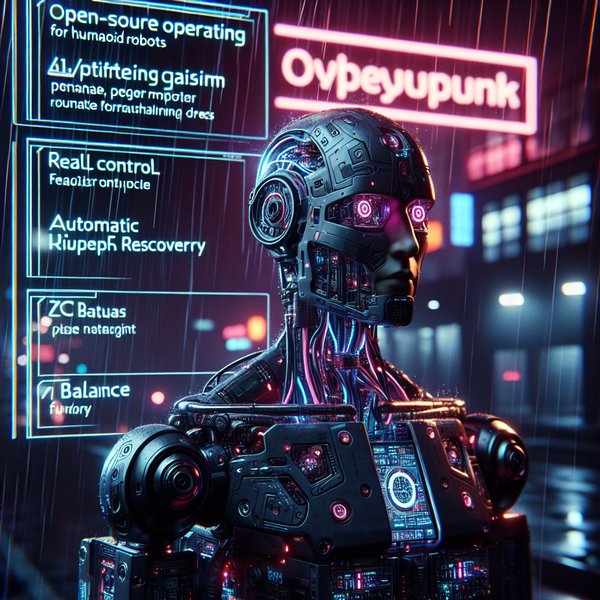
|
|||||
| Hugging Face Launches Reachy Mini Robots for Human-Robot Interaction - … | https://www.infoq.com/news/2025/07/hugg… | 1 | Dec 25, 2025 08:00 | active | |
Hugging Face Launches Reachy Mini Robots for Human-Robot Interaction - InfoQURL: https://www.infoq.com/news/2025/07/hugging-face-reachy/ Description: Hugging Face has launched its Reachy Mini robots, now available for order. Designed for AI developers, researchers, and enthusiasts, the robots offer an exciting opportunity to experiment with human-r Content:
A monthly overview of things you need to know as an architect or aspiring architect. View an example We protect your privacy. Live Webinar and Q&A: A Reference Architecture for Building Trustworthy Agentic AI Systems (Jan 22, 2026) Save Your Seat Facilitating the Spread of Knowledge and Innovation in Professional Software Development Unlock the full InfoQ experience by logging in! Stay updated with your favorite authors and topics, engage with content, and download exclusive resources. Vivek Yadav, an engineering manager from Stripe, shares his experience in building a testing system based on multi-year worth of data. He shares insights into why Apache Spark was the choice for creating such a system and how it fits in the "traditional" engineering practices. As AI evolves from tool to collaborator, architects must shift from manual design to meta-design. This article introduces the "Three Loops" framework (In, On, Out) to help navigate this transition. It explores how to balance oversight with delegation, mitigate risks like skill atrophy, and design the governance structures that keep AI-augmented systems safe and aligned with human intent. Jade Abbott discusses the shift from massive, resource-heavy models to "Little LMs" that prioritize efficiency and cultural sustainability. She explains how techniques like LoRA, quantization, and GRPO allow for high performance with less compute. By sharing the "Ubuntu Punk" philosophy, she shares how to move beyond extractive data practices toward human-centric, sustainable AI systems. Peter Hunter & Elena Stojmilova share Open GI's journey from a slow, legacy monolith to a cloud-native SaaS platform. They detail how adopting Team Topologies and a decentralized architectural approach empowered teams. Key practices discussed include utilizing Domain-Driven Design to create a Context Map, implementing the Advice Process with Architectural Principles, and more. Lesley Cordero discusses platform engineering as a sociotechnical solution for scaling organizations. She explains the CALMS framework, the "pendulum of tension" between reliability and velocity, and how to transition from reactive to proactive leadership. By focusing on communal learning and distributed power, she shares how to build resilient systems without sacrificing human well-being. Go from AI demos to real engineering impact. Learn to embed LLMs, govern & scale securely. SOLD OUT! Join Luca Mezzalira for this 5-week online cohort. Master socio-technical architecture leadership. Save your spot. Learn what works in AI, architecture, data, security & FinTech. Early Bird ends Jan 13. Learn how leading engineering teams run AI in production—reliably, securely, and at scale. Early Bird ends Jan 13. InfoQ Homepage News Hugging Face Launches Reachy Mini Robots for Human-Robot Interaction This item in japanese Jul 15, 2025 2 min read by Daniel Dominguez Hugging Face has launched its Reachy Mini robots, now available for order. Designed for AI developers, researchers, and enthusiasts, the robots offer an exciting opportunity to experiment with human-robot interaction and AI applications. The Reachy Mini is compact, measuring 11 inches in height and weighing just 3.3 pounds. It comes as a kit that users can assemble themselves, fostering a deeper understanding of the robot’s mechanics. The robot features motorized head and body rotations, animated antennas for expressiveness, and multimodal sensing capabilities, including a camera, microphones, and speakers. These features enable rich AI-powered audio-visual interactions, making Reachy Mini suitable for a wide range of AI development and research tasks. Reachy Mini is fully programmable in Python, with future support for JavaScript and Scratch. The robot integrates with the Hugging Face Hub, which gives users access to over 1.7 million AI models and more than 400,000 datasets. This integration allows users to build, test, and deploy custom AI applications on the robot, making it a versatile tool for AI development. Both versions of Reachy Mini offer a range of capabilities, but the Wireless version includes onboard computing, wireless connectivity, and a battery, while the Lite version requires an external computing source. Regardless of the version, Reachy Mini is designed for accessibility and ease of use, making it ideal for AI enthusiasts, students, and researchers of all skill levels. Hugging Face’s approach to Reachy Mini aligns with its commitment to open-source technology. The robot’s hardware, software, and simulation environments are all open-source, which means that users can extend, modify, and share their own robot behaviors. The community-driven approach encourages innovation and collaboration, with users able to contribute to the growing library of robot behaviors and features. The community feedback reflects enthusiasm, curiosity, and constructive critique, with a focus on its affordability, open-source nature, and potential for AI and robotics development. System design & AI architect Marcel Butucea commented: Reachy Mini robot ships as a DIY kit & integrates w/ their AI model hub! Could this open-source approach, like Linux for robots, democratize robotics dev? Meanwhile Clement Delangue, CEO of Hugging Face posted: Everyone will be able to build all sorts of apps thanks to the integrations with Lerobot & Hugging Face. The Reachy Mini Lite is expected to begin shipping in late summer 2025, with the Wireless version rolling out in batches later in the year. Hugging Face is focused on getting the robots into the hands of users quickly to gather feedback and continuously improve the product. Snowplow enables digital-first companies to turn behavioral data into fuel for real-time advanced analytics, predictive modeling, hyper-personalization, and customer-facing AI agent context. Learn More. A round-up of last week’s content on InfoQ sent out every Tuesday. Join a community of over 250,000 senior developers. View an example We protect your privacy. A round-up of last week’s content on InfoQ sent out every Tuesday. Join a community of over 250,000 senior developers. View an example We protect your privacy. Reliability rules have changed. At QCon London 2026, unlearn legacy patterns and get the blueprints from senior engineers scaling production AI today. Join senior peers from high-scale orgs as they share how they are: InfoQ.com and all content copyright © 2006-2025 C4Media Inc. Privacy Notice, Terms And Conditions, Cookie Policy
Images (1): 
|
|||||
| cTrader Introduces Native Python Supporting More Algo Trading Participants | https://financefeeds.com/ctrader-introd… | 0 | Dec 25, 2025 08:00 | active | |
cTrader Introduces Native Python Supporting More Algo Trading ParticipantsURL: https://financefeeds.com/ctrader-introduces-native-python-supporting-more-algo-trading-participants/ Description: Spotware, the developer of the cTrader multi-asset trading platform has launched an essential update with the introduction of cTrader Windows version 5.4, Content: |
|||||
| GitHub - OpenMind/OM1: Modular AI runtime for robots | https://github.com/OpenMind/OM1 | 1 | Dec 25, 2025 08:00 | active | |
GitHub - OpenMind/OM1: Modular AI runtime for robotsURL: https://github.com/OpenMind/OM1 Description: Modular AI runtime for robots. Contribute to OpenMind/OM1 development by creating an account on GitHub. Content:
We read every piece of feedback, and take your input very seriously. To see all available qualifiers, see our documentation. Modular AI runtime for robots There was an error while loading. Please reload this page. There was an error while loading. Please reload this page. Technical Paper | Documentation | X | Discord OpenMind's OM1 is a modular AI runtime that empowers developers to create and deploy multimodal AI agents across digital environments and physical robots, including Humanoids, Phone Apps, websites, Quadrupeds, and educational robots such as TurtleBot 4. OM1 agents can process diverse inputs like web data, social media, camera feeds, and LIDAR, while enabling physical actions including motion, autonomous navigation, and natural conversations. The goal of OM1 is to make it easy to create highly capable human-focused robots, that are easy to upgrade and (re)configure to accommodate different physical form factors. To get started with OM1, let's run the Spot agent. Spot uses your webcam to capture and label objects. These text captions are then sent to the LLM, which returns movement, speech and face action commands. These commands are displayed on WebSim along with basic timing and other debugging information. You will need the uv package manager. For MacOS For Linux Obtain your API Key at OpenMind Portal. Copy it to config/spot.json5, replacing the openmind_free placeholder. Or, cp env.example .env and add your key to the .env. Run After launching OM1, the Spot agent will interact with you and perform (simulated) actions. For more help connecting OM1 to your robot hardware, see getting started. Note: This is just an example agent configuration. If you want to interact with the agent and see how it works, make sure ASR and TTS are configured in spot.json5. OM1 assumes that robot hardware provides a high-level SDK that accepts elemental movement and action commands such as backflip, run, gently pick up the red apple, move(0.37, 0, 0), and smile. An example is provided in src/actions/move/connector/ros2.py: If your robot hardware does not yet provide a suitable HAL (hardware abstraction layer), traditional robotics approaches such as RL (reinforcement learning) in concert with suitable simulation environments (Unity, Gazebo), sensors (such as hand mounted ZED depth cameras), and custom VLAs will be needed for you to create one. It is further assumed that your HAL accepts motion trajectories, provides battery and thermal management/monitoring, and calibrates and tunes sensors such as IMUs, LIDARs, and magnetometers. OM1 can interface with your HAL via USB, serial, ROS2, CycloneDDS, Zenoh, or websockets. For an example of an advanced humanoid HAL, please see Unitree's C++ SDK. Frequently, a HAL, especially ROS2 code, will be dockerized and can then interface with OM1 through DDS middleware or websockets. OM1 is developed on: OM1 should run on other platforms (such as Windows) and microcontrollers such as the Raspberry Pi 5 16GB. We're excited to introduce full autonomy mode, where four services work together in a loop without manual intervention: From research to real-world autonomy, a platform that learns, moves, and builds with you. We'll shortly be releasing the BOM and details on DIY for it. Stay tuned! Clone the following repos - To start all services, run the following commands: Setup the API key For Bash: vim ~/.bashrc or ~/.bash_profile. For Zsh: vim ~/.zshrc. Add Update the docker-compose file. Replace "unitree_go2_autonomy_advance" with the agent you want to run. More detailed documentation can be accessed at docs.openmind.org. Please make sure to read the Contributing Guide before making a pull request. This project is licensed under the terms of the MIT License, which is a permissive free software license that allows users to freely use, modify, and distribute the software. The MIT License is a widely used and well-established license that is known for its simplicity and flexibility. By using the MIT License, this project aims to encourage collaboration, modification, and distribution of the software. Modular AI runtime for robots There was an error while loading. Please reload this page. There was an error while loading. Please reload this page. There was an error while loading. Please reload this page. There was an error while loading. Please reload this page.
Images (1): 
|
|||||
| Towards development of geometric calibration and dynamic identification methods for … | https://theses.hal.science/tel-05133384… | 1 | Dec 25, 2025 08:00 | active | |
Towards development of geometric calibration and dynamic identification methods for anthropomorphic robots - TEL - Thèses en ligneURL: https://theses.hal.science/tel-05133384v1 Description: This thesis addresses geometric calibration and dynamic identification for anthropomorphic robotic systems, focusing on mobile manipulators and humanoid robots. For the TIAGo mobile manipulator, it introduces a comprehensive approach combining geometric calibration, suspension modeling, and backlash compensation, resulting in a 57% reduction in end-effector positioning RMSE. For the TALOS humanoid, it presents a whole-body calibration method using plane-constrained contacts and the novel IROC algorithm for optimal posture selection. A major contribution is FIGAROH, an open-source Python toolbox for unified calibration and identification across various robotic systems. FIGAROH features automatic generation of optimal calibration procedures, diverse parameter estimation methods, and validation tools. Extensive experiments on TIAGo, TALOS, and other platforms demonstrate significant improvements in accuracy and model fidelity. This research advances robot calibration and ide! ntification, offering theoretical insights and practical tools for a wide range of anthropomorphic systems, with potential applications in industrial and human-robot interaction scenarios. Content:
This thesis addresses geometric calibration and dynamic identification for anthropomorphic robotic systems, focusing on mobile manipulators and humanoid robots. For the TIAGo mobile manipulator, it introduces a comprehensive approach combining geometric calibration, suspension modeling, and backlash compensation, resulting in a 57% reduction in end-effector positioning RMSE. For the TALOS humanoid, it presents a whole-body calibration method using plane-constrained contacts and the novel IROC algorithm for optimal posture selection. A major contribution is FIGAROH, an open-source Python toolbox for unified calibration and identification across various robotic systems. FIGAROH features automatic generation of optimal calibration procedures, diverse parameter estimation methods, and validation tools. Extensive experiments on TIAGo, TALOS, and other platforms demonstrate significant improvements in accuracy and model fidelity. This research advances robot calibration and ide! ntification, offering theoretical insights and practical tools for a wide range of anthropomorphic systems, with potential applications in industrial and human-robot interaction scenarios. Cette thèse aborde la calibration géométrique et l'identification dynamique des systèmes robotiques anthropomorphes, en se concentrant sur les manipulateurs mobiles et les robots humanoïdes. Pour le manipulateur mobile TIAGo, elle propose une approche globale combinant calibration géométrique, modélisation de la suspension et compensation du jeu mécanique, aboutissant à une réduction de 57% de la RMSE du positionnement de l'effecteur. Pour le robot humanoïde TALOS, elle présente une méthode de calibration globale utilisant des contacts plan-contraints et l'algorithme novateur IROC pour la sélection optimale des postures. Une contribution majeure est FIGAROH, un outil open-source en Python pour la calibration et l'identification unifiées à travers divers systèmes robotiques. FIGAROH permet la génération automatique de procédures de calibration optimales, propose diverses méthodes d'estimation de paramètres et des outils de validation. Des expérience! s approfondies sur TIAGo, TALOS et d'autres plateformes démontrent des améliorations significatives en précision et en fidélité des modèles. Cette recherche fait progresser la calibration et l'identification des robots, offrant des perspectives théoriques et des outils pratiques pour une large gamme de systèmes anthropomorphes, avec des applications potentielles dans les domaines industriels et d'interaction humain-robot. Connectez-vous pour contacter le contributeur https://laas.hal.science/tel-05133384 Soumis le : jeudi 5 juin 2025-16:45:43 Dernière modification le : mercredi 22 octobre 2025-18:04:09 Archivage à long terme le : samedi 6 septembre 2025-19:05:39 Contact Ressources Informations Questions juridiques Portails CCSD
Images (1): 
|
|||||
| 7 Ways Python Is Powering the Next Wave of Robotics … | https://python.plainenglish.io/7-ways-p… | 0 | Dec 25, 2025 08:00 | active | |
7 Ways Python Is Powering the Next Wave of Robotics InnovationDescription: There’s a lot of hype in robotics. Everyone wants to talk about humanoids doing backflips or robot dogs that can dance. But what most people miss is the quiet... Content: |
|||||
| Florida deploys robot rabbits to control invasive Burmese python population … | https://www.cbsnews.com/news/burmese-py… | 1 | Dec 25, 2025 08:00 | active | |
Florida deploys robot rabbits to control invasive Burmese python population - CBS NewsURL: https://www.cbsnews.com/news/burmese-pythons-robot-rabbits-florida-invasive-species/ Description: Burmese pythons pose a huge threat to native species in the Florida Everglades. Officials have used creative methods to manage the population of invasive snakes. Content:
Watch CBS News August 28, 2025 / 12:11 PM EDT / CBS/AP They look, move and even smell like the kind of furry Everglades marsh rabbit a Burmese python would love to eat. But these bunnies are robots meant to lure the giant invasive snakes out of their hiding spots. It's the latest effort by the South Florida Water Management District to eliminate as many pythons as possible from the Everglades, where they are decimating native species with their voracious appetites. In Everglades National Park, officials say the snakes have eliminated 95% of small mammals as well as thousands of birds. "Removing them is fairly simple. It's detection. We're having a really hard time finding them," said Mike Kirkland, lead invasive animal biologist for the water district. "They're so well camouflaged in the field." The water district and University of Florida researchers deployed 120 robot rabbits this summer as an experiment. Previously, there was an effort to use live rabbits as snake lures but that became too expensive and time-consuming, Kirkland said. The robots are simple toy rabbits, but retrofitted to emit heat, a smell and to make natural movements to appear like any other regular rabbit. "They look like a real rabbit," Kirkland said. They are solar powered and can be switched on and off remotely. They are placed in small pens monitored by a video camera that sends out a signal when a python is nearby. "Then I can deploy one of our many contractors to go out and remove the python," Kirkland said. The total cost per robot rabbit is about $4,000, financed by the water district, he added. Pythons are not native to Florida. The population of the species exploded in the mid-90s, when they were imported into Florida as exotic pets. Since then, they have become established in the swampy, subtropical Everglades by escaping from homes or by people releasing them when they become too large. Hurricane Andrew also exacerbated the problem: The 1992 storm toppled a reptile breeding facility and freed the snakes living there. A female python can lay between 50 and 100 eggs at a time with a gestation period of 60-90 days, according to the Florida Fish and Wildlife Conservation Commission. When fully grown, the snakes average between 10 and 16 feet in length. In 2023, a record-breaking 19-foot-long snake was caught by a Florida duo. The snakes are not venomous and generally do not attack people or pets, but they pose a threat to native species. The snakes eat birds, rabbits, raccoons, deer and even alligators. Burmese pythons have no natural predators. In 2022, a video showed a python defending its nest from a bobcat. It's not easy to find definite estimates of the number of pythons in Florida. The U.S. Geological Survey recently reported a ballpark number of "tens of thousands," while other official estimates run as high as 300,000 snakes. Scientists have warned that climate change may make the entire United States hospitable to the species by 2050. Since 2000, more than 23,000 of the snakes have been removed from the wild, the wildlife commission says. "Every invasive python that is removed makes a difference for Florida's environment and its native wildlife," said Ron Bergeron, a member of the water district governing board. Pythons can be humanely killed year-round on private lands and on lands managed by the wildlife commission across the state. Each year the commission holds a "Florida Python Challenge" that carries cash prizes for most pythons caught, the longest snake and so forth. This year, nearly a thousand people from 30 states took part in the July event. Florida resident Taylor Stanberry took home the top prize, winning $10,000 for catching 60 snakes. Hunters removed 294 snakes in total. The state also operates a Python Elimination Program, which employs up to 50 people to hunt and remove the snakes. Donna Kalil, one of the paid hunters, told CBS Miami that she has caught over 1,000 Burmese pythons. "I know I'm making a difference. I know every single python that's removed is making a positive difference," Kalil told CBS Miami. It's too early to determine how successful the robot rabbit project will be, but officials say initial results are a cause for optimism. "This part of the project is in its infancy," Kirkland said. "We are confident, though, that this will work once we are given enough time to work out some of these details." © 2025 CBS Interactive Inc. All Rights Reserved. This material may not be published, broadcast, rewritten, or redistributed. The Associated Press contributed to this report. (01:02) Copyright ©2025 CBS Interactive Inc. All rights reserved.
Images (1): 
|
|||||
| How to Learn Python for Robotics | https://careerkarma.com/blog/python-for… | 1 | Dec 25, 2025 08:00 | active | |
How to Learn Python for RoboticsURL: https://careerkarma.com/blog/python-for-robotics/ Description: This guide contains useful resources and tips to help you to learn everything you need to know about Python for robotics. Content:
Explore your training options and get exclusive tuition discounts Get Started Back When it comes to robotics, Python is one of the most useful and popular languages used. This language is most commonly used to design embedded systems in industrial robots. One of the main reasons this programming language is a key player in robotics is because of its Robot Operating System (ROS) that eases the entire process for developers. Some of the strengths for robot programming with Python include software like Raspberry Pi and Arduino, which make robotic engineering easier than ever before. If you want to pursue a career in robotics, it is necessary to learn Python for your field. This guide will provide insight on how you can use Python for robotics. Python is still one of the most popular programming languages, today. This high-level open-source language doubles as a general-purpose language, and can also be used for complex machine code and low-level hardware for a robot framework. Python stands out as one of the top languages for robotics due to its beginner-friendly nature and ease of use. You can embed Python into different applications and also use it on various operating systems such as Windows, Mac, general-purpose, and Linux. When it comes to ease of use and speed of coding, it beats other programming languages such as C++ and JavaScript. Python is also a scripting language used for coding websites, prototype development, image processing, and scientific data. Its open-sourced nature makes it popular among developers and data scientists. Python is used for developing and testing robots. It is one of the best languages in robotics because of how easily it can teach, automate, and process robot programs. Professionals choose it because it eases the process of writing a script that records, calculates, and stimulates a physical robot program, which eliminates the need for manual programming. Compared to other programming languages such as Java, C++, and C, Python lets you write fewer lines of code. It is used to design embedded systems and offers libraries to handle basic functions. The libraries are free, so you don’t need to reinvent the wheel. Generally, it saves you time and lets you focus on other aspects of your job. Learning Python for robotics can take a few weeks to several months, depending on your exact use. However, this also depends on your learning method and prior experience. Coding bootcamps and online courses are quick and effective ways to become proficient in Python robotics. College programs are also extremely effective, but more time-consuming. There are so many reasons to learn Python for robotics, but one of the primary reasons is to enter the machine learning industry. The machine learning industry continues to grow as technology advances. Below you’ll find more details as to why you should learn Python for robotics. Artificial intelligence is the next innovation in the tech space. This technology makes it possible for machines to mimic the human brain. It can analyze, think, and even make decisions. Libraries like TensorFlow and Keras allow AI development without being programmed explicitly. There are also other Python libraries such as OpenCV for image recognition or computer vision. Python is well-known as a programming language, but it also doubles as a scripting language. Scripting involves writing a code script form and executing it. The machine usually reads the code and interprets it while error-checking commences during runtime. When the code has been checked, you can use it more than once. Python has portable and extensible properties that let you perform Ross language operations with ease. Several platforms support this programming language in the industry, including Solaris, Windows, Linux, Macintosh, and PlayStation. It is easy to integrate languages like Java and .NET components while also invoking C++ and C libraries. Some of the main ways to learn Python for robotics include coding bootcamps, online courses, and books. The first two methods are instructor guided while the last one is self-taught. The learning method you choose depends on how well you assimilate information. Below you’ll find details of different learning options to help you determine which one is right for you. Coding bootcamps offer intensive Python training for anyone in the robotics field. It is a flexible learning environment with hands-on training to ensure that you understand each module thoroughly. You can choose to attend remotely or in person, without compromising on the quality of your training. Online courses are one of the most popular and effective ways to learn Python for robotics. You can find some of the best courses on platforms like Coursera, edX, Udemy, and Udacity. Each of these providers offers theoretical learning with lots of hands-on training. Although books may seem old-fashioned, they’re actually a great self-learning method for Python engineering. You can find Python books on Amazon and other online platforms. Most websites provide hard copy and ebook options to accommodate a variety of readers. You can also look at book stores like Barnes and Noble. Python libraries are valuable in removing the need to write codes from scratch. So far, there are over 137,000 libraries for different purposes. Robotics has its own share of libraries that make it easier to work. Some of the most popular programming libraries for robotics are listed below. Learning Python for robotics can be easy if you have a structured curriculum and learning program. It will also be easier if you have clear-cut goals that you want to meet. Here are the steps you can follow to learn Python for robotics. Motivation is an essential factor in learning Python for robotics. At first, it may be challenging to start learning Python techniques, so you must motivate yourself to push past any challenges that may occur. Before you begin your project, develop your learning goals and your primary reason for learning Python. Every learning method starts with the fundamentals because you need a basic understanding before moving forward. You’ll want to start by learning data types such as strings, float, and int, as well as compound data structures like dictionaries, tuples, and lists. You will also need to learn about loops, conditionals, and functions. After learning the fundamentals of Python, the next step is to get hands-on practice. The best way to do this is to work on Python projects. Since Python has a large community, you can always get pointers to help you while creating projects. Work on a structured robotics project that other programmers have worked on before. Working on projects alone can only get you so far, so consider taking on pair programming projects, as well. Pair programming involves a pair of programmers working together to complete one task. Both programmers take turns as navigators and drivers. The navigator guides and reviews codes, while the driver writes them. Throughout the process, they switch places. Hands-on practice is a continuous process required to learn Python for robotics. If you have mastered the basics and worked on some beginner projects, you need to work on advanced projects of your own. If you are up for a challenge, you can volunteer to provide solutions for robotics or simply come up with something unique. Python is a versatile programming language for robotics. It has an extensive library that can make your work much easier. Since Python is easy to read and write, it doesn’t take long to learn. It is also free to use to work on as many projects as needed to master Python for robotics. About us: Career Karma is a platform designed to help job seekers find, research, and connect with job training programs to advance their careers. Learn about the CK publication. Your email address will not be published. Required fields are marked * Δ Explore your training options and get exclusive tuition discounts
Images (1): 
|
|||||
| 10 Ways Python Is Quietly Powering the AI Revolution | https://blog.stackademic.com/10-ways-py… | 0 | Dec 25, 2025 08:00 | active | |
10 Ways Python Is Quietly Powering the AI RevolutionDescription: 10 Ways Python Is Quietly Powering the AI Revolution Behind the scenes of every breakthrough You think AI is all about robots writing poems, generating code, or... Content: |
|||||
| 9 Python Features I Wish I Knew Sooner | https://medium.com/@abdul.ahadmahmood55… | 0 | Dec 25, 2025 08:00 | active | |
9 Python Features I Wish I Knew SoonerURL: https://medium.com/@abdul.ahadmahmood555/9-python-features-i-wish-i-knew-sooner-0ba80db88e19 Description: The biggest “Aha!” moments in Python don’t come when you learn about loops or data types. They come months or even years into your journey — when you ra... Content: |
|||||
| Florida deploys robot rabbits to fight invasive Burmese python overpopulation … | https://nypost.com/2025/07/27/us-news/f… | 1 | Dec 25, 2025 08:00 | active | |
Florida deploys robot rabbits to fight invasive Burmese python overpopulation | New York PostDescription: A water management district in Florida's Everglades is using robot rabbits to help monitor and remove its ever-growing population of the invasive Burmese python that has wreaked havoc on native animals. Content:
Night of the Robbits! A water management district in Florida’s Everglades is using robot rabbits to help monitor and eventually eliminate its ever-growing population of invasive Burmese pythons that have wreaked havoc on native animals. The solar-powered rabbits were let loose into the Everglades shortly after the annual Florida Python Challenge, a 10-day competition that draws hundreds of eager snake wranglers to hunt the invasive reptiles. The robot bunnies, while cartoonish in appearance, are equipped with an artificial intelligence-powered camera that alerts officials with the South Florida Water Management District when they spot a python. From there, someone will be dispatched to remove the snake, according to a news release. The robots were designed to mimic real rabbits’ movements and include mechanics to imitate a live one’s heat signature and scent, which pythons hone in on when hunting real-life bunnies. The invasive pythons can measure as long as 18 feet in length and are capable of swallowing an entire deer whole. It’s unclear how the robot rabbits may stack up against the pythons, or how many the district may lose to the reptiles’ appetites. The Burmese python, a non native species to the United States, was first recorded in the Sunshine State in the 1990s. Since then, its population has skyrocketed exponentially, though officials aren’t sure what the precise count is. More than 19,000 pythons have been removed from the Everglades since 2000, according to Fox Weather Service. Others have been either killed or removed during promoted events like the Florida Python Challenge. Last year’s winner wiped out a staggering 20 pythons and clinched the $10,000 grand prize. The species is exempted from the state’s animal protection legislation — except for the anti-cruelty law — and can be humanely killed year-round with or without a hunting permit or license, according to the Florida Fish and Wildlife Conservation Commission. Still, the python’s domination is clear when looking at the damage other species in the Everglades have suffered. The populations of raccoons and possums, two easy prey for the gargantuan reptiles, have almost been entirely eradicated from the area, with just 1% or 2% left intact, according to a 2012 study by the United States Geological Survey. Advertisement
Images (1): 
|
|||||
| How to Learn Python in 2026 | A Step-By-Step Guide | https://www.dataquest.io/blog/learn-pyt… | 1 | Dec 25, 2025 08:00 | active | |
How to Learn Python in 2026 | A Step-By-Step GuideURL: https://www.dataquest.io/blog/learn-python-the-right-way/ Description: Discover the most effective way to learn Python with insights from Dataquest founder Vik Paruchuri. Start your coding journey the right way! Content:
When I first tried to learn Python, I spent months memorizing rules, staring at errors, and questioning whether coding was even right for me. Almost every beginner hits this wall, and most Python courses are part of the problem. They force you to memorize syntax for weeks before you ever get to build anything interesting. I know because I went through it myself. I sat through boring lectures, read books that put me to sleep, and followed Python exercises that felt pointless. All I wanted was to jump straight into building websites, experimenting with AI, or analyzing data. No matter how hard I tried, Python felt like an alien language. That's why so many beginners give up before seeing results. Thankfully, there's a better way to learn Python, and I'm going to teach you. Over the past decade, I went from having a history degree and zero coding experience to becoming a machine learning engineer, data science consultant, and founder of Dataquest. This guide condenses everything I've learned into five simple steps that get you coding fast, with less memorization and more doing. Let's get started. Learning Python is much easier when you’re excited about what you’re building. Motivation turns long hours into enjoyable progress. I remember struggling to stay awake while memorizing basic syntax as a beginner. But when I started a project I actually cared about, I could code for hours without noticing the time. The key takeaway? Focus on what excites you. Pick one or two areas of Python that spark your curiosity and dive in. Here are some broad areas where Python shines. Think about which ones interest you most: Begin with the essential Python syntax. Learn just enough to get started, then move on. A couple of weeks is usually enough, no more than a month. Most beginners spend too much time here and get frustrated. This is why many people quit. Here are some great resources to learn the basics without getting stuck: Most people pick up the rest naturally as they work on projects they enjoy. Focus on the basics, then let your projects teach you the rest. You’ll be surprised how much you learn just by doing. Want to skip the trial-and-error and learn from hands-on projects? Browse our Python learning paths designed for beginners who want to build real skills fast. Once you’ve learned the basic syntax, start doing Python projects. Using what you’ve learned right away helps you remember it. It’s better to begin with structured or guided projects until you feel comfortable enough to create your own. Here are some fun examples from Dataquest. Which one excites you? You don’t need to start in a specific place. Let your interests guide you. Are you interested in general data science or machine learning? Do you want to build something specific, like an app or website? Here are some recommended resources for inspiration, organized by category: Projects are where most real learning happens. They challenge you, keep you motivated, and help you build skills you can show to employers. Once you’ve done a few structured projects, you’ll be ready to start your own projects. Once you’ve done a few structured projects, it’s time to take it further. Working on your own projects is the fastest way to learn Python. Start small. It’s better to finish a small project than get stuck on a huge one. A helpful statement to remember: progress comes from consistency, not perfection. It can feel tricky to come up with ideas. Here are some ways to find interesting projects: 1. Data Science and Machine Learning 2. Mobile Apps 3. Website Projects 4. Python Game Projects 5. Hardware / Sensors / Robots Projects 6. Data Processing and Analysis Projects 7. Work Automation Projects The key is to pick one project and start. Don’t wait for the perfect idea. My first independent project was adapting an automated essay-scoring algorithm from R to Python. It wasn’t pretty, but finishing it gave me confidence and momentum. Running into problems and getting stuck is part of the learning process. Don’t get discouraged. Here are some resources to help: As you succeed with independent projects, start tackling harder and bigger projects. Learning Python is a process, and momentum is key. Once you feel confident with your current projects, find new ones that push your skills further. Keep experimenting and learning. This is how growth happens. Learning Python is a journey. By breaking it into stages, you can progress from a complete beginner to a job-ready Python developer without feeling overwhelmed. Here’s a practical roadmap you can follow: Start by understanding Python’s core syntax and fundamentals. At this stage, it’s less about building complex projects and more about getting comfortable with the language. During these first weeks, focus on: By the end of this stage, you should feel confident writing small programs and understanding Python code you read online. Now that you know the basics, it’s time to apply them. Guided projects help you see how Python works in real scenarios, reinforcing concepts through practice. Try projects such as: Along the way: By completing these projects, you’ll gain confidence in building functional programs and using Python in practical ways. Once you’ve mastered guided projects, start designing your own. Independent projects are where real growth happens because they require problem-solving, creativity, and research. Ideas to get started: Tips for success: By the end of this stage, you’ll have projects you can show to employers or share online. With a few projects under your belt, it’s time to focus on the area you’re most interested in. Specialization allows you to deepen your skills and prepare for professional work. Steps to follow: At this stage, your portfolio should start reflecting your specialization and show a clear progression in your skills. Now it’s time to put your skills to work. Whether you’re aiming for a full-time job, freelancing, or contributing to open-source projects, your experience matters. Focus on: Remember: Python is a lifelong skill. Momentum comes from consistency, curiosity, and practice. Even seasoned developers are always learning. Wondering what the best way to learn Python is? The truth is, it depends on your learning style. However, there are proven approaches that make the process faster, more effective, and way more enjoyable. Whether you learn best by following tutorials, referencing cheat sheets, reading books, or joining immersive bootcamps, there’s a resource that will help you stay motivated and actually retain what you learn. Below, we’ve curated the top resources to guide you from complete beginner to confident Python programmer. Most online Python courses rely heavily on video lectures. While these can be informative, they’re often boring and don’t give you enough practice. Dataquest takes a completely different approach. With our courses, you start coding from day one. Instead of passively watching someone else write code, you learn by doing in an interactive environment that gives instant feedback. Lessons are designed around projects, so you’re applying concepts immediately and building a portfolio as you go. The key difference? With Dataquest, you’re not just watching. You’re building, experimenting, and learning in context. If you like learning at your own pace, our Python tutorials are perfect. They cover everything from writing functions and loops to using essential libraries like Pandas, NumPy, and Matplotlib. Plus, you’ll find tutorials for automating tasks, analyzing data, and solving real-world problems. Even the best coders need quick references. Our Python cheat sheet is perfect for keeping the essentials at your fingertips: Think of it as your personal Python guide while coding. You can also download it as a PDF to have a handy reference anytime, even offline. Books are great if you prefer in-depth explanations and examples you can work through at your own pace. For those who want a fully immersive experience, Python bootcamps can accelerate your learning. Mix and match these resources depending on your learning style. By combining hands-on courses, tutorials, cheat sheets, books, and bootcamps, you’ll have everything you need to go from complete beginner to confident Python programmer without getting bored along the way. Learning Python from scratch can feel overwhelming at first, but a few practical strategies can make the process smoother and more enjoyable. Here are some tips to help you stay consistent, motivated, and effective as you learn: Consistency beats cramming. Even dedicating 30–60 minutes a day to coding will reinforce your understanding faster than occasional marathon sessions. Daily practice helps concepts stick and makes coding feel natural over time. Don’t wait until you “know everything.” Start building small projects from the beginning. Even simple programs, like a calculator or a to-do list app, teach you more than memorizing syntax ever will. Projects also keep learning fun and tangible. Large problems can feel intimidating. Break them into manageable steps and tackle them one at a time. This approach helps you stay focused and reduces the feeling of being stuck. Mistakes are part of learning. Try changing code, testing new ideas, and intentionally breaking programs to see what happens. Each error is a lesson in disguise and helps you understand Python more deeply. Explore [open-source projects](https://pypi.org/), tutorials, and sample code. Seeing how others structure programs, solve problems, and write functions gives you new perspectives and improves your coding style. Writing down key concepts, tips, and tricks helps reinforce learning. Notes can be a quick reference when you’re stuck, and they also provide a record of your progress over time. Interactive platforms and exercises help you learn by doing, not just by reading. Immediate feedback on your code helps you understand mistakes and internalize solutions faster. Set realistic goals for each session or week. Completing these small milestones gives a sense of accomplishment and keeps motivation high. Regularly review your past projects and exercises. Reflecting on what you’ve learned helps solidify knowledge and shows how far you’ve come, which is especially motivating for beginners. Learning Python is exciting, but beginners often stumble on the same issues. Knowing these common mistakes ahead of time can save you frustration and keep your progress steady. Python isn’t just another programming language. It’s one of the most versatile and beginner-friendly languages out there. Learning Python can open doors to countless opportunities, whether you want to advance your career, work on interesting projects, or just build useful tools for yourself. Here’s why Python is so valuable: Python’s versatility makes it a tool for many different fields. Some examples include: Python is one of the most widely used programming languages across industries, which means learning it can significantly enhance your career prospects. Companies in tech, finance, healthcare, research, media, and even government rely on Python to build applications, analyze data, automate workflows, and power AI systems. Knowing Python makes you more marketable and opens doors to a variety of exciting, high-demand roles, including: Even outside technical roles, Python gives you a huge advantage. Automate tasks, analyze data, or build internal tools, and you’ll stand out in almost any job. Learning Python isn’t just about a language; it’s about gaining a versatile, in-demand, and future-proof skill set. Python’s readability and simplicity make it easier to pick up other programming languages later. It also helps you understand core programming concepts that transfer to any technology or framework. In short, learning Python gives you tools to solve problems, explore your interests, and grow your career. No matter what field you’re in. Python is always evolving. No one fully masters it. That means you will always be learning and improving. Six months from now, your early code may look rough. That is a sign you are on the right track. If you like learning on your own, you can start now. If you want more guidance, our courses are designed to help you learn fast and stay motivated. You will write code within minutes and complete real projects in hours. If your goal is to build a career as a business analyst, data analyst, data engineer, or data scientist, our career paths are designed to get you there. With structured lessons, hands-on projects, and a focus on real-world skills, you can go from complete beginner to job-ready in a matter of months. Now it is your turn. Take the first step! Yes. Python is the most popular programming language, and its popularity has never been higher. As of October 2025, it ranks #1 on the TIOBE Programming Community index: Even with the rise of AI tools changing how people code, Python remains one of the most useful programming languages in the world. Many AI tools and apps are built with Python, and it’s widely used for machine learning, data analysis, web development, and automation. Python has also become a “glue language” for AI projects. Developers use it to test ideas, build quick prototypes, and connect different systems. Companies continue to hire Python developers, and it’s still one of the easiest languages for beginners to learn. Even with all the new AI trends, Python isn’t going away. It’s actually become even more important and in-demand than ever. If you want a quick answer: you can learn the basics of Python in just a few weeks. But if you want to get a job as a programmer or data scientist, it usually takes about 4 to 12 months to learn enough to be job-ready. (This is based on what students in our Python for Data Science career path have experienced.) Of course, the exact time depends on your background and how much time you can dedicate to studying. The good news is that it may take less time than you think, especially if you follow an effective learning plan. Yes! LLMs can be helpful tools for learning Python. You can use it to get explanations of concepts, understand error messages, and even generate small code examples. It gives quick answers and instant feedback while you practice. However, LLMs work best when used alongside a structured learning path or course. This way, you have a clear roadmap and know which topics to focus on next. Combining an LLM with hands-on coding practice will help you learn faster and remember more. Python is considered one of the easiest programming languages for beginners. Its syntax is clean and easy to read (almost like reading English) which makes it simple to write and understand code. That said, learning any programming language takes time and practice. Some concepts, like object-oriented programming or working with data libraries, can be tricky at first. The good news is that with regular practice, tutorials, and small projects, most learners find Python easier than they expected and very rewarding. Yes, you can! Many people successfully teach themselves Python using online resources. The key is to stay consistent, practice regularly, and work on small projects to apply what you’ve learned. While there are many tutorials and videos online, following a structured platform like Dataquest makes learning much easier. Dataquest guides you step-by-step, gives hands-on coding exercises, and tracks your progress so you always know what to learn next. About the author Vik is the founder of Dataquest and is currently building open source AI tools and models. Learn data skills 10x faster Join 1M+ learners Enroll for free
Images (1): 
|
|||||
| Improvisational Machines: Live Coding Industrial Robots | https://www.creativeapplications.net/ed… | 0 | Dec 25, 2025 08:00 | active | |
Improvisational Machines: Live Coding Industrial RobotsDescription: Organised and led by Madeline Gannon, Improvisational Machines is a workshop that brings live coding, dynamic interfaces, and flexible workflows into industrial... Content: |
|||||
| the two – Is it possible for robots to fall … | https://www.creativeapplications.net/me… | 0 | Dec 25, 2025 08:00 | active | |
the two – Is it possible for robots to fall in love?Description: Two robotic arms with cameras, connected to computers running deep neural networks, are trained to recognize and track each other as they move independently. Content: |
|||||
| Can Robots Run on Python? Is Exploring the Future of … | https://medium.com/@ravendrakumar22000/… | 0 | Dec 25, 2025 08:00 | active | |
Can Robots Run on Python? Is Exploring the Future of Automation a Good Idea?Description: Can Robots Run on Python? Is Exploring the Future of Automation a Good Idea? When we think of robots these days, we often imagine complex machines powered by cu... Content: |
|||||
| Deep Reinforcement Learning in Natural Language Understanding | https://www.freecodecamp.org/news/deep-… | 1 | Dec 24, 2025 16:00 | active | |
Deep Reinforcement Learning in Natural Language UnderstandingURL: https://www.freecodecamp.org/news/deep-reinforcement-learning-in-natural-language-understanding/ Description: Language is messy, subtle, and full of meaning that shifts with context. Teaching machines to truly understand it is one of the hardest problems in artificial intelligence. That challenge is what natural language understanding (NLU) sets out to solve... Content:
Language is messy, subtle, and full of meaning that shifts with context. Teaching machines to truly understand it is one of the hardest problems in artificial intelligence. That challenge is what natural language understanding (NLU) sets out to solve. From voice assistants that follow instructions to support systems that interpret user intent, NLU sits at the core of many real-world AI applications. Most systems today are trained using labeled data and supervised techniques. But there's growing interest in something more adaptive: deep reinforcement learning (DRL). Instead of learning from fixed examples, DRL allows a model to improve through trial, error, and feedback, much like a person learning through experience. This article looks at where DRL fits into the modern NLU landscape. We'll explore how it's being used to fine-tune responses, guide conversation flow, and align models with human values. Overview of Deep Reinforcement Learning What is Natural Language Understanding (NLU)? Challenges in NLU and How to Address Them Where DRL Adds Value in NLU Modern Architectures in NLU from BERT to Claude The Niche Role of DRL in Modern NLU Reinforcement Learning from Human Feedback (RLHF) Ecosystem and Tools for DRL in NLP Hands-On Demo: Simulating DRL Feedback in NLU Case Studies of DRL in NLU Wrapping Up Reinforcement learning is a subfield of machine learning. It’s inspired by behavioral psychology, in which agents learn to maximize cumulative rewards by performing behaviors in a given environment. Traditionally, reinforcement learning techniques have been used to solve simple problems with discrete state and action spaces. But the development of deep learning has opened the door to applying these techniques to more complicated, high-dimensional environments, like computer vision, natural language processing (NLP), and robotics. DRL uses deep neural networks to approximate complex functions that translate observations into actions, allowing agents to learn from raw sensory data. Deep neural networks, which represent knowledge in numerous layers of abstraction, may catch detailed patterns and relationships in data, allowing for more effective decision-making. Imagine you’re playing a video game where you’re controlling a character, and your goal is to get the highest score possible. Now, when you first start playing, you might not know the best way to play, right? You might try different things like jumping, running, or shooting, and you see what works and what doesn’t. We can think of DRL as a technique that enables computers or robots to learn how to play video games as time goes on. DRL involves a computer learning from its environment, learning from its experiences and mistakes. The computer, like the player, tries different actions and receives feedback based on its performance. If it performs well, it gets rewards, while if it fails, it gets a penalty. The computer’s job is to figure out the best possible actions to take in different situations to maximize rewards. Instead of learning from trial and error, DRL uses deep neural networks, which are like super-smart brains that can understand vast amounts of data and patterns. These neural networks help the computer make better decisions in the future, and over time, it can become even better at playing the game – sometimes even better than humans. Image Source NLU is a subfield of artificial intelligence (AI), and its aim is to help computers understand, interpret, and respond to human language in meaningful ways. It involves creating algorithms and models that can process and analyze text to extract meaningful information, determine the intent behind it, and provide appropriate replies. NLU is a basic part of many AI applications, such as chatbots, virtual assistants, and personalized recommendation systems, which require the ability to interpret and respond to human language. Its key components include: Text processing: NLU systems must be able to process and interpret text, which includes tokenization (cutting it down into words or phrases), part-of-speech tagging, and named entity recognition. Sentiment analysis: Identifying the sentiment communicated in a piece of text (positive, negative, or neutral) is a common task in NLU. Intent recognition: Identifying the goal or objective of a user’s input, such as buying a flight or requesting weather forecasts. Language generation: (technically part of Natural Language Generation, or NLG): While NLU focuses on understanding text, NLG is about producing coherent, contextually appropriate text. Many AI systems combine both, first interpreting the input through NLU, then generating an appropriate response using NLG. Entity extraction: Identifying and categorizing essential details in the text, such as dates, locations, and people. NLU aims to help machines interpret, understand, and respond to human language in ways that make sense. While it has made great progress, there are still challenges that limit how well it works in practice. Below are some of these challenges and how Deep Reinforcement Learning (DRL) can play a supportive role. DRL is not a replacement for large-scale pretraining or instruction tuning, but it can complement them by helping models adapt through interaction and feedback. Naturally, words can have more than one meaning, and a single sentence or phrase might be understood in different ways. This makes it hard for NLU systems to always pinpoint what the speaker or writer intends. DRL can help reduce ambiguity by allowing models to learn from feedback. If a certain interpretation gets positive results, the model can prioritize it. If not, it can try a different approach. While this does not remove ambiguity entirely, it can improve a model’s ability to make better choices over time, especially when combined with a strong pretrained foundation. Understanding language often depends on context such as cultural references, sarcasm, or the tone behind certain words. These are straightforward for people but challenging for machines to recognize. By learning from interaction signals such as whether a user is satisfied with a response, DRL can help a model adapt to context more effectively. However, the core ability to understand context still comes from large-scale pretraining. DRL mainly fine-tunes and adjusts this behavior during use. Human language comes in many forms including different dialects, slang, colloquialisms, and regional expressions. This variety can challenge NLU systems that have not seen enough examples of these patterns during training. With DRL, models can adapt to new language styles when exposed to them repeatedly in real-world use. This makes them more flexible and responsive, although their base understanding still relies on the diversity of the data used during pretraining. As text data continues to grow, NLU systems must be able to process large volumes quickly and efficiently, especially in real-time applications such as chatbots and virtual assistants. DRL can contribute by helping models optimize certain processing steps through trial and feedback. While it will not replace architectural or infrastructure improvements, it can help fine-tune performance for specific high-traffic tasks. Training advanced NLU models is resource-intensive, which can be a challenge for mobile devices, edge computing, or other resource-limited environments. DRL can make the learning process more efficient by reusing past experiences through techniques such as off-policy learning and reward modeling. Combined with smaller, distilled model architectures, this can make it easier to deploy capable NLU systems even with limited computing power. DRL is not a primary training method for most NLU models. Its main value comes when interaction, feedback, or rewards can be used to improve how a system behaves after it has already been pretrained. When applied selectively, DRL can help refine and personalize model performance in ways that matter for specific use cases. Here are some areas where DRL has shown potential: Dialogue systems DRL can help chatbots and virtual assistants manage conversations more smoothly. It can be used to refine turn-taking, handle vague questions in a better way, or adjust responses to improve user satisfaction during longer conversations. Text summarization Most summarization models rely on supervised learning. DRL can be added as a fine-tuning step to focus on factors such as relevance or fluency, especially when custom reward signals are linked to specific goals or user preferences. Response generation and language modeling DRL can guide language generation toward outputs that are more useful, aligned with user intent, or better suited to certain tone and safety requirements. Reward-based optimization in parsing or classification In certain cases, DRL has been used to improve outputs based on downstream objectives such as increasing label confidence or enhancing the quality of supporting explanations, alongside accuracy. Interactive machine translation DRL can help translation systems adapt over time by learning from reinforcement signals like human corrections or post-editing feedback, leading to gradual improvements in quality. In short, DRL works best as a targeted enhancement. It is not used to build general-purpose NLU systems from scratch, but it can make existing systems more adaptable, aligned, and responsive when feedback loops are part of the application. Early NLU systems used Recurrent Neural Networks (RNNs) and Convolutional Neural Networks (CNNs), but most modern systems use transformers. These models use a mechanism called self-attention to capture long-range dependencies. Self-attention allows each word to “attend” to every other word in the input, assigning weights that determine relevance for understanding the current word. Long-range dependencies occur when the meaning of one word depends on another far away in the text (like linking “he” to “the president” from earlier sentences). This helps maintain context over large spans of text. Here’s how the main types of transformer models are used today: Examples: BERT, RoBERTa, ALBERT, DeBERTa These models process text input and create rich contextual representations without generating new text. They are excellent for classification, entity extraction, and tasks that require understanding rather than producing language. The encoder reads the whole input and encodes it into a vector representation, which is then used by a task-specific head for predictions. They're often fine-tuned for specific tasks and perform especially well in structured language understanding. Examples: T5, FLAN-T5 These models have two components: an encoder that reads and encodes the input text, and a decoder that generates an output sequence based on that encoded representation. They are ideal for sequence-to-sequence tasks such as summarization, translation, and instruction following. The encoder captures the meaning of the input, while the decoder produces coherent output in the target form. They’re flexible and particularly useful in multi-task learning setups Examples: GPT-4, Claude 3, Gemini These models generate text one token at a time, predicting the next token based on all previous tokens in the sequence. They excel in open-ended text generation, creative writing, and reasoning tasks. Because they are trained to predict the next word given any context, they can perform many tasks simply by being prompted, without additional training. They’re typically aligned with human preferences using techniques like Reinforcement Learning from Human Feedback (RHLF). These models are now widely used in real-world applications, such as chatbots, enterprise tools, and multilingual digital assistants, and many can handle new tasks with just a prompt, requiring no additional training. DRL is not a general-purpose solution for most NLU challenges, such as handling ambiguity or understanding context. These problems are typically addressed using large-scale pretraining and supervised or instruction-based fine-tuning. That said, DRL still plays a valuable role in specific areas where feedback and long-term optimization are useful. It is commonly applied in: Improving dialogue strategy: DRL helps conversational agents manage turn-taking, adjust tone, and adapt to user preferences across multiple interactions. Aligning model behavior using RLHF: Reinforcement learning from human feedback (RLHF – more on this below) uses DRL to train models that respond in ways people find more helpful, safe, or contextually appropriate. Reward modeling for alignment and safety: DRL enables the training of reward models that guide language systems toward ethical, culturally aware, or domain-specific behavior. Looking ahead, DRL is likely to grow in importance for applications that involve real-time interaction, long-horizon reasoning, or agent-driven workflows. For now, it serves as a targeted enhancement alongside more widely used training methods. Let’s talk a bit more about RLHF, as it’s pretty important here. It’s also currently the primary way DRL is applied in large-scale language models such as GPT‑4, Claude, and Gemini. It works in three main steps: Reward model training – Human annotators rank model outputs for the same prompt. These rankings are used to train a reward model that scores outputs based on how helpful, safe, or relevant they are. Policy optimization – Using algorithms such as PPO (Proximal Policy Optimization), the base language model is fine-tuned to maximize the reward model’s score. Iteration and safety – RLHF loops are often combined with safety-focused reward modeling, constitutional AI (following explicit guidelines for safe behavior), refusal strategies for harmful requests, and red‑teaming to probe weaknesses. Data‑efficient variants are increasingly common, such as offline RL, replay buffers, and leveraging implicit feedback like click‑through logs. In practice, RLHF has significantly improved the ability of models to follow instructions, avoid harmful outputs, and align with human values. If you're looking to explore DRL in NLU, you don't have to start from scratch. There’s a solid ecosystem of tools that make it easier to test ideas, build prototypes, and fine-tune models using rewards and feedback. Here are a few go-to libraries: trl by Hugging Face: A lightweight framework built specifically for applying reinforcement learning to transformer models. It's widely used for RLHF, reward modeling, and steering model outputs based on human preferences. Stable-Baselines3: A simple, well-documented library for classic DRL algorithms like PPO, A2C, and DQN. It’s great for testing DRL setups in smaller or custom environments. RLlib (part of Ray): Designed for scaling up. If you're working on distributed training or combining DRL with larger pipelines, RLlib helps manage the complexity. These libraries pair well with open-source large language models like LLaMA, Mistral, Gemma, and Command R+. Together, they give you everything you need to experiment with DRL-backed language systems, whether you're tuning responses in a chatbot or building a reward model for alignment. You don’t need a full reinforcement learning pipeline to understand reward signals. This notebook demonstrates how you can simulate preference-based feedback using GPT-3.5. Users interact with the model, provide binary feedback (good or bad), and the system logs each interaction with a corresponding reward. It mirrors the principles behind techniques like RLHF. First, you’ll need to install the required packages and set up your API key. What this does: Installs and loads required libraries Reads your OpenAI key from an environment variable or prompts for it interactively Now, try sending a prompt and seeing what response you get: What this does: Uses OpenAI’s GPT-3.5 to generate a response Handles errors if the API call fails You can now track user responses and simulated reward signals like this: This code initializes a list to store logs of each interaction. Now you can capture the prompt, display the response, and accept feedback. What this does: Shows GPT-3.5’s response to the user’s prompt Displays feedback buttons Logs reward and shows feedback history You can also visualize reward trends: This plots the user’s reward signals over time to simulate policy shaping. You can also allow users to type and submit prompts. This sets up a simple form to collect prompts and connects the generate button to the main interaction logic. This gives the output: This demo captures the fundamentals of preference-based learning using GPT-3.5. It doesn’t update model weights but shows how feedback can be structured as a reward signal. This is the foundation of reinforcement learning in modern LLM pipelines. Note: This demo only logs feedback. In true RLHF, a second phase fine-tunes the model weights based on it. A real-world example of this is InstructGPT. This is a version of OpenAI’s GPT models that’s trained to follow instructions written by people. Instead of just predicting the next word, it tries to really figure out and then do what you’ve asked, the way you asked it. Despite being over 100× smaller than GPT-3, InstructGPT was preferred by humans in 85% of blind comparisons. And one of the key reasons was that is uses RLHF. This made it safer, more truthful, and better at following complex instructions, showing how reward signals like the one simulated here can greatly improve real-world model performance. While DRL is not the default approach for most NLU tasks, it has shown promising results in targeted use cases, especially where learning from interaction or adapting over time adds value. Below are a few examples that illustrate how DRL can enhance language understanding in practice: A global e-commerce platform partnered with Welocalize to launch a DRL-powered multilingual NLU system capable of interpreting customer intent across 30+ languages and domains. This system used reinforcement learning to adapt to cultural nuances and refine predictions through user interaction. Over 13 million high-quality utterances delivered for culturally adaptive, accurate customer support and product recommendations. Researchers introduced a framework called RLLR (Reinforcement Learning with Label-Sensitive Reward) to improve NLU tasks like sentiment classification, topic labeling, and intent detection. By incorporating label-sensitive reward signals and optimizing via Proximal Policy Optimization (PPO), the model aligned its predictions with both rationale quality and true label accuracy. These examples show how DRL, when paired with specific feedback signals or interactive goals, can be a useful layer on top of traditional NLU systems. Though still niche, the approach continues to evolve through research and industry experimentation. The integration of DRL with NLU has shown promising results in niche but growing areas. Adaptive learning through various interactions and feedback allows DRL to enhance NLU models’ ability to handle ambiguity, context, and linguistic differences. As research progresses, the link between DRL and NLU is expected to drive advancements in AI-powered language applications, making them more efficient, scalable, and context-aware. I hope this was helpful! Python developer Studying Mechanical Engineering Machine Learning enthusiast If this article was helpful, share it. Learn to code for free. freeCodeCamp's open source curriculum has helped more than 40,000 people get jobs as developers. Get started freeCodeCamp is a donor-supported tax-exempt 501(c)(3) charity organization (United States Federal Tax Identification Number: 82-0779546) Our mission: to help people learn to code for free. We accomplish this by creating thousands of videos, articles, and interactive coding lessons - all freely available to the public. Donations to freeCodeCamp go toward our education initiatives, and help pay for servers, services, and staff. You can make a tax-deductible donation here.
Images (1): 
|
|||||
| Reinforcement Learning: Core Concepts for Complete Beginners | https://medium.com/@weijunmingjeremy/re… | 0 | Dec 24, 2025 16:00 | active | |
Reinforcement Learning: Core Concepts for Complete BeginnersDescription: Imagine you’re teaching a puppy to fetch a ball. You throw the ball, and when the puppy brings it back, you reward it with a treat. Over time, the puppy learn... Content: |
|||||
| Reinforcement learning for single-agent to multi-agent systems: from basic theory … | https://link.springer.com/article/10.10… | 1 | Dec 24, 2025 16:00 | active | |
Reinforcement learning for single-agent to multi-agent systems: from basic theory to industrial application progress, a survey | Artificial Intelligence ReviewDescription: Reinforcement learning (RL), as an emerging interdisciplinary field formed by the integration of artificial intelligence and control science, is currently Content:
Advertisement You have full access to this open access article 278 Accesses Explore all metrics We are providing an unedited version of this manuscript to give early access to its findings. Before final publication, the manuscript will undergo further editing. Please note there may be errors present which affect the content, and all legal disclaimers apply. Reinforcement learning (RL), as an emerging interdisciplinary field formed by the integration of artificial intelligence and control science, is currently demonstrating a cross-disciplinary development trend led by artificial intelligence and has become a research hotspot in the field of optimal control. This paper systematically reviews the development context of RL, focusing on the intrinsic connection between single-agent reinforcement learning (SARL) and multi-agent reinforcement learning (MARL). Firstly, starting from the formation and development of RL, it elaborates on the similarities and differences between RL and other learning paradigms in machine learning, and briefly introduces the main branches of current RL. Then, with the basic knowledge and core ideas of SARL as the basic framework, and expanding to multi-agent system (MAS) collaborative control, it explores the coherence characteristics of the two in theoretical frameworks and algorithm design. On this basis, this paper reconfigures SARL algorithms into dynamic programming, value function decomposition and policy gradient (PG) type, and abstracts MARL algorithms into four paradigms: behavior analysis, centralized learning, communication learning and collaborative learning, thus establishing an algorithm mapping relationship from single-agent to multi-agent scenarios. This innovative framework provides a new perspective for understanding the evolutionary correlation of the two methods, and also discusses the challenges and solution ideas of MARL in solving large-scale MAS problems. This paper aims to provide a reference for researchers in this field, and to promote the development of cooperative control and optimization methods for MAS as well as the advancement of related application research. Avoid common mistakes on your manuscript. No datasets were generated or analysed during the current study. Agrawal R, Imieliński T, Swami A (1993) Mining association rules between sets of items in large databases. In: Proceedings of the 1993 ACM SIGMOD international conference on Management of data, pp 207–216 Ahad A, Tahir M, Sheikh MAS, et al (2021) Optimal route selection in 5G-based smart health-care network: a reinforcement learning approach. In: 2021 26th IEEE Asia-Pacific conference on communications (APCC), pp 248–253 Alelaiwi A (2020) Resource allocation management in patient-to-physician communications based on deep reinforcement learning in smart healthcare services. In: 2020 IEEE International conference on multimedia & expo workshops (ICMEW), pp 1–5 Anderson JR (1983) Machine learning: an artificial intelligence approach, vol 2. Morgan Kaufmann, Burlington Google Scholar Arthur D, Vassilvitskii S (2007) K-means++: the advantages of careful seeding. In: Proceedings of the eighteenth annual ACM-SIAM symposium on discrete algorithms, vol 1, pp 1027–1035 Asha Rani GS, Lal Priya PS, Jayan J et al (2024) Data-driven energy management of an electric vehicle charging station using deep reinforcement learning. IEEE Access 12:65956–65966 Google Scholar Bai H, Shen R, Lin Y et al (2024) Lamarckian platform: pushing the boundaries of evolutionary reinforcement learning toward asynchronous commercial games. IEEE Trans Games 16(1):51–63 Google Scholar Bellman R (1957a) A Markovian decision process. J Math Mech 6(5):679–684 Google Scholar Bellman RE (1957b) Dynamic programming. Princeton University Press, Princeton Google Scholar Bertsekas DP (2011) Approximate policy iteration: a survey and some new methods. J Control Theory Appl 9(3):310–335 Google Scholar Bertsekas D (2012) Dynamic programming and optimal control, vol 4. Athena scientific, Nashua Google Scholar Breiman L (2001) Random forests. Mach Learn 45(1):5–32 Google Scholar Cao H, Xiong H, Zeng W et al (2024) Safe reinforcement learning-based motion planning for functional mobile robots suffering uncontrollable mobile robots. IEEE Trans Intell Transp Syst 25(5):4346–4363 Google Scholar Castañeda AO (2016) Deep reinforcement learning variants of multi-agent learning algorithms. PhD thesis, University of Edinburgh, Edinburgh Chapelle O, Scholkopf B, Zien A (2009) Semi-supervised learning (chapelle, O. et al., eds.; 2006) [book reviews]. IEEE Trans Neural Netw 20(3):542–542 Google Scholar Chen H, Luo H, Huang B et al (2023) Transfer learning-motivated intelligent fault diagnosis designs: a survey, insights, and perspectives. IEEE Trans Neural Netw Learning Syst 35(3):2969–2983 Google Scholar Chen W, Yang S, Li W et al (2024) Learning multi-intersection traffic signal control via coevolutionary multi-agent reinforcement learning. IEEE Trans Intell Transp Syst 25(11):15947–15963 Google Scholar Chen J, Zhu B, Zhang M et al (2025) Multi-agent deep reinforcement learning cooperative control model for autonomous vehicle merging into platoon in highway. World Electr Veh J 16(4):225 Google Scholar Diprasetya MR, Pullani AN, Schwung A (2024) Sim-to-real transfer for robotics using model-free curriculum reinforcement learning. In: 2024 IEEE international conference on industrial technology (ICIT), pp 1–6 Drudi C, Fechner M, Mollura M et al (2024) Reinforcement learning for heart failure treatment optimization in the intensive care unit. In: 2024 46th annual international conference of the IEEE Engineering in Medicine and Biology Society (EMBC), pp 1–4 Foerster JN, Assael YM, de Freitas N et al (2016) Learning to communicate with deep multi-agent reinforcement learning. In: Proceedings of the 30th international conference on neural information processing systems, Barcelona, pp 2145–2153 Foerster J, Farquhar G, Afouras T et al (2017) Counterfactual multi-agent policy gradients. arXiv:1705.08926 Fukushima K, Miyake S, Ito T (1983) Neocognitron: a neural network model for a mechanism of visual pattern recognition. IEEE Trans Syst Man Cybern 13(5):826–834 Google Scholar Gauss CF (1809) Theoria Motus Corporum Coelestium in Sectionibus Conicis Solem Ambientium. Perthes et Besser, Hamburg Google Scholar Geranmayeh P, Grass E (2025) Optimization of beamforming and transmit power using DGN and comparison with traditional techniques. IEEE Access 13:94275–94285 Google Scholar Geurts P, Irrthum A, Wehenkel L (2009) Supervised learning with decision tree-based methods in computational and systems biology. Mol BioSyst 5(12):1593–1605 Google Scholar Gong J, Yu N, Han F et al (2024) Energy scheduling optimization for microgrids based on partially observable Markov game. IEEE Trans Artif Intell 5(11):5371–5380 Google Scholar Guan H (2020) Analysis on deep reinforcement learning in industrial robotic arm. In: 2020 international conference on intelligent computing and human–computer interaction (ICHCI), pp 426–430 Guan H, Gao Y, Zhao M et al (2022) Ab-mapper: attention and bicnet based multi-agent path planning for dynamic environment. In: 2022 IEEE/RSJ international conference on intelligent robots and systems (IROS), IEEE, pp 13799–13806 Gui J, Chen T, Zhang J et al (2024) A survey on self-supervised learning: algorithms, applications, and future trends. IEEE Trans Pattern Anal Mach Intell 46(12):9052–9071 Google Scholar Han J, Pei J, Yin Y (2000) Mining frequent patterns without candidate generation. ACM SIGMOD Rec 29(2):1–12 Google Scholar Hausknecht MJ, Stone P (2015) Deep recurrent Q-learning for partially observable MDPs. In: AAAI fall symposia, p 141 Hosmer DW, Lemeshow S (2000) Applied logistic regression. Wiley, Hoboken Google Scholar Hou Y, Zhao J, Zhang R et al (2024) UAV swarm cooperative target search: a multi-agent reinforcement learning approach. IEEE Trans Intell Veh 9(1):568–578 Google Scholar Hu B, Gong Y, Liang X et al (2024) Safe deep reinforcement learning-based real-time multi-energy management in combined heat and power microgrids. IEEE Access 12:193581–193593 Google Scholar Huang Z, van der Aalst W, Lu X et al (2011) Reinforcement learning based resource allocation in business process management. Data Knowl Eng 70(1):127–145 Google Scholar Iqbal S, Sha F (2018) Actor-attention-critic for multi-agent reinforcement learning. arXiv:1810.02912 Iskandar A, Rostum HM, Kovács B (2023) Using deep reinforcement learning to solve a navigation problem for a swarm robotics system. In: 2023 24th international Carpathian control conference (ICCC), pp 185–189 Isla-Cernadas D, Fernández-Delgado M, Cernadas E et al (2025) Closed-form gaussian spread estimation for small and large support vector classification. IEEE Trans Neural Netw Learn Syst 36(3):4336–4344 Google Scholar Jiang Q, Qin M, Zhang H et al (2024) Blindlight: high robustness reinforcement learning method to solve partially blinded traffic signal control problem. IEEE Trans Intell Transp Syst 25(11):16625–16641 Google Scholar Jiang Y, Di K, Qian R et al (2025) Optimizing risk-aware task migration algorithm among multiplex UAV groups through hybrid attention multi-agent reinforcement learning. Tsinghua Sci Technol 30(1):318–330 Google Scholar Jordan MI, Kearns MJ, Solla SA (1998) Advances in neural information processing systems. In: proceedings of the 1997 conference, vol 10. MIT Press Kaloev M, Krastev G (2023) Comprehensive review of benefits from the use of neuron connection pruning techniques during the training process of artificial neural networks in reinforcement learning: experimental simulations in atari games. In: 2023 7th International symposium on multidisciplinary studies and innovative technologies (ISMSIT), pp 1–6 Karimi S, Asadi S, Payberah AH (2024) Bazigooshi: a hybrid model of reinforcement learning for generalization in gameplay. IEEE Trans Games 16(3):722–734 Google Scholar Kell AJM, Forshaw M, Stephen McGough A (2020) Exploring market power using deep reinforcement learning for intelligent bidding strategies. In: 2020 IEEE international conference on big data (big data), pp 4402–4411 Kim S (2023) Learning and game based spectrum allocation model for internet of medical things (IOMT) platform. IEEE Access 11:48059–48068 Google Scholar Kim D, Moon S, Hostallero D et al (2019) Learning to schedule communication in multi-agent reinforcement learning. arXiv:1902.01554 Kiran BR, Sobh I, Talpaert V et al (2022) Deep reinforcement learning for autonomous driving: a survey. IEEE Trans Intell Transpl Syst 23(6):4909–4926 Google Scholar Kobren A, Monath N, Krishnamurthy A et al (2017) A hierarchical algorithm for extreme clustering. In: Proceedings of the 23rd ACM SIGKDD international conference on knowledge discovery and data mining, pp 255–264 Lagoudakis MG, Parr R (2003) Least-squares policy iteration. J Mach Learn Res 4(Dec):1107–1149 Google Scholar Lance GN, Williams WT (1967) A general theory of classificatory sorting strategies: 1. Hierarchical systems. Comput J 9(4):373–380 Google Scholar Li M, Zhou ZH (2007) Improve computer-aided diagnosis with machine learning techniques using undiagnosed samples. IEEE Trans Syst Man Cybern-Part A 37(6):1088–1098 Google Scholar Li K, Hu Q, Liu Q et al (2024a) A predefined-time consensus algorithm of multi-agent system for distributed constrained optimization. IEEE Trans Netw Sci Eng 11(1):957–968 Google Scholar Li X, Yang Y, Yuan Z et al (2024b) Progression cognition reinforcement learning with prioritized experience for multi-vehicle pursuit. IEEE Trans Intell Transp Syst 25(8):10035–10048 Google Scholar Lillicrap TP, Hunt JJ, Pritzel A et al (2015) Continuous control with deep reinforcement learning. arXiv:1509.02971 Lin M, Zhao B, Liu D (2025) Optimal learning output tracking control: a model-free policy optimization method with convergence analysis. IEEE Trans Neural Netw Learn Syst 36(3):5574–5585 Google Scholar Littman ML (1994) Markov games as a framework for multi-agent reinforcement learning. In: Machine learning proceedings 1994. Elsevier, pp 157–163 Liu Y, Wang Q (2022) Game confrontation of 5v5 multi-agent based on Mappo reinforcement learning algorithm. In: 2022 37th youth academic annual conference of chinese association of automation (YAC), pp 1395–1398 Liu D, Wei Q (2013) Policy iteration adaptive dynamic programming algorithm for discrete-time nonlinear systems. IEEE Trans Neural Netw Learning Syst 25(3):621–634 Google Scholar Liu D, Wei Q (2014) Policy iteration adaptive dynamic programming algorithm for discrete-time nonlinear systems. IEEE Trans Neural Netw Learn Syst 25(3):621–634 Google Scholar Liu D, Wei Q, Wang D et al (2017) Adaptive dynamic programming with applications in optimal control. Springer, Cham Google Scholar Liu D, Xue S, Zhao B et al (2021a) Adaptive dynamic programming for control: a survey and recent advances. IEEE Trans Syst Man Cybern Syst 51(1):142–160 Google Scholar Liu X, Zhang F, Hou Z et al (2021b) Self-supervised learning: generative or contrastive. IEEE Trans Knowl Data Eng 35(1):857–876 Google Scholar Liu D, Dou L, Zhang R et al (2023) Multi-agent reinforcement learning-based coordinated dynamic task allocation for heterogenous UAVs. IEEE Trans Veh Technol 72(4):4372–4383 Google Scholar Liu B, Han W, Wang E et al (2024) An efficient message dissemination scheme for cooperative drivings via cooperative hierarchical attention reinforcement learning. IEEE Trans Mob Comput 23(5):5527–5542 Google Scholar Lloyd SP (1982) Least squares quantization in PCM. IEEE Trans Inf Theory 28(2):129–137 Google Scholar Lu R, Jiang Z, Yang T et al (2024) A novel hybrid-action-based deep reinforcement learning for industrial energy management. IEEE Trans Ind Inf 20(10):12461–12475 Google Scholar Ma Z, Liu X, Huang Y (2024) Unsupervised reinforcement learning for multi-task autonomous driving: expanding skills and cultivating curiosity. IEEE Trans Intell Transpl Syst 25(10):14209–14219 Google Scholar Malathy V, Al-Jawahry HM, GKM et al (2024) A reinforcement learning method in cooperative multi-agent system for production control system. In: 2024 international conference on data science and network security (ICDSNS), pp 1–4 Marden JR, Arslan G, Shamma JS (2009) Cooperative control and potential games. IEEE Trans Syst Man Cybern B 39(6):1393–1407 Google Scholar Markov AA (1906) Extension of the law of large numbers to dependent quantities. Izv Fiz-Matem Obsch Kazan Univ 15(1):135–156 Google Scholar Ministry of Industry and Information Technology of the People’s Republic of China (2024) Notice on issuing the national comprehensive standardization system construction guidelines for the artificial intelligence industry (2024 edition). https://www.miit.gov.cn/zwgk/zcwj/wjfb/tz/art/2024/art_e8ebf5600ec24d3db644150873712c5f.html Minsky M (2007) Steps toward artificial intelligence. Proc IRE 49(1):8–30 Google Scholar Mnih V, Kavukcuoglu K, Silver D et al (2015) Human-level control through deep reinforcement learning. Nature 518(7540):529–533 Google Scholar Mnih V, Kavukcuoglu K, Silver D et al (2013) Playing Atari with deep reinforcement learning. arXiv:1312.5602 Mnih V, Badia AP, Mirza M et al (2016) Asynchronous methods for deep reinforcement learning. In: International conference on machine learning, PmLR, pp 1928–1937 Mocanu E, Mocanu DC, Nguyen PH et al (2019) On-line building energy optimization using deep reinforcement learning. IEEE Trans Smart Grid 10(4):3698–3708 Google Scholar Neftci EO, Averbeck BB (2019) Reinforcement learning in artificial and biological systems. Nat Mach Intell 1(3):133–143 Google Scholar Noaro G, Zhu T, Cappon G et al (2023) A personalized and adaptive insulin bolus calculator based on double deep q-learning to improve type 1 diabetes management. IEEE J Biomed Health Inform 27(5):2536–2544 Google Scholar Park JS, Chen MS, Yu PS (1995) An effective hash-based algorithm for mining association rules. ACM SIGMOD Rec 24(2):175–186 Google Scholar Pearson K (1901) Liii. On lines and planes of closest fit to systems of points in space. Lond Edinburgh Dublin Philos Mag J Sci 2(11):559–572 Google Scholar Peng P, Yuan Q, Wen Y et al (2017) Multiagent bidirectionally-coordinated nets for learning to play Starcraft combat games. arXiv:1703.10069 Prudencio RF, Maximo MR, Colombini EL (2023) A survey on offline reinforcement learning: taxonomy, review, and open problems. IEEE Trans Neural Netw Learn Syst 35(8):10237–57 Google Scholar Qi L, Sun Y, Luan W (2024) Large-scale traffic signal control based on multi-agent q-learning and pressure. IEEE Access 12:1092–1101 Google Scholar Qin C, Qiao X, Wang J et al (2024) Barrier-critic adaptive robust control of nonzero-sum differential games for uncertain nonlinear systems with state constraints. IEEE Trans Syst Man Cybern Syst 54(1):50–63 Google Scholar Qin C, Hou S, Pang M et al (2025a) Reinforcement learning-based secure tracking control for nonlinear interconnected systems: an event-triggered solution approach. Eng Appl Artif Intell 161:112243 Google Scholar Qin C, Jiang K, Wang Y et al (2025b) Event-triggered H∞ control for unknown constrained nonlinear systems with application to robot arm. Appl Math Model 144:116089 Google Scholar Qin C, Ran X, Zhang D (2025c) Unsupervised image stitching based on generative adversarial networks and feature frequency awareness algorithm. Appl Soft Comput 183:113466 Google Scholar Qu G, Wu H, Li R et al (2021) DMRO: a deep meta reinforcement learning-based task offloading framework for edge-cloud computing. IEEE Trans Netw Serv Manage 18(3):3448–3459 Google Scholar Rashid T, Samvelyan M, Schroeder C et al (2018) Qmix: monotonic value function factorisation for deep multi-agent reinforcement learning. In: International conference on machine learning, PMLR, pp 4295–4304 Rashid T, Farquhar G, Peng B et al (2020) Weighted qmix: expanding monotonic value function factorisation for deep multi-agent reinforcement learning. In: Advances in neural information processing systems, pp 10199–10210 Rattal S, Badri A, Moughit M et al (2025) Ai-driven optimization of low-energy IoT protocols for scalable and efficient smart healthcare systems. IEEE Access 13:48401–48415 Google Scholar Rawat RS, Rana DS (2023) Implementation of reinforcement learning and imaging for better decision-making in the medical sector. In: 2023 IEEE 8th international conference for convergence in technology (I2CT), pp 1–4 Ren Y, Zhang H, Du L et al (2024) Stealthy black-box attack with dynamic threshold against Marl-based traffic signal control system. IEEE Trans Ind Inf 20(10):12021–12031 Google Scholar Rosenblatt F (1958) The perceptron: a probabilistic model for information storage and organization in the brain. Psychol Rev 65(6):386–408 Google Scholar Rummery GA, Niranjan M (1994) On-line Q-learning using connectionist systems, vol 37. University of Cambridge, Department of Engineering, Cambridge Google Scholar Saeed AK, Holguin F, Yasin AS et al (2024) Multi-agent and multi-target reinforcement learning for satellite sensor tasking. In: 2024 IEEE aerospace conference, pp 1–13 Schubert E, Sander J, Ester M et al (2017) DBSCAN revisited, revisited: why and how you should (still) use DBSCAN. ACM Trans Database Syst (TODS) 42(3):1–21 Google Scholar Schütz HJ, Kolisch R (2012) Approximate dynamic programming for capacity allocation in the service industry. Eur J Oper Res 218(1):239–250 Google Scholar Schwung A, Schwung D, Abdul Hameed MS (2019a) Cooperative robot control in flexible manufacturing cells: centralized vs. distributed approaches. In: 2019 IEEE 17th international conference on industrial informatics (INDIN), pp 233–238 Schwung D, Schwung A, Ding SX (2019b) Actor-critic reinforcement learning for energy optimization in hybrid production environments. Int J Comput 18(4):360–371 Google Scholar Schwung D, Schwung A, Ding SX (2022) Distributed self-optimization of modular production units: a state-based potential game approach. IEEE Trans Cybern 52(4):2174–2185 Google Scholar Shang C, Fu L, Xiao H et al (2024) Joint optimization of power generation and voyage scheduling in ship power system based on operating scene clustering and multitask deep reinforcement learning. IEEE Trans Transp Electr 10(4):8432–8442 Google Scholar Shen X, Zhang X, Wang Y (2021) Kernel temporal difference based reinforcement learning for brain machine interfaces. In: 2021 43rd annual international conference of the IEEE engineering in medicine & biology society (EMBC), pp 6721–6724 Shi B, Yuan H, Shi R (2018) Pricing cloud resource based on multi-agent reinforcement learning in the competing environment. In: 2018 IEEE Intl conf on parallel & distributed processing with applications, ubiquitous computing & communications, big data & Cloud computing, social computing & networking, sustainable computing & communications (ISPA/IUCC/BDCloud/SocialCom/SustainCom), pp 462–468 Silver D, Lever G, Heess N et al (2014) Deterministic policy gradient algorithms. In: International conference on machine learning, PMLR, pp 387–395 Singh A, Jain T, Sukhbaatar S (2019) Learning when to communicate at scale in multiagent cooperative and competitive tasks. In: 7th international conference on learning representations, ICLR 2019, New Orleans, LA, USA Skinner BF (1956) A case history in scientific method. Am Psychol 11(5):221–233 Google Scholar Skinner BF (1958) Reinforcement today. Am Psychol 13(3):94–99 Google Scholar Son K, Kim D, Kang WJ et al (2019) QTRAN: learning to factorize with transformation for cooperative multi-agent reinforcement learning. In: International conference on machine learning, PMLR, pp 5887–5896 Son K, Kim D, Kang WJ et al (2020) Qtran++: improved value transformation for cooperative multi-agent reinforcement learning. arXiv:2006.12010 Sui F, Yue W, Zhang Z et al (2023) Trial-and-error learning for mems structural design enabled by deep reinforcement learning. In: 2023 IEEE 36th international conference on micro electro mechanical systems (MEMS), pp 503–506 Sukhbaatar S, Fergus R (2016) Learning multiagent communication with backpropagation. In: Proceedings of the 29th conference on neural information processing systems, NIPS, Barcelona, pp 2252–2260 Sun C, Mu C (2020) Some key scientific problems in multi-agent deep reinforcement learning. Acta Automatica Sinica 46(7):1301–1312 Google Scholar Sun Z, Zhou Y, Tang S et al (2024) Noise suppression zeroing neural network for online solving the time-varying inverse kinematics problem of four-wheel mobile manipulators with external disturbances. Artif Intell Rev 57(8):211 Google Scholar Sunehag P, Lever G, Gruslys A et al (2017) Value-decomposition networks for cooperative multi-agent learning. arXiv:1706.05296 Sutton RS (1988) Learning to predict by the methods of temporal differences. Mach Learn 3:9–44 Google Scholar Sutton R, Barto A (1998) Reinforcement learning: an introduction. IEEE Trans Neural Netw 9(5):1054–1054 Google Scholar Sutton RS, McAllester D, Singh S et al (1999) Policy gradient methods for reinforcement learning with function approximation. Adv Neural Inf Process Syst 12:1–7 Google Scholar Tamar A, Wu Y, Thomas G et al (2016) Value iteration networks. Advances in neural information processing systems 29 Tampuu A, Matiisen T, Kodelja D et al (2017) Multiagent cooperation and competition with deep reinforcement learning. PLoS ONE 12(4):e0172395 Google Scholar Tan M (1993) Multi-agent reinforcement learning: independent vs. cooperative agents. In: Proceedings of the tenth international conference on machine learning, pp 330–337 Uc-Cetina V, Navarro-Guerrero N, Martin-Gonzalez A et al (2023) Survey on reinforcement learning for language processing. Artif Intell Rev 56(2):1543–1575 Google Scholar Urbanowicz RJ, Moore JH (2009) Learning classifier systems: a complete introduction, review, and roadmap. J Artif Evol Appl 2009:1–25 Google Scholar Van der Maaten L, Hinton G (2008) Visualizing data using t-SNW. J Mach Learn Res 9(11):2579 Google Scholar Van Hasselt H, Guez A, Silver D (2016) Deep reinforcement learning with double q-learning. In: Proceedings of the AAAI conference on artificial intelligence Waltz DL, Fu KS (1965) A heuristic approach to reinforcement learning control systems. IEEE Trans Autom Control 10(4):390–398 Google Scholar Wang Z, Schaul T, Hessel M et al (2016) Dueling network architectures for deep reinforcement learning. arXiv:1511.06521 Wang J, Ren Z, Liu T et al (2020) Qplex: duplex dueling multi-agent q-learning. arXiv:2008.01062 Wang H, Tao J, Peng T et al (2022a) Dynamic inventory replenishment strategy for aerospace manufacturing supply chain: combining reinforcement learning and multi-agent simulation. Int J Prod Res 60(13):4117–4136 Google Scholar Wang L, Zhang Y, Hu Y et al (2022b) Individual reward assisted multi-agent reinforcement learning. In: Proceedings of the 39th international conference on machine learning, ACM Press, Baltimore, pp 23417–23432 Wang D, Gao N, Liu D et al (2024a) Recent progress in reinforcement learning and adaptive dynamic programming for advanced control applications. IEEE/CAA J Autom Sin 11(1):18–36 Google Scholar Wang H, Liu Z, Hu G et al (2024b) Offline meta-reinforcement learning for active pantograph control in high-speed railways. IEEE Trans Ind Inform Wang S, Yue Q, Xu Z et al (2025) A collaborative multi-agent reinforcement learning approach for non-stationary environments with unknown change points. Mathematics 13(11):1738 Google Scholar Watkins CJ, Dayan P (1992) Q-learning. Mach Learn 8:279–292 Google Scholar Wei S, Wang S, Sun S et al (2022) Stock ranking prediction based on an adversarial game neural network. IEEE Access 10:65028–65036 Google Scholar Wen G, Yang T, Zhou J et al (2023) Reinforcement learning and adaptive/approximate dynamic programming: a survey from theory to applications in multi-agent systems. Kongzhi yu Juece/Control Decision 38(5):1200–1230 Google Scholar Wu J, Li D, Yu Y et al (2024) An attention mechanism and adaptive accuracy triple-dependent MADDPG formation control method for hybrid UAVs. IEEE Trans Intell Transpl Syst 25(9):11648–11663 Google Scholar Xia X, Fu X, Zhong S et al (2023) A multi-agent convolution deep reinforcement learning network for aeroengine fleet maintenance strategy optimization. J Manuf Syst 68:410–425 Google Scholar Xing X, Zhou Z, Li Y et al (2024) Multi-UAV adaptive cooperative formation trajectory planning based on an improved MATD3 algorithm of deep reinforcement learning. IEEE Trans Veh Technol 73(9):12484–12499 Google Scholar Xing-Xing L, Yang-He F, Yang M et al (2020) Deep multi-agent reinforcement learning: a survey. Acta Automatica Sinica 46(12):2537–2557 Google Scholar Xu D, Yu Z, Liao X et al (2024) A graph deep reinforcement learning traffic signal control for multiple intersections considering missing data. IEEE Trans Veh Technol 73(12):18307–18319 Google Scholar Xue Y, Chen W (2023) Multi-agent deep reinforcement learning for UAVs navigation in unknown complex environment. IEEE Trans Intell Veh 9(1):2290–2303 Google Scholar Xue S, Luo B, Liu D (2021) Event-triggered adaptive dynamic programming for unmatched uncertain nonlinear continuous-time systems. IEEE Trans Neural Netw Learn Syst 32(7):2939–2951 Google Scholar Xue S, Luo B, Liu D et al (2022) Event-triggered ADP for tracking control of partially unknown constrained uncertain systems. IEEE Trans Cybern 52(9):9001–9012 Google Scholar Xue S, Zhang W, Luo B et al (2025a) Integral reinforcement learning-based dynamic event-triggered nonzero-sum games of USVs. IEEE Trans Cybern 55(4):1706–1716 Google Scholar Xue S, Zhao N, Zhang W et al (2025b) A hybrid adaptive dynamic programming for optimal tracking control of USVs. IEEE Trans Neural Netw Learn Syst 36(6):9961–9969 Google Scholar Xu H, Zuo L, Sun F et al (2022) Low-latency patient monitoring service for cloud computing based healthcare system by applying reinforcement learning. In: 2022 IEEE 8th international conference on computer and communications (ICCC), pp 1373–1377 Yan Z, Kreidieh AR, Vinitsky E et al (2023) Unified automatic control of vehicular systems with reinforcement learning. IEEE Trans Autom Sci Eng 20(2):789–804 Google Scholar Yang Y, Hao J, Chen G et al (2018) Multi-agent soft q-learning. arXiv:1804.04175 Yang Y, Hao J, Chen G et al (2020a) Q-value path decomposition for deep multi-agent reinforcement learning. arXiv:2002.03950 Yang Y, Hao J, Liao B et al (2020b) Qatten: a general framework for cooperative multi-agent reinforcement learning. arXiv:2002.03939 Yang X, Song Z, King I et al (2022a) A survey on deep semi-supervised learning. IEEE Trans Knowl Data Eng 35(9):8934–8954 Google Scholar Yang Q, Wang S, Zhang Q et al (2023) Hundreds guide millions: adaptive offline reinforcement learning with expert guidance. IEEE Trans Neural Netw Learn Syst 35(11):16288–16300 Google Scholar Yu C, Wang X, Xu X et al (2019) Distributed multiagent coordinated learning for autonomous driving in highways based on dynamic coordination graphs. IEEE Trans Intell Transp Syst 21(2):735–748 Google Scholar Yu C, Wang X, Xu X et al (2020) Distributed multiagent coordinated learning for autonomous driving in highways based on dynamic coordination graphs. IEEE Trans Intell Transp Syst 21(2):735–748 Google Scholar Yuan L, Wang J, Zhang F et al (2022) Multi-agent incentive communication via decentralized teammate modeling. In: Proceedings of the 36th AAAI conference on artificial intelligence, AAAI Press, Ottawa, pp 9466–9474 Yu C, Velu A, Vinitsky E et al (2022) The surprising effectiveness of PPO in cooperative multi-agent games. In: Advances in Neural Information Processing Systems, pp 24611–24624 Zhang X, Wang Y (2023) A kernel reinforcement learning decoding framework integrating neural and feedback signals for brain control*. In: 2023 45th annual international conference of the IEEE engineering in medicine & biology society (EMBC), pp 1–4 Zhang ML, Zhou ZH (2011) Cotrade: confident co-training with data editing. IEEE Trans Syst Man Cybern B 41(6):1612–1626 Google Scholar Zhang K, Yang Z, Başar T (2021) Multi-agent reinforcement learning: a selective overview of theories and algorithms. Handbook of reinforcement learning and control pp 321–384 Zhang D, Wang Y, Jiang K et al (2023) Safe optimal robust control of nonlinear systems with asymmetric input constraints using reinforcement learning. Appl Intell 54(1):1–13 Google Scholar Zhang D, Wang Y, Meng L et al (2024) Adaptive critic design for safety-optimal FTC of unknown nonlinear systems with asymmetric constrained-input. ISA Trans 155:309–318 Google Scholar Zhang D, Yu C, Li Z et al (2025) A lightweight network enhanced by attention-guided cross-scale interaction for underwater object detection. Appl Soft Comput 184:113811 Google Scholar Zhang Y, Zhao B, Liu D (2025) Distributed optimal containment control of wheeled mobile robots via adaptive dynamic programming. IEEE Trans Syst Man Cybern Syst 55(9):5876–5886 Google Scholar Zhao F, Hua Y, Zheng H et al (2023a) Cooperative target pursuit by multiple fixed-wing UAVs based on deep reinforcement learning and artificial potential field. In: 2023 42nd Chinese control conference (CCC), pp 5693–5698 Zhao M, Wang D, Qiao J et al (2023b) Advanced value iteration for discrete–time intelligent critic control: a survey. Artif Intell Rev 56(10):12315–12346 Google Scholar Zhao B, Zhang S, Liu D (2025) Self-triggered approximate optimal neuro-control for nonlinear systems through adaptive dynamic programming. IEEE Trans Neural Netw Learn Syst 36(3):4713–4723 Google Scholar Zheng H, Ryzhov IO, Xie W et al (2021) Personalized multimorbidity management for patients with type 2 diabetes using reinforcement learning of electronic health records. Drugs 81:471–482 Google Scholar Zhu H, Vyetrenko S, Dwarakanath K et al (2023a) Once burned, twice shy? The effect of stock market bubbles on traders that learn by experience. In: 2023 Winter simulation conference (WSC), pp 291–302 Zhu Z, Lin K, Jain AK et al (2023b) Transfer learning in deep reinforcement learning: a survey. IEEE Trans Pattern Anal Mach Intell 45(11):13344–13362 Google Scholar Download references This work was supported in part by Nanyang Normal University Foundation of China under Grant (2024PY011), in part by the Key Scientific and Technological Project of the Henan Province under Grant (232102311012, 232102311004), in part by the Key Research Projects Funding Program for Higher Education Institutions of Henan Province under Grant (24A320003), and in part by the Key Medical Science and Technology Research Project of Henan Province under Grant (SBJ202103098, LHGJ20220662). School of Artificial Intelligence, Henan University, North Section of Mingli Road, Zhengzhou, 450046, Henan, China Dehua Zhang, Qingsong Yuan, Lei Meng, Ruixue Xia & Chunbin Qin School of Intelligent Manufacturing and Electrical Engineering (Collaborative Innovation Center of Intelligent Explosion-proof Equipment, Henan Province), Nanyang Normal University, Wolong Road, Nanyang, 473061, Henan, China Wei Liu Search author on:PubMed Google Scholar Search author on:PubMed Google Scholar Search author on:PubMed Google Scholar Search author on:PubMed Google Scholar Search author on:PubMed Google Scholar Search author on:PubMed Google Scholar D.Z. and Q.Y. were responsible for the conception and design of the study and wrote the main manuscript text. L.M. and R.X. participated in the literature review section and provided theoretical support for the manuscript. W.L. prepared the figures and tables and helped write the summary. C.Q. provided the final review and revision of the manuscript. All authors participated in the discussions and reviewed and approved the manuscript content. Correspondence to Wei Liu or Chunbin Qin. The authors declare no conflict of interest. Springer Nature remains neutral with regard to jurisdictional claims in published maps and institutional affiliations. Open Access This article is licensed under a Creative Commons Attribution-NonCommercial-NoDerivatives 4.0 International License, which permits any non-commercial use, sharing, distribution and reproduction in any medium or format, as long as you give appropriate credit to the original author(s) and the source, provide a link to the Creative Commons licence, and indicate if you modified the licensed material. You do not have permission under this licence to share adapted material derived from this article or parts of it. The images or other third party material in this article are included in the article’s Creative Commons licence, unless indicated otherwise in a credit line to the material. If material is not included in the article’s Creative Commons licence and your intended use is not permitted by statutory regulation or exceeds the permitted use, you will need to obtain permission directly from the copyright holder. To view a copy of this licence, visit http://creativecommons.org/licenses/by-nc-nd/4.0/. Reprints and permissions Zhang, D., Yuan, Q., Meng, L. et al. Reinforcement learning for single-agent to multi-agent systems: from basic theory to industrial application progress, a survey. Artif Intell Rev (2025). https://doi.org/10.1007/s10462-025-11439-9 Download citation Received: 29 April 2025 Accepted: 30 October 2025 Published: 27 November 2025 DOI: https://doi.org/10.1007/s10462-025-11439-9 Anyone you share the following link with will be able to read this content: Sorry, a shareable link is not currently available for this article. Provided by the Springer Nature SharedIt content-sharing initiative Avoid common mistakes on your manuscript. Advertisement 178.128.244.209 Not affiliated © 2025 Springer Nature
Images (1): 
|
|||||
| Art of Teaching Robots | https://travellingaloud.medium.com/art-… | 0 | Dec 24, 2025 16:00 | active | |
Art of Teaching RobotsURL: https://travellingaloud.medium.com/art-of-teaching-robots-e9bea10336bd Description: Art of Teaching Robots Let’s talk about the use of AI and it’s use to train those robots, the limbs of the artificial brain. Robots have come a long way, fr... Content: |
|||||
| Why Deep Reinforcement Learning in Trading is Mostly Overfitting | https://tonyhoang-719.medium.com/why-de… | 0 | Dec 24, 2025 16:00 | active | |
Why Deep Reinforcement Learning in Trading is Mostly OverfittingDescription: Why Deep Reinforcement Learning in Trading is Mostly Overfitting Deep Reinforcement Learning (DRL) has exploded in popularity over the past decade. From teachin... Content: |
|||||
| Reinforcement Learning: How AI Learns Like Humans Do | https://medium.com/@mahadasif2443/reinf… | 0 | Dec 24, 2025 16:00 | active | |
Reinforcement Learning: How AI Learns Like Humans DoURL: https://medium.com/@mahadasif2443/reinforcement-learning-how-ai-learns-like-humans-do-8af5f4b01efb Description: Reinforcement Learning: How AI Learns Like Humans Do The AI that learned to beat world champions, drive cars, and optimize Google’s data centers — all by ma... Content: |
|||||
| What will define AI? AReaL head Yi Wu points to … | https://kr-asia.com/what-will-define-ai… | 1 | Dec 24, 2025 16:00 | active | |
What will define AI? AReaL head Yi Wu points to reinforcement learningURL: https://kr-asia.com/what-will-define-ai-areal-head-yi-wu-points-to-reinforcement-learning Description: His work on reinforcement learning and embodied agents is part research, part startup, and all about learning by doing. Content:
Written by 36Kr English Published on 3 Dec 2025 11 mins read Whether in academic research or collaborations with companies such as Ant Group, Yi Wu encourages his team to keep an entrepreneurial mindset: move quickly, iterate often, and avoid fearing failure. An assistant professor at Tsinghua University’s Institute for Interdisciplinary Information Sciences and head of the AReaL project, Wu studies reinforcement learning algorithms and applications of artificial intelligence. In May, his team and Ant Research jointly open-sourced AReaL-lite, described by the researchers as the first asynchronous reinforcement learning training framework designed to improve training efficiency and reduce GPU waste. The claim has not been independently verified. As a young tech leader, Wu emphasizes learning through trial and error. He resists the idea that a lack of resources is an acceptable reason for stalled progress, saying that building something new often requires creating the resources along the way. That philosophy surfaced at the Inclusion Conference on the Bund in September, where Wu argued that teams should release products as soon as they work at a basic level so they can learn from market feedback. The goal, he said, is not to wait for a perfect launch but to identify problems early and refine the product. His approach is rooted in earlier entrepreneurial experience. In 2023, his team founded Prosocial Intelligence, an agentic AI company that later evolved into AReaL. Wu is informally grouped with Jianyu Chen, Yang Gao, and Huazhe Xu as part of the “Berkeley Four,” a nickname referencing their shared academic background in AI research. All four studied in the US. Wu was the first to return to China, and he encouraged the others to follow. At Tsinghua University, Wu often reminds students that innovation requires venturing into unfamiliar territory. He argues that AI breakthroughs benefit more from long-term focus than from trying to chase every potential direction. He also holds a specific view of AI’s future, where intelligent agents interpret loosely defined human intentions, complete long-horizon tasks, and eventually move from digital spaces into the physical world. At this year’s World Artificial Intelligence Conference (WAIC), he described a scenario where a person could verbally ask a robot to tidy a room, and the robot would spend hours finishing the task. Reinforcement learning, his area of research, is central to that goal. He notes that the technique enables AI systems to learn through interaction and exploration, in contrast to supervised learning, which depends on continuous human instruction and struggles with long, open-ended tasks. Despite his rigorous academic work, Wu’s social media presence is lighter. On Xiaohongshu, he posts research updates, responds to questions about careers in AI, and occasionally ranks his favorite bubble tea flavors. Wu spoke with 36Kr about his take on AI’s future, entrepreneurship, and building efficient teams. The following transcript has been edited and consolidated for brevity and clarity. Wu Yi (WY): I think enabling AI to complete long-horizon tasks is an irreversible trend. Meanwhile, the commands humans give AI will become increasingly simple and vague. It’s hard to predict the exact product form, but one thing is certain: we’re moving from users actively driving AI to AI proactively anticipating what users want and completing it. This pattern already appeared during the mobile internet era. With search engines, users had to look for information themselves. Then came platforms like Zhihu, and later ByteDance’s products, whose algorithms pushed desired content directly to users. So I think, eventually, people will forget what a “search box” is as AI increasingly caters to human laziness. Ultimately, a whole new kind of product will emerge, and it will mark a generational opportunity. WY: A smart embodied agent can infer user intentions from fuzzy instructions, complete tasks accurately, and even anticipate unspoken needs. For example, if you tell your home robot that you can’t find your power bank, it may reason and act on its own, searching based on your habits and its memory of where you last used it. WY: They can cooperate to handle more complex tasks. Take robots in soccer for instance. Just like human players, when robots encounter familiar situations, a quick scan of the environment signals what formation to take. If you have several intelligent agents, the next step is defining how they communicate. In the digital world, one approach is a master agent that coordinates many smaller ones. You can use different models or even a single model structured like a planner directing many executors. That’s the idea behind a multi-agent system. I often cite Claude Code and Gemini as an example: Claude Code excels at programming but has short context and high cost, while Gemini handles large amounts of content but lacks reasoning power. Let Gemini first read an entire codebase and extract key parts, then let Claude Code write the actual code. It’s like pairing a smart but frail thinker with a strong but dull worker. The combination makes a highly efficient multi-agent system. In embodied scenarios, such as cleaning a space, robots “communicate” to plan who sweeps and who mops, working together to finish the job. WY: Transitioning from the digital to the physical world requires multimodal data, moving training environments from computers into reality. In the digital world, tools are mostly bits. They execute reliably, but in the physical world, using tools like grabbing a bag or opening a door still involves high error rates. Embodied intelligence, therefore, develops more slowly and with greater complexity. That said, if we look far enough ahead, once the physical world has been sufficiently digitized, the core technical challenges for all types of agents will converge. If one day a machine can reliably operate almost any physical tool, building an embodied agent that can function autonomously for an entire day will be technically no different from a digital agent. WY: At Prosocial, we made plenty of mistakes in early hiring. Many employees treated it like a regular job, not a startup, and didn’t grasp what entrepreneurship really means. Objectively, the team wasn’t fully ready to adopt a mindset catered to running a startup in the AI era. Still, everyone was learning. It was inevitable to stumble. Now I really dislike hearing that something can’t be done because we don’t have the resources. Startups rarely have abundant resources, and people create them while pursuing their goals. Entrepreneurial teams need that spark of innovation and the right level of conviction. Innovation isn’t about placing bets. Startups must believe deeply in what they are doing. We don’t have enough resources to hedge across multiple tracks hoping one will win. That only breeds mediocrity. Entrepreneurial spirit means believing something is right even if you fail to achieve it yourself. Someday, someone will. WY: In August 2018, I finished my internship at ByteDance in Beijing. Though I earned my PhD at UC Berkeley, my experience at ByteDance had a big influence on me. Since 2016, I’d interned intermittently in various ByteDance teams and was among the first members of its AI lab, witnessing the end of China’s mobile internet boom. By August 2018, I knew I wanted to return to China. Partly, I saw enormous opportunity in China’s development. Partly, I felt a clear ceiling for Chinese professionals in the US. Unless you become fully American, you face that question: if you want to make a real impact, do you want to be Chinese or American? I realized I didn’t want to compromise by becoming American. Many people say that they aren’t ready yet, and that they will wait until they are. Some Chinese scholars in the US say they will develop there for a few more years, then return. But my view is: if you’re sure you’ll do something someday, the best time was yesterday. The second best is today. So I decided to come back. A month later, I turned down ByteDance’s return offer. In October 2018, I joined Tsinghua University as a faculty member. Then I shared my thoughts with my fellow Berkeley classmates, telling them to seize the opportunity, and indeed, some were persuaded. Looking back, the timing really was ideal. We early returnees enjoyed the dividends of that wave. WY: Exactly. I’ve been “learning by reinforcement” all along, hitting every pitfall as quickly as possible. Honestly, learning through trial and error teaches you more deeply and generalizes better than supervised fine-tuning. Building products works the same way. I often say: once you make something, release it immediately. In the AI era, even great products need exposure. Get them out there, gather feedback, and iterate fast. Even negative feedback shows you where the pitfalls are. Of course, with high-quality supervised fine-tuning data, reinforcement learning becomes more efficient. Negative rewards are costly, so I share my experiences to help others learn faster. WY: I have a method to help me make decisions quickly: I flip a coin. Before it even lands, I usually already know my answer. I’m always the one who flips first. WY: Yes. I’ve thought about it: if I built a startup from zero to one and later, as it scaled from one to 100, I was no longer the most visible leader, would I be fine with that? The answer I arrived at is yes. At that inflection point, I’d likely bring in a professional manager and move on to the next project. Managing hundreds of people isn’t what I enjoy most. That said, I’m reflecting on whether such idealism might limit me. Maybe when that moment comes, I’ll choose differently. But if you ask me now, I’d still choose to keep creating zero-to-one projects. WY: Because it lets AI learn from real interaction. Supervised learning or fine-tuning means humans constantly tell AI what to do, but possibilities are infinite, and humans can’t give instructions for ten hours straight. Human instructions also differ from how AI “thinks.” When AIs simply memorize, they don’t truly understand, and thus generalize poorly. Reinforcement learning encourages active interaction with environments, even teaching AI to ask questions when uncertain. It cultivates self-driven exploration, something only the technique can achieve. WY: I now think the most important factor is prompting, specifically creating large numbers of high-quality prompts. Here’s an analogy: a teacher tutoring a student in math. Prompts are the teacher’s problems, search and exploration are the student’s problem-solving process, and the reward model is the teacher’s feedback. Choosing the right difficulty is crucial. Make it too advanced and the student gives up, but if it’s too easy, they learn nothing. The same applies to reinforcement learning: data volume alone doesn’t help. Appropriateness does. WY: The relationship goes two ways. One is locomotion, where reinforcement learning is already mature and doesn’t require pre-training. The other involves long-horizon reasoning and planning, usually combined with large pre-trained models. That area only became popular after ChatGPT. These two aspects form a spectrum from high-frequency control for short tasks to abstract reasoning for complex ones. Traditional reinforcement learning for control doesn’t need pre-training, think quadruped robots that can run and jump. Tiny neural networks trained in simulation can directly control real robots without pre-training. In such tasks, reinforcement learning trains the network to output control signals for each joint, enabling motion over durations as short as seconds, not hours. By contrast, models like ChatGPT and DeepSeek’s R1 use reinforcement learning after pre-training to enhance reasoning. Large models that employ reinforcement learning can think for minutes or hours, use common sense, break complex problems into subtasks, and call tools. But so far, this success remains in the digital realm, not the physical. In between lies the vision-language-action (VLA) model, which is often discussed in embodied intelligence research. WY: VLA applies pre-training to the physical world. Researchers gather massive data to pre-train models that not only complete short tasks like running or jumping but also generalize to minute-long activities like folding towels and pouring water. To reach longer-range tasks like cooking or cleaning, robots must perform for hours, combining fine control with abstract reasoning and human interaction, just like digital agents, except it’s in the physical world. So I see embodied agents as systems that merge locomotion or VLA as the “small brain” controlling motion, with language models enhanced using reinforcement learning as the “big brain.” Unlike digital agents, physical agents still get less attention. Most people focus on hardware aspects such as gripping accuracy, object sorting, and so on. But altering the physical world is always harder. Given my focus, I’m working on stabilizing long-duration reasoning before combining it with physical control. WY: Our current plan is a layered structure. As I said at WAIC, the higher you go, the more human knowledge you need. Likewise, the lower, the less. Lower layers handle instinctive reactions like grabbing a cup based on tactile feedback or simple physics. Upper layers need prior knowledge. So there’s a natural division between digital and physical agents. I don’t think VLA will be the final paradigm, because it isn’t large enough in scale to become a fully capable agent. We’ll perfect the digital agent format first while others explore the embodied side, then merge them when the timing is right. WY: In the internet era, building a product required four or five people which typically includes a frontend developer, a backend developer, and a product manager. In the AI era, one person might be sufficient to handle all that. Previously, small companies outsourced many tasks. Now, AI can streamline not just internal work but also outsourcing itself. If a team can run heavily on AI, its capabilities will naturally scale outward, because if AI can serve us, it can serve others, too. That’s a new product opportunity. Our AReaL team has only six members, with some external support. Counting everyone, we could still make it leaner. I want the team to stay minimalist, and that’s why it has always been small. WY: First, a modern agent-focused team must use many agents every day itself. Second, I combine algorithm and infrastructure teams into a single full-stack unit. Traditional structures separate algorithms from systems and add data collection teams, creating a segregation dynamic whereby algorithm teams are the “clients,” while engineers become the contractors doing the “dirty work.” That division kills innovation. Once you’re used to being the former, you avoid the grunt work. And if you’re in the latter, you lose creative space. OpenAI didn’t magically invent new algorithms, it simply perfected the details. So to excel in infrastructure and data, you need to dig deep. With that groundwork, algorithms can shine. That’s why algorithms and infrastructure must be co-designed and co-evolved. A small, highly capable team can collectively fulfill this. Large organizations, say with 200 people, can’t avoid silos. Limited communication bandwidth leads to rigid roles and inefficiency. So a compact, full-stack setup and high innovation go hand in hand. Forget the 200-person org chart. In the AI era, it’s all about going from zero to one, so take bold, radical approaches and build anew. KrASIA Connection features translated and adapted content that was originally published by 36Kr. This article was written by Fu Chong for 36Kr. Loading... Subscribe to our newsletters KrASIA A digital media company reporting on China's tech and business pulse.
Images (1): 
|
|||||
| A critical assessment of reinforcement learning methods for microswimmer navigation … | https://hal.science/hal-05343166v1 | 1 | Dec 24, 2025 16:00 | active | |
A critical assessment of reinforcement learning methods for microswimmer navigation in complex flows - Archive ouverte HALURL: https://hal.science/hal-05343166v1 Description: Navigating in a fluid flow while being carried by it, using only information accessible from on-board sensors, is a problem commonly faced by small planktonic organisms. It is also directly relevant to autonomous robots deployed in the oceans. In the last ten years, the fluid mechanics community has widely adopted reinforcement learning, often in the form of its simplest implementations, to address this challenge. But it is unclear how good are the strategies learned by these algorithms. In this paper, we perform a quantitative assessment of reinforcement learning methods applied to navigation in partially observable flows. We first introduce a well-posed problem of directional navigation for which a quasioptimal policy is known analytically. We then report on the poor performance and robustness of commonly used algorithms (Q-Learning, Advantage Actor Critic) in flows regularly encountered in the literature: Taylor-Green vortices, Arnold-Beltrami-Childress flow, and two-dimensional turbulence. We show that they are vastly surpassed by PPO (Proximal Policy Optimization), a more advanced algorithm that has established dominance across a wide range of benchmarks in the reinforcement learning community. In particular, our custom implementation of PPO matches the theoretical quasi-optimal performance in turbulent flow and does so in a robust manner. Reaching this result required the use of several additional techniques, such as vectorized environments and generalized advantage estimation, as well as hyperparameter optimization. This study demonstrates the importance of algorithm selection, implementation details, and fine-tuning for discovering truly smart autonomous navigation strategies in complex flows. Content:
Navigating in a fluid flow while being carried by it, using only information accessible from on-board sensors, is a problem commonly faced by small planktonic organisms. It is also directly relevant to autonomous robots deployed in the oceans. In the last ten years, the fluid mechanics community has widely adopted reinforcement learning, often in the form of its simplest implementations, to address this challenge. But it is unclear how good are the strategies learned by these algorithms. In this paper, we perform a quantitative assessment of reinforcement learning methods applied to navigation in partially observable flows. We first introduce a well-posed problem of directional navigation for which a quasioptimal policy is known analytically. We then report on the poor performance and robustness of commonly used algorithms (Q-Learning, Advantage Actor Critic) in flows regularly encountered in the literature: Taylor-Green vortices, Arnold-Beltrami-Childress flow, and two-dimensional turbulence. We show that they are vastly surpassed by PPO (Proximal Policy Optimization), a more advanced algorithm that has established dominance across a wide range of benchmarks in the reinforcement learning community. In particular, our custom implementation of PPO matches the theoretical quasi-optimal performance in turbulent flow and does so in a robust manner. Reaching this result required the use of several additional techniques, such as vectorized environments and generalized advantage estimation, as well as hyperparameter optimization. This study demonstrates the importance of algorithm selection, implementation details, and fine-tuning for discovering truly smart autonomous navigation strategies in complex flows. Connectez-vous pour contacter le contributeur https://hal.science/hal-05343166 Soumis le : lundi 3 novembre 2025-10:15:31 Dernière modification le : vendredi 7 novembre 2025-12:43:28 Contact Ressources Informations Questions juridiques Portails CCSD
Images (1): 
|
|||||